


Victorian Sterling Silver Canister
These Victorian sterling silver canisters are substantial vessels designed to hold precious tea leaves, offering tactile weight and historic charm for your interior.
Victorian Sterling Silver Canister
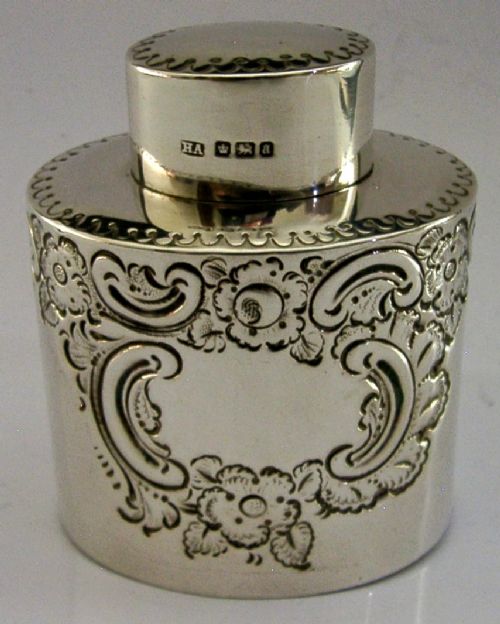
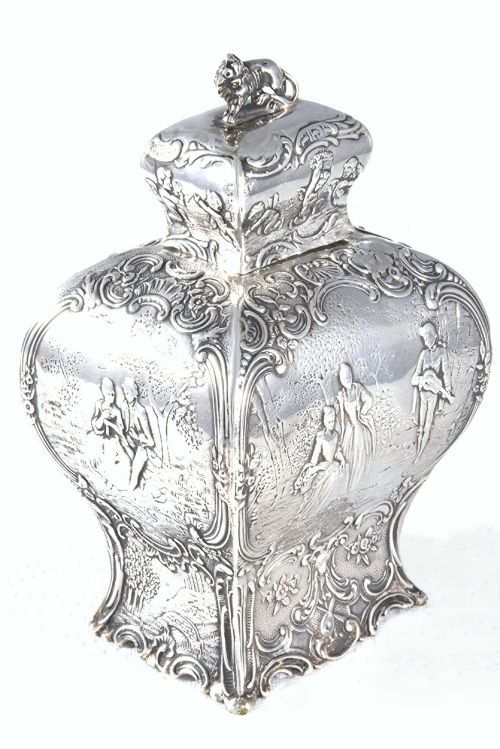
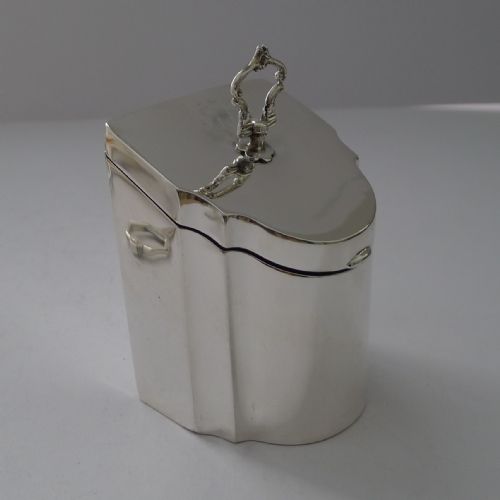
When you search for Victorian sterling silver canisters, you encounter a selection of tea caddies, tea caddy boxes, and trinket boxes spanning the nineteenth century into the Edwardian period. The forms vary from straightforward oval bodies to bombe profiles, knife box shapes, and cut crystal combinations mounted in sterling silver.
Most examples originate from the Victorian era, particularly the closing decades with dates such as eighteen ninety-three, eighteen ninety-eight, and eighteen ninety-nine. Makers working in centres like Sheffield and Birmingham produced these pieces, alongside Scottish examples incorporating fifteen carat yellow gold details.
You will also find related forms like ebonised wood elements and ebony accents paired with the silver work. These items served a functional purpose in the historic home, storing dry leaves securely before the tea service began.
Materials and Construction
Silversmiths utilised sterling silver sheet, hammering and shaping the metal into rigid bodies before applying decorative techniques like repoussé work. This involved pressing or hammering the silver from the reverse side to raise ornamental floral or scroll motifs in relief.
Cut crystal bodies appear alongside sterling silver mounts and pull-off lids, combining heavy faceted glass with solid metal collars. Other variations incorporate ebonised wood or ebony, creating contrast through dark timber components against the polished silver surface.
Several canisters are shaped like miniature knife boxes, proving that nineteenth-century silversmiths enjoyed playful architectural references.
Evaluating the Metalwork
The distinction between standard examples and superior pieces rests largely on the gauge of the silver and the crispness of the hand-worked decoration. Heavier metal gauge provides a substantial feel in the hand and ensures the structural integrity of lids and hinges.
Repoussé work demonstrates quality through the depth and definition of the chased details rather than shallow surface pressing. Furthermore, the precision of the assay office marks and maker's stamps indicates the pride taken by the original silversmith.
Atkin Brothers
The Victorian Sterling Silver Canister Glossary
- Sterling Silver
- An alloy comprising ninety-two point five percent silver and seven point five percent other metals, usually copper, chosen for durability in domestic objects.
- Repoussé
- A metalworking technique where the smith hammers the silver from the reverse to form raised designs on the front.
- Tea Caddy
- A small vessel designed for storing tea leaves, often fitted with a secure lid to preserve the aroma and flavour of the contents.
- Bombe
- A swollen or bulging convex furniture and vessel shape popular in historic silver and decorative arts.
- Assay Office
- An official body that tests the purity of precious metals and stamps items with hallmarks to confirm their standard.
Victorian Sterling Silver Canister: Frequently Asked Questions
What is a silver tea caddy?
A silver tea caddy is a small lidded container built to hold tea leaves safely in the home. During periods when tea was an expensive commodity, these vessels remained locked to protect the contents.
Today, they function as decorative objects on sideboards or as storage for small keepsakes, retaining their original utility while serving as display pieces.
How do I date a Victorian canister?
Dating these pieces relies upon the hallmarks stamped directly into the silver by official assay offices. These tiny marks record the town mark, the standard mark, and a date letter corresponding to the exact year of production.
Additional clues include the prevailing style, such as late Victorian repoussé work or Edwardian cut crystal combinations, which align with specific decades.
What is a pull off lid?
A pull off lid is a simple removable cover that lifts straight up from the mouth of the canister without hinges or screws. It relies on a precise, snug fit against the collar to stay secure.
This construction appears frequently on oval and cylindrical caddies from the nineteenth century, offering straightforward access to the interior.
How should I clean silver canisters?
Cleaning sterling silver requires a soft cloth and a gentle silver polish formulated to remove tarnish without stripping the underlying metal. Avoid abrasive pads that scratch the polished surface or damage repoussé details.
Regular, light dusting and minimal chemical intervention help preserve the historic patina built up over decades of existence.