

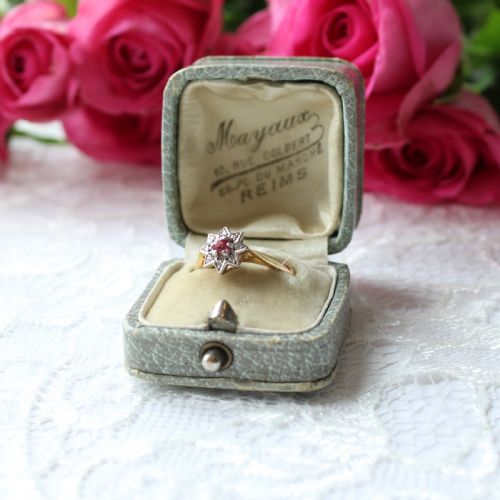
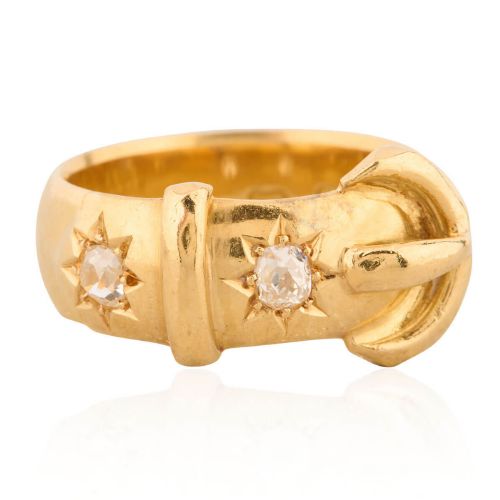


Victorian Star Setting Ring
A victorian star setting ring holds stones flush within hand-carved celestial mounts, offering enduring daily wear with distinct nineteenth-century character.
Victorian Star Setting Ring
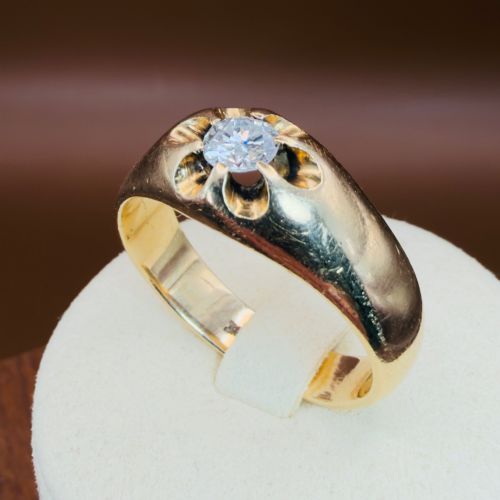
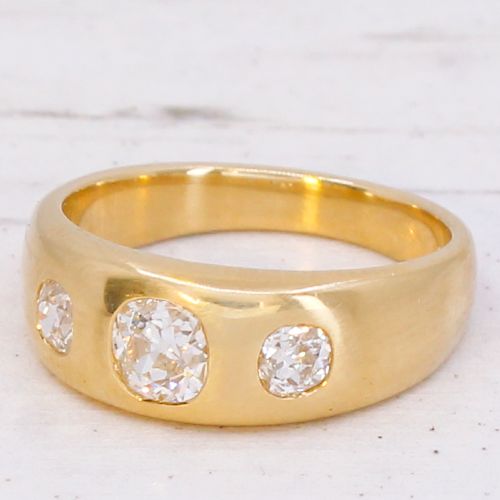
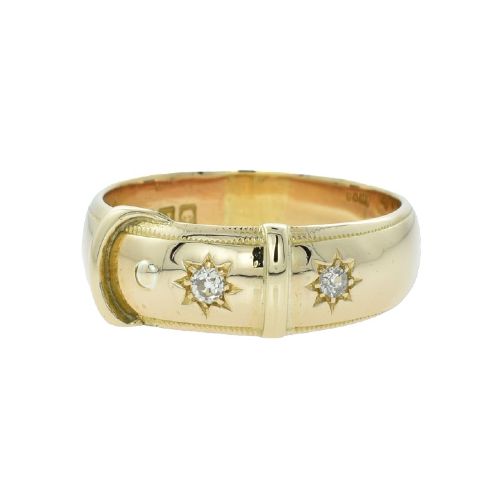
A victorian star setting ring typically presents a low-profile band where gems sit flush or gypsy-set into the metal surface. These pieces span the nineteenth century and the Edwardian period, often taking the form of gypsy bands, buckle motifs, or multi-stone trilogy designs.
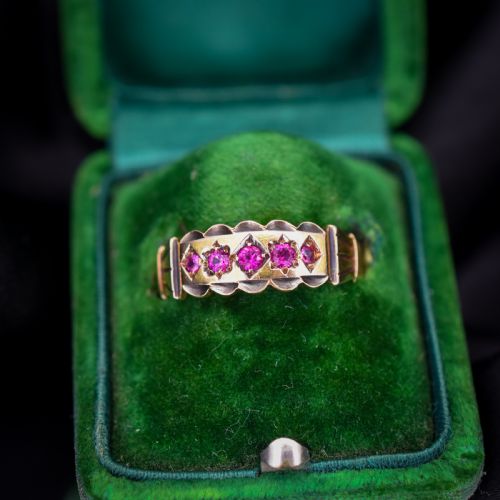
The aesthetic centres on flush-mounted diamonds, rubies, sapphires, and pearls punctuated by hand-engraved starbursts around the stones. This layout protects the girdle of the gem while catching light across the surrounding gold facets.
Buyers encounter variations including single-stone solitaires, five-stone rows, and mourning rings featuring black onyx and enamel. The dominant metal is yellow gold, found in nine, fifteen, and eighteen carat purities alongside fourteen carat examples.
Materials and Construction
Goldsmiths constructed these rings using yellow gold alloyed predominantly to nine, fifteen, or eighteen carat standards, often carrying British hallmarks from assay offices such as Chester and Birmingham. Stones were hand-cut into old mine or old European cuts, featuring small tables and deep pavilions that suit flush settings.
Craftsmen secured gems by pushing the surrounding gold rim over the stone edge, then engraving crisp star rays outward from the centre point. Additional decorative techniques include black enamel inlay, chased band shoulders, and flush bezel mounts for pearls and coloured gemstones.
Victorian jewellers engraved starbursts into solid gold so wearers could carry a permanent patch of starry night on their fingers.
Distinctions in Quality
Quality rests upon the crispness of the hand-engraved starburst and the security of the metal push-work surrounding each stone. Finer examples display symmetrical ray geometry and thick, robust shanks that retain their structural weight over decades of wear.
The selection of gemstones shapes the standard of the piece, with well-matched natural rubies, sapphires, and lively old-cut diamonds elevating the overall work. Maker marks and clear provincial hallmarks provide tangible anchors for provenance and manufacturing date.
The Victorian Star Setting Ring Glossary
- Star setting
- A flush stone mounting surrounded by hand-engraved star rays that spread into the metal band. This technique protects the girdle of the gem.
- Gypsy ring
- A ring style featuring a thick band that tapers toward the back, with stones set flush into the swollen top section. It emerged in the Victorian era for practical everyday wear.
- Old cut
- A diamond facet arrangement hand-polished before modern brilliant cutting standards were established. It displays smaller tables and high crowns.
- Buckle ring
- A design shaped to resemble a buckled belt, symbolising loyalty and attachment in nineteenth-century jewellery. These often incorporate star-set diamonds.
- Trilogy ring
- A ring mounting three principal gemstones representing past, present, and future. In this selection, they appear with flush or star settings.
Victorian Star Setting Ring: Frequently Asked Questions
Can I wear a victorian star setting ring daily?
The flush mounting style keeps stones secure against the band, making these pieces robust candidates for daily wear.
Owners should still check the claws and bezel edges periodically to ensure the gold maintains its grip on the gems.
How do I identify the gold purity?
British pieces typically bear hallmarks stamped inside the shank indicating the carat weight, such as nine, fifteen, or eighteen carat gold.
Assay office symbols like the Chester crown or Birmingham anchor help date the exact year of manufacture.
What is a gypsy ring?
A gypsy ring has a solid band where the metal swells around the stone, allowing the gem to sit flush with the surface.
This design prevented stones from snagging on clothing during the Victorian period.
Are the diamonds modern cuts?
These pieces feature old cut diamonds shaped by hand rather than modern brilliant cuts.
Their proportions create a softer, warmer light reflection suited to candlelight.