


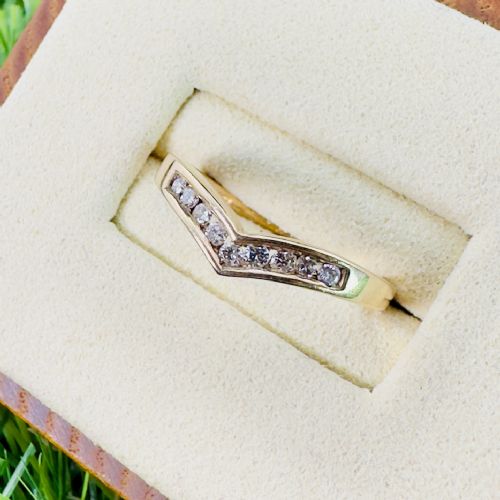


9 Carat Gold Diamond Ring
A 9 carat gold diamond ring brings together enduring precious metal and bright stones from periods spanning the Victorian era to the mid-twentieth century.
9 Carat Gold Diamond Ring
A 9 carat gold diamond ring encompasses various historical forms designed for engagement, daily wear, or special occasions. The selection includes single stone solitaires, multi-stone trilogy settings, and detailed clusters shaped across the nineteenth and twentieth centuries.
Makers utilised distinct regional styles during the Victorian, Edwardian, and Art Deco periods, combining lower-purity yellow and white gold with hand-cut stones. These pieces reflect shifting aesthetic preferences from ornate starburst motifs to geometric symmetry.
Surviving examples span decades of craftsmanship, capturing the transition from nineteenth-century hand fabrication to mid-century modern production. Each ring carries the physical markers of its specific decade, whether from the 1900s or the 1950s.
Materials and construction
Goldsmiths combined 9 carat gold and higher-purity alloys with platinum settings to secure diamond and gemstone arrangements. Metal components were cast, hammered, or drawn by hand to form the shank and claws.
Lapidaries shaped diamonds using old cuts, old European cuts, and transitional facets that distribute light differently than modern brilliant cuts. Gemstones such as rubies, sapphires, and emeralds were integrated alongside these diamonds using grain, bezel, or star settings.
Some nineteenth-century gypsy rings hide tiny starburst engravings around the flush-set stones, making the metalwork sparkle even without direct light.
Assessing construction and design
The standard of a piece depends upon the precision of the stone setting and the integrity of the original metalwork. Stronger constructions maintain secure claws and well-defined shank shoulders without thinning from excessive wear or past resizing.
Artistic execution also separates individual items, visible in the symmetry of cluster arrangements and the skill required to shape older diamond cuts. Better examples display harmonious proportions between the central gems and the supporting gold band.
Kutchinsky
The 9 Carat Gold Diamond Ring Glossary
- Old Cut
- A diamond faceting style popular before the mid-twentieth century, characterised by a smaller table and larger culet. This cut produces a softer, more atmospheric scintillation under candlelight.
- Trilogy Ring
- A ring featuring three main stones set in a row, often interpreted as representing the past, present, and future. These settings frequently combine diamonds with coloured gems.
- Cluster Ring
- A design featuring a central gemstone surrounded by a border of smaller stones, typically diamonds. This layout maximises visual impact and light reflection.
- Gypsy Ring
- A style where stones are flush-set directly into a thick, tapered gold band. The metal surrounds the girdle of the gem for a smooth profile.
- Solitaire
- A ring mounting a single prominent gemstone. This minimalist setting places the full visual focus on the characteristics of the central stone.
9 Carat Gold Diamond Ring: Frequently Asked Questions
How do I care for a vintage gold ring?
Clean antique jewellery gently using warm water, mild soap, and a soft brush to remove everyday debris from beneath the settings. Avoid harsh chemical dips that might damage softer gemstones or weaken older gold alloys.
Store pieces individually in fabric-lined compartments to prevent the diamonds from scratching softer metals or other stones. Routine checks by a professional jeweller help ensure claws remain tight and secure.
Can these rings be resized easily?
Most gold rings can be adjusted by a skilled jeweller who matches the alloy purity and colour. The complexity depends on the band design, particularly if engraving or channel-set stones wrap around the entire hoop.
Full eternity rings generally resist resizing due to their continuous stone layout, whereas solitaires and three-stone styles allow straightforward adjustments. Consult a specialist to preserve structural hallmarks during the alteration process.
What distinguishes old cut diamonds?
Old cut diamonds feature hand-polished facets shaped before modern optical machinery standardised proportions. They exhibit smaller tabletops, steeper crown angles, and open culets that catch ambient light in a distinct manner.
These historic stones display a warm, deep glow rather than the intense white brilliance of modern brilliant cuts. Each stone bears the subtle irregularities of human craftsmanship.
How are different production periods identified?
Stylistic cues, mounting techniques, and hallmark stamps help determine the era of manufacture. Victorian designs often favour heavy yellow or rose gold with star settings, while Edwardian pieces lean towards platinum-topped openwork.
Mid-century examples introduce streamlined geometry and alternate stone combinations. Official hallmarks stamped inside the shank provide definitive assay office and date records where legible.