

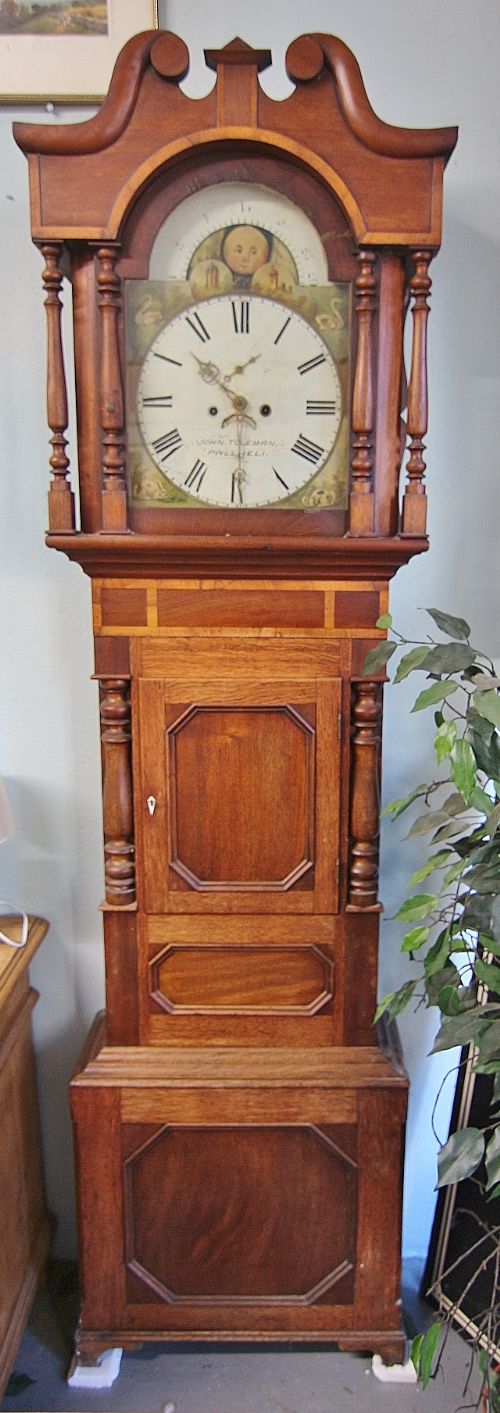
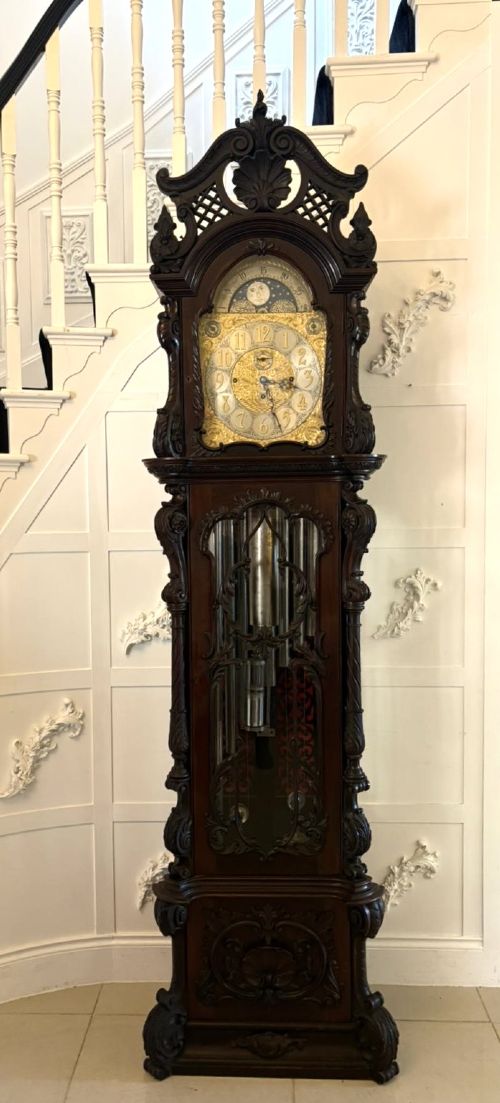
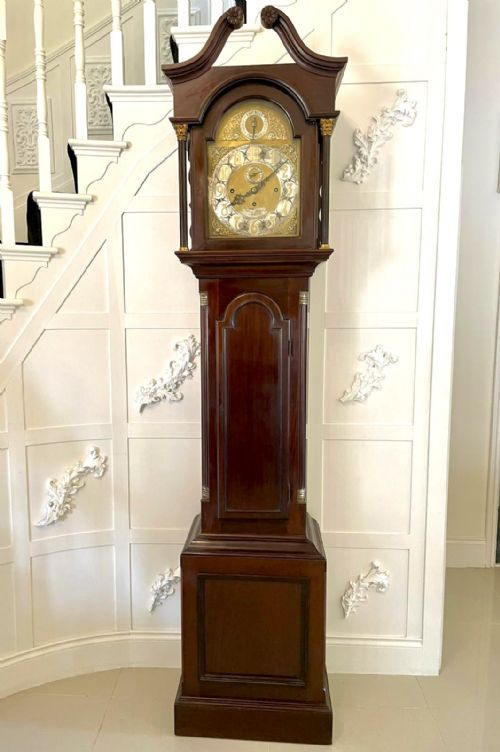
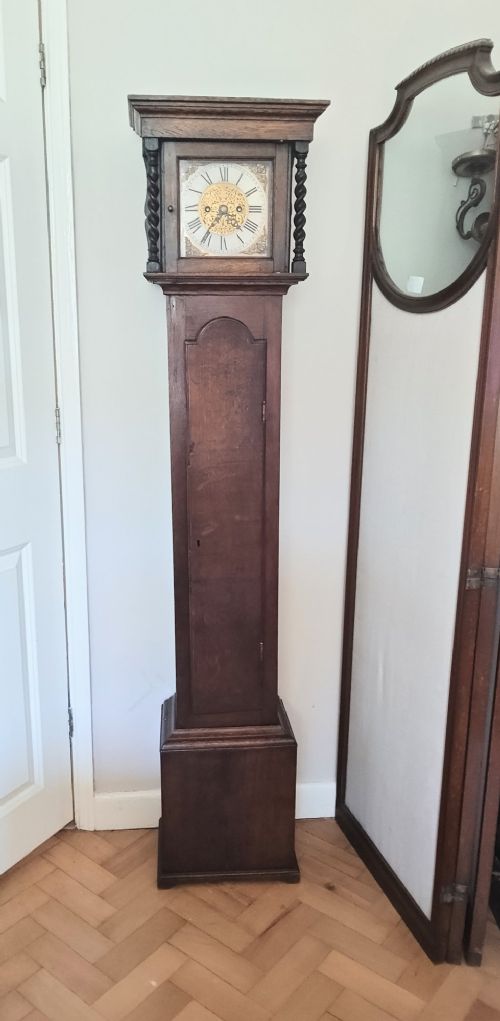


Victorian Standing Clock
A victorian standing clock brings architectural presence and mechanical precision into a room through tall timber cases and brass movements.
Victorian Standing Clock
A victorian standing clock encompasses tall floor-standing timepieces including longcase clocks, grandfathers, and smaller grandmother variations from the nineteenth century.
These upright clocks range from simple regional pine thirty-hour timepieces to elaborate musical or chiming examples housed in carved mahogany and oak.
Alongside tall floor models, the category extends to standing bracket or table formats encased in glass domes or supported by decorative stands.
What varies in quality
Quality rests in the ambition of the casework and the sophistication of the movement, separating standard regional timepieces from exhibition examples with musical barrels or moon rollers.
The crispness of wood carving, the depth of figuring in mahogany or oak veneers, and the complexity of chiming or regulating mechanisms define the upper tier of the range.
Victorian Standing Clock Retail Price Guide 2026
Typical asking prices for victorian standing clock among the pieces listed under this phrase on Sellingantiques today, from the lower quarter to the upper quarter. They describe what is for sale here now, not the wider market.
The listings show nineteenth century standing clocks constructed in mahogany, oak, and pine, featuring brass, glass, and enamel components.
Winsor Bishop Norwich·David Craig Ford Path head·JAMES WOOD·French Royal Exchange·Aitchison of Glasgow·Barwise London·Geo Tarratt of Leicester·RICHARD ROWELL OXFORD·Sam Robson·Beha·A D Mougin France
The Victorian Standing Clock Glossary
- Longcase clock
- A tall pendulum clock enclosed in a wooden case standing directly on the floor. These are commonly known as grandfather clocks.
- Grandmother clock
- A smaller, scaled-down version of a longcase clock produced during the nineteenth century. They occupy less vertical space while retaining traditional mechanics.
- Regulator
- A precision timekeeping clock designed for high accuracy. They often feature simplified dials and deadbeat escapements.
- Fusee
- A conical pulley used in clock movements to maintain equal driving force as the mainspring unwinds. This mechanism improves timekeeping consistency.
- Garniture
- A set of decorative matching objects, such as a clock accompanied by side urns or candelabra, placed together on a mantel or surface.
Victorian Standing Clock: Frequently Asked Questions
What is a victorian standing clock?
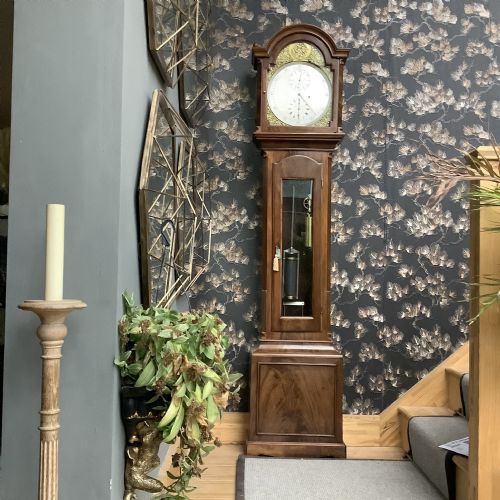
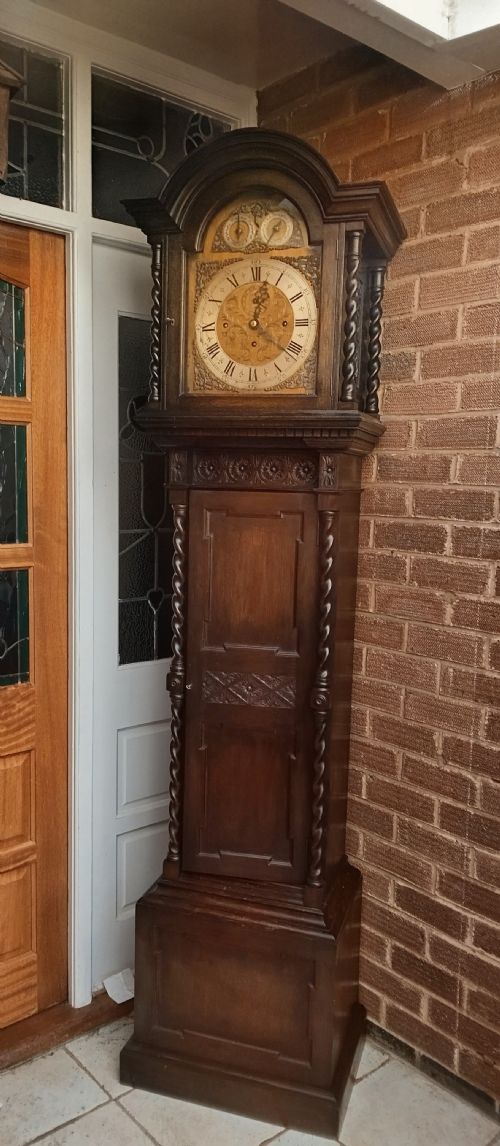
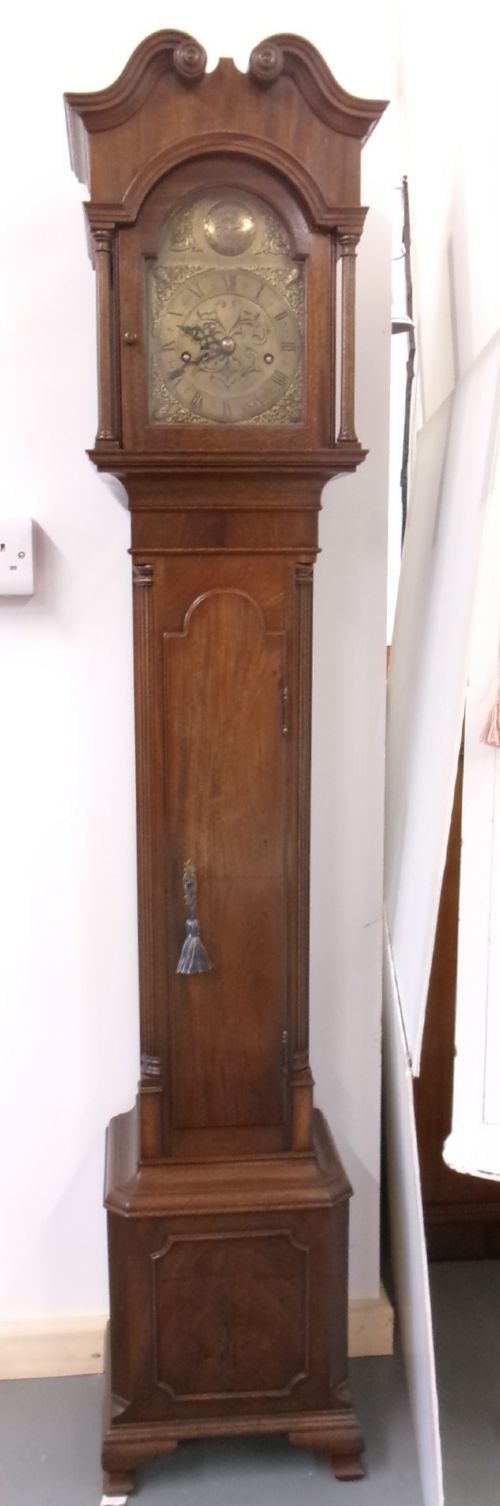
A victorian standing clock is a tall floor-standing timepiece, most commonly a longcase or grandfather clock, enclosed in a wooden case made of mahogany, oak, or pine.
These pieces house complex mechanical movements driven by brass and steel components, often featuring painted dials, moon rollers, or chiming bells.
Where should I place a longcase clock?
Longcase clocks require a stable, level floor and a secure wall fixing to ensure the pendulum swings freely and accurately without interference.
They suit hallways, studies, or living rooms where their height and traditional timber cases add architectural weight to the interior.
How do I wind an eight day clock?
An eight day clock requires winding approximately once a week using a matching key inserted into the winding holes on the dial face.
Care must be taken not to overwind the mechanism, ensuring the weights or springs are drawn up steadily.
How can I tell a grandfather clock from a grandmother clock?
A grandfather clock is a full-sized longcase clock standing typically over six feet tall with substantial proportions and heavy weights.
A grandmother clock is a scaled-down, narrower version produced in the nineteenth century that stands significantly lower to the floor.