


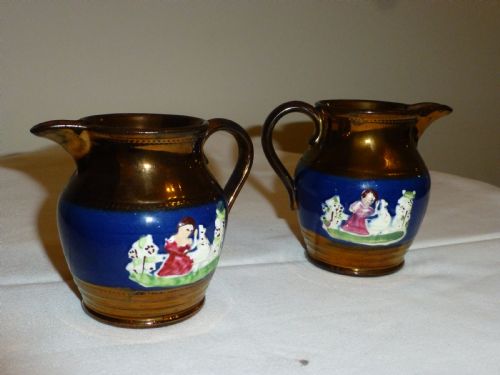


Victorian Staffordshire Milk Pitcher
A victorian staffordshire milk pitcher is a sturdy earthenware or pearlware vessel used for serving cream or milk at the table, prized for its hand-decorated lustre finishes and animal forms.
Victorian Staffordshire Milk Pitcher
These items encompass earthenware, pearlware, and porcelain vessels designed for daily dairy service during the nineteenth century. Buyers searching for a victorian staffordshire milk pitcher frequently encounter robust jugs alongside novelty animal creamers formed as cows.
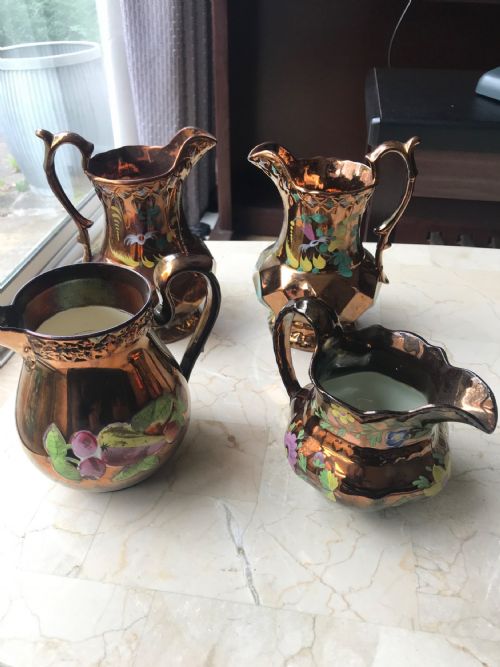
The selection ranges from early nineteenth-century pearlware examples with purple transfer decoration to later copper lustre jugs hand decorated with fruit. Forms vary from graduated sets of blue and white jugs to individual jugs and pitchers originating from Staffordshire potteries.
Makers and potteries such as Keeling and Co. and Copeland Spode appear alongside unmarked pieces from the Victorian and Georgian eras. The prevailing style leans towards traditional earthenware and porcelain decorated with enamel and gilding.
How they were made
Potters shaped these vessels from earthenware and pearlware, applying glazes before adding hand-decorated enamel and copper lustre finishes. Many pieces feature transfer printing, notably in purple, combined with gilt details or gilding applied to the ceramic body.
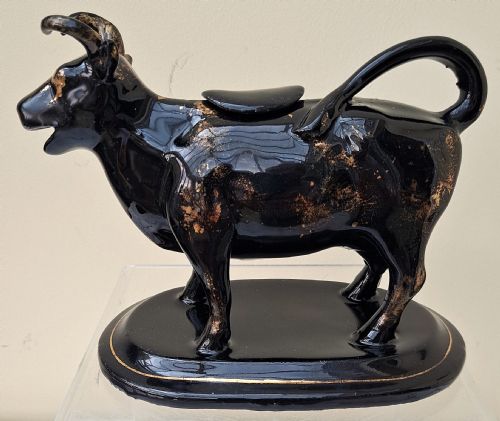
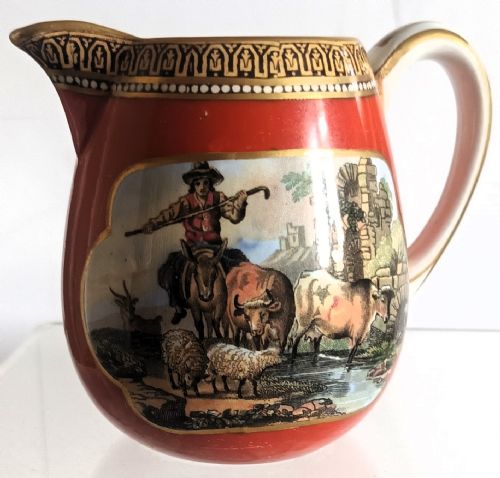
Specialised techniques produced distinct finishes such as the dark glaze characteristic of Jackfield pottery and the colourful pigments seen on Pratt-ware pottery. Kiln firing fixed these metallic lustres and enamels to the ceramic surface.
Even the cows had to work for their keep, doubling as cream jugs on the Victorian breakfast table.
What varies in quality
Quality depends upon the crispness of the transfer decoration and the evenness of the copper lustre glaze across the ceramic body. Finer examples display careful hand-painted details on fruit motifs or clean blue and white transfer lines without smudging.
The artistic execution of modelled forms, particularly on novelty cow creamers, separates standard utility vessels from more collectible sculptural pieces. Graduated sets show superior quality when all matching vessels maintain uniform glaze consistency and proportion.
Keeling and Co.·Copeland Spode
The Victorian Staffordshire Milk Pitcher Glossary
- Pearlware
- A refined earthenware developed in the late eighteenth century featuring a subtle bluish glaze that pooled in recesses. It served as a precursor to Victorian white earthenware.
- Copper Lustre
- A metallic glaze technique imparting a reflective, coppery sheen to ceramics. It was frequently paired with hand-painted polychrome enamel bands or fruit motifs.
- Jackfield
- A type of British pottery traditionally known for its glossy black earthenware body, often accented with gilt highlights. It gained popularity during the nineteenth century for tea and dairy wares.
- Pratt-ware
- Earthenware decorated with muted multi-coloured underglaze metallic oxides, typically blues, yellows, browns, and greens. Named after the Pratt family of potters, these pieces date largely from the late eighteenth and early nineteenth centuries.
- Transfer Printing
- A method of applying pre-printed designs from a copper plate onto ceramics via tissue paper. This technique allowed for intricate, repeatable patterns in colours like purple and blue.
Victorian Staffordshire Milk Pitcher: Frequently Asked Questions
What is a victorian staffordshire milk pitcher?
A victorian staffordshire milk pitcher is a ceramic vessel produced in the Staffordshire potteries during the nineteenth century for holding and pouring milk or cream.
These pieces span earthenware, pearlware, and porcelain bodies decorated with copper lustre, transfer printing, or hand-painted enamel fruit motifs.
How were cow creamers used?
Cow creamers served as novelty vessels for pouring cream from the animal's mouth during tea or dining services.
Filled through an aperture on the back, these hollow earthenware figures combined utility with whimsical domestic display.
How do I date a copper lustre jug?
Dating relies on examining the ceramic body, handle attachment style, and the richness of the metallic copper lustre glaze.
Earlier Georgian pieces often utilise pearlware bodies with purple transfer prints, while later Victorian examples feature heavier earthenware and hand-painted polychrome bands.
Are graduated jug sets common?
Graduated sets consist of multiple jugs in varying sizes designed to nest together or display in a matching row.
Surviving complete sets in blue and white transferware or copper lustre remain desirable for their uniform decorative appeal.