


Victorian Spirit Jug
A victorian spirit jug brings heavy glass, warm copper or rich stoneware directly to the sideboard, offering practical service wrapped in nineteenth-century weight.
Victorian Spirit Jug
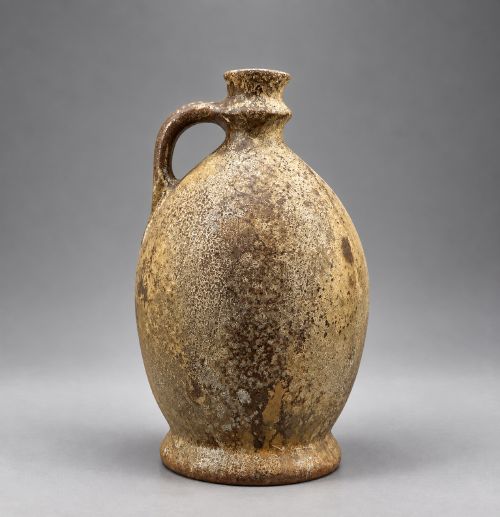
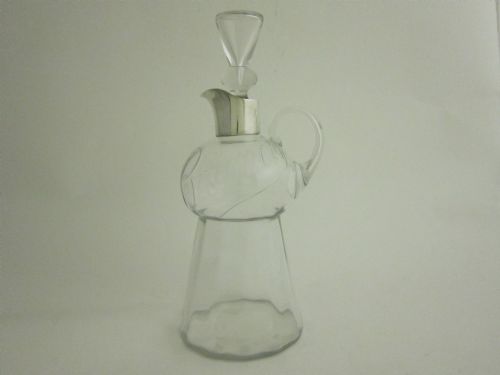
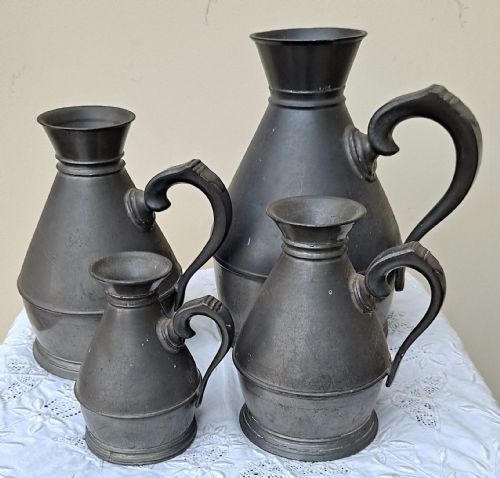
A victorian spirit jug encompasses vessels designed for holding, measuring and pouring alcohol, stretching across decanters, tavern measures, whisky flasks and ceramic carafes. The materials span clear and coloured glass, sterling silver mounted crystal, gleaming copper, pewter haystack measures and brown glazed stoneware. These pieces emerge from nineteenth-century contexts ranging from domestic dining rooms to public taverns and provincial kitchens.
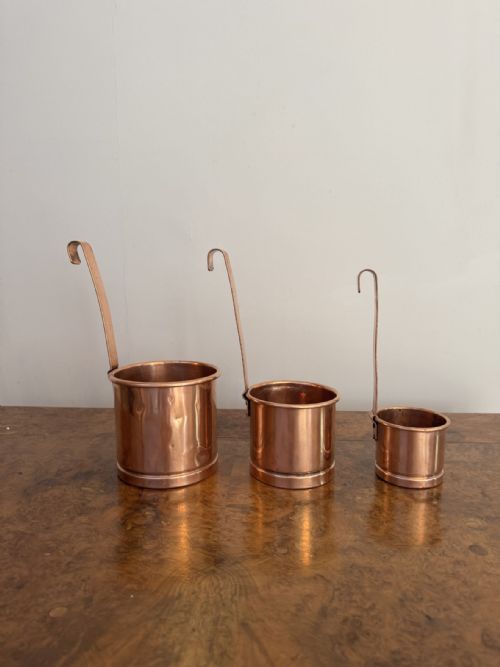
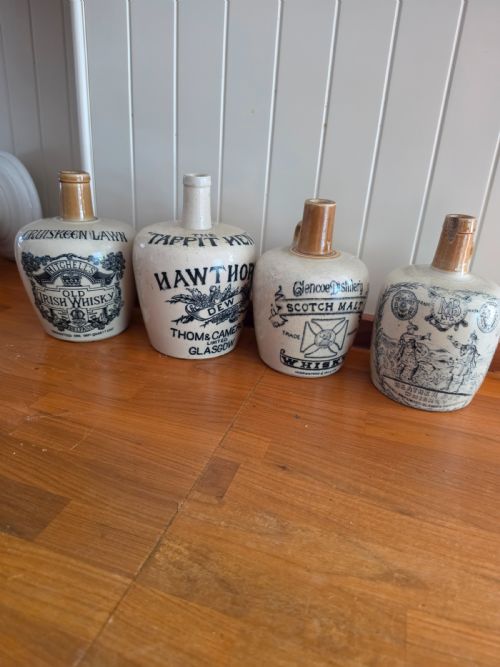
The assortment on this page leans heavily toward matched sets of graduated copper measures, heavy pewter tankards marked with crown stamps, and hand-blown glass decanters in cranberry, amber or Bristol blue tones. Stoneware whisky flagons and ceramic carafes also appear frequently, often bearing advertising or sporting motifs. Edwardian variations drift into the mix alongside strictly Victorian iterations, maintaining the robust utility of the earlier period.
Materials and Construction
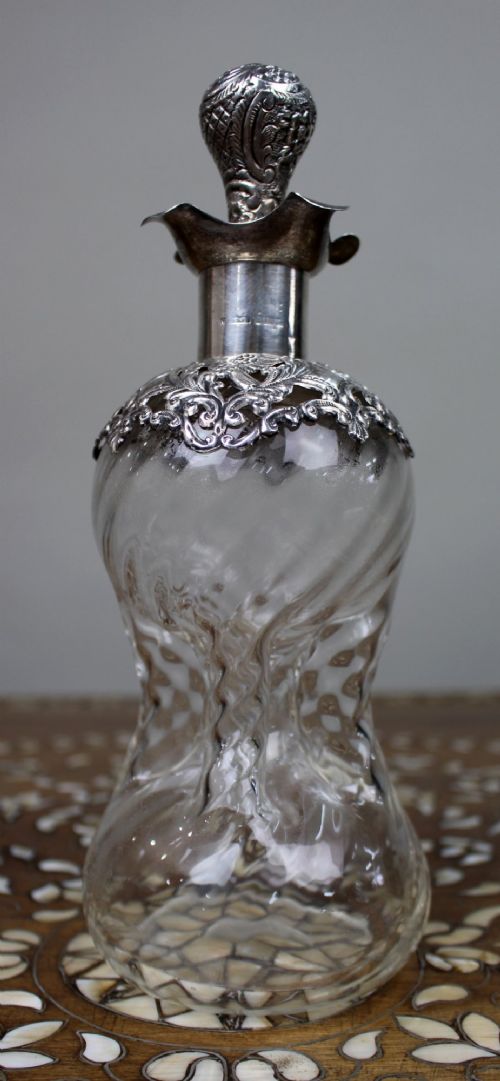
Glass vessels rely on hand-blowing techniques, yielding deep hues in cranberry and blue alongside crystal clarity, frequently paired with cast and pierced silver mounts or collars. Metal measures utilise heavy sheets of copper or brass joined with visible seams, or cast pewter shaped into traditional haystack silhouettes. Stoneware and ceramic jugs take form through throwing or moulding before receiving salt-glazes, brown slips or transfer-printed details.
Craftsmen applied various surface treatments to finish these utility items, from hand-engraved royal ciphers and golf motifs on stoneware to VR verification stamps punched into tavern metalware. Silver-plated stands and mounts involve base metals coated with a thin layer of silver, while glass decanters often feature ground stoppers made specifically for each individual neck.
The documented forms span Victorian decanters, Irish haystack measures, tavern tankards, and ceramic whisky carafes.
Assessing Quality and Merit
The upper tier of these pieces displays crisp casting in metalware, precise weight distribution, and complete original matched sets rather than assembled groupings. Glass quality shows in the depth of colour, absence of heavy internal bubble distortion, and retention of the matching original stopper. Makers' marks, verification stamps and clear engraved heraldry add considerable distinction to utilitarian vessels.
Lower quality typically presents as mismatched replacement stoppers, heavy dents in thin copper or pewter walls, and worn silver plating exposing the base metal beneath. Stoneware and ceramics show quality through the sharpness of moulded motifs and the evenness of the glaze, whereas inferior examples suffer from dull, blurred relief work and mismatched repairs.
J Bower·Royal Doulton·Port Dundass
The Victorian Spirit Jug Glossary
- Haystack measure
- A traditional Irish or Scottish liquid measure featuring a distinctive bulbous body resembling a stack of hay. These metal vessels carry specific capacity ratings.
- Kingsware
- A type of brown-glazed stoneware developed in the early twentieth century featuring moulded relief figures and scenes. Port Dundass and Royal Doulton produced notable examples.
- Decanter
- A decorative glass or crystal vessel fitted with a stopper, utilised for serving wine or spirits at the table. They emerged in various tinted shades during the nineteenth century.
- VR stamp
- Victoria Regina cipher stamped onto tavern and trade measures to denote official government verification of volume. These stamps confirm legal compliance for commercial use.
- Bristol blue
- A deep cobalt-tinted glass produced in England, frequently utilised for nineteenth-century spirit bottles and decanters. The intense colour helped protect contents from light.
Victorian Spirit Jug: Frequently Asked Questions
How were copper measures used?
These vessels served in taverns and households for transferring and measuring precise quantities of ale, spirits and wine from larger casks into drinking vessels. Their robust construction allowed them to withstand daily commercial handling.
Many carry official verification stamps confirming their accuracy for trade use. Today they function primarily as decorative kitchenalia or display pieces on country house dressers.
Are glass stoppers original?
Finding a decanter with its original matching stopper remains an important consideration for collectors. Because stoppers were easily broken or swapped over decades of service, replacements are common.
Closely inspect the ground glass surfaces of both the stopper stem and the interior neck. Matching manufacturing striations and identical wear patterns often confirm authenticity.
What do pewter VR stamps mean?
The VR initials stand for Victoria Regina, indicating the reign of Queen Victoria. These government marks were stamped onto tavern measures by inspectors to guarantee accurate volume.
Such stamps provide a reliable baseline for dating metalware. They appear on the rim or body of copper, brass and pewter tankards alike.
How do I clean antique decanters?
Cloudy mineral deposits inside old glass decanters require gentle treatment to avoid scratching the interior. Warm water paired with specialised cleaning beads or raw rice works safely without harsh chemicals.
Metal mounts and silver collars should be cleaned separately using appropriate non-abrasive polishes. Avoid submerging vessels with cork-lined stoppers or fragile applied handles in water.