



Victorian Spirit Flagon
A victorian spirit flagon holds the table's strongest drink in glass, stoneware, or ceramic, bringing nineteenth-century weight and colour to your sideboard.
Victorian Spirit Flagon
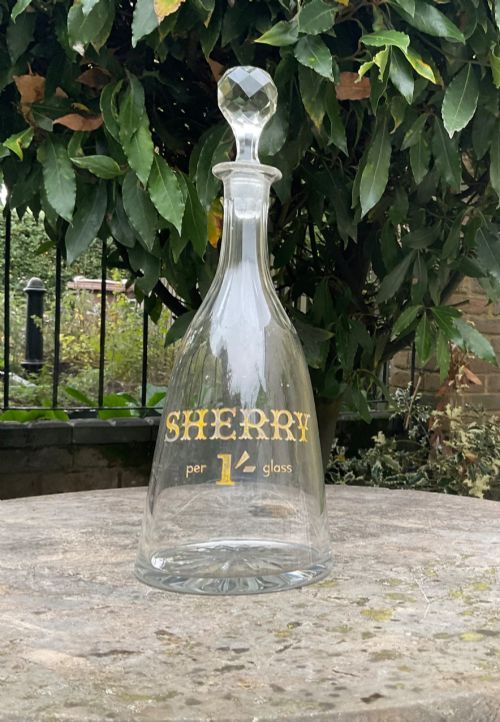
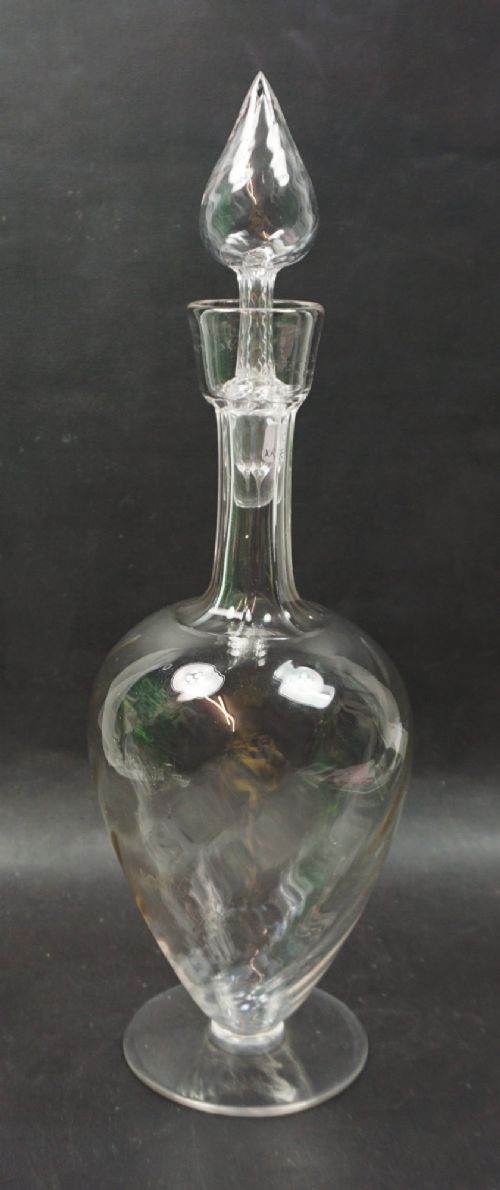
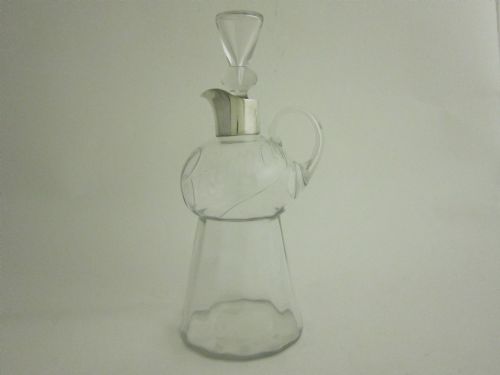
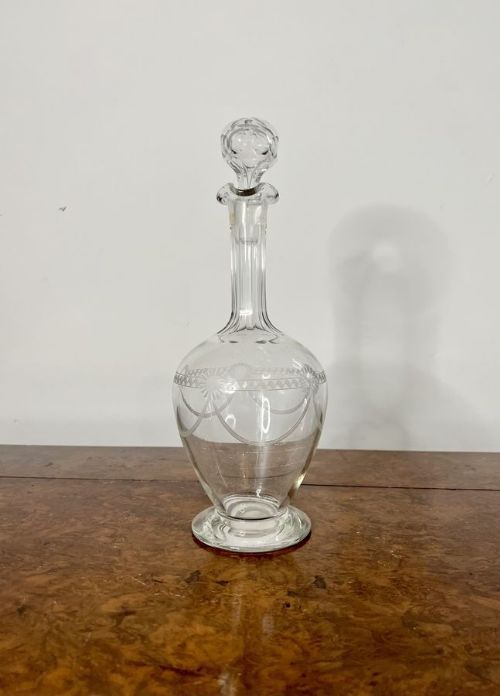
A victorian spirit flagon encompasses serving bottles, whisky flasks, and decanters made during the nineteenth century. These vessels served spirits at the dining table, sideboard, or desk, often housed in fitted caddies or leather cases.
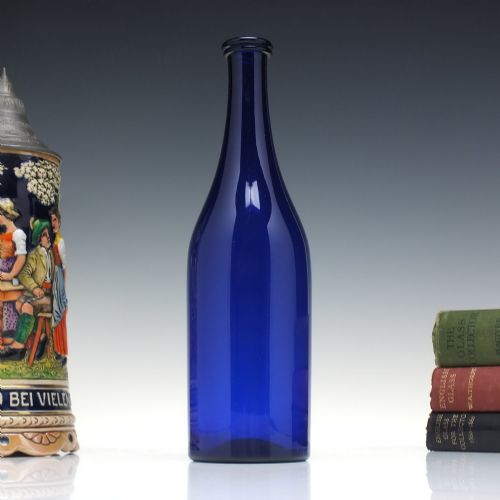
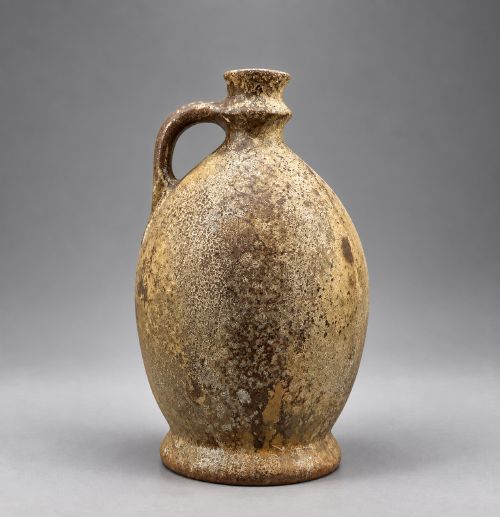
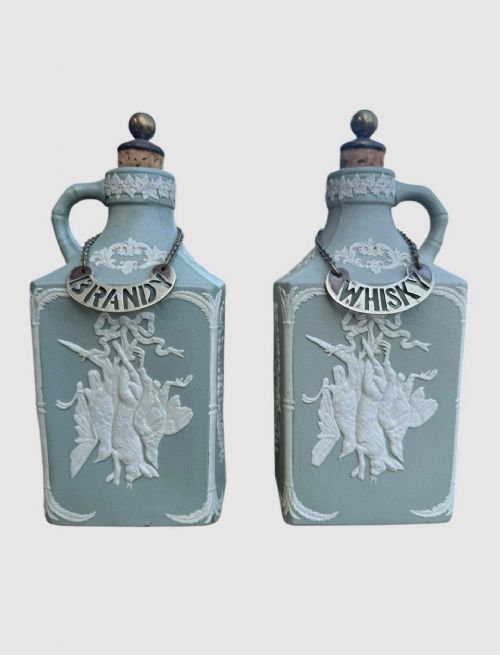
You will most commonly meet glass and stoneware examples on this page, spanning clear crystal, cut glass, coloured glass, and salt-glazed pottery. Forms range from simple cylindrical bottles to novelty shapes like dogs and champagne bottles.
Origins stretch across English workshops, London makers, and continental European glasshouses. The era covers simple country utility pieces alongside heavily engraved royal decanters.
Materials and construction
Makers shaped glass through hand-blowing and lead crystal cutting, producing heavy vessels with deep facets and polished pontils. Coloured variants appeared in Bristol blue, ruby overlay, and green glass.
Stoneware flagons and ceramic carafes relied on salt-glazing and brown glazes, fired in kilns to produce durable containers for bulk spirits and whisky. Metal elements like sterling silver necks and silver plate mounts added functional structure to glass bodies.
Victorian Spirit Flagon Retail Price Guide 2026
Typical asking prices for victorian spirit flagon among the pieces listed under this phrase on Sellingantiques today, from the lower quarter to the upper quarter. They describe what is for sale here now, not the wider market.
Some nineteenth-century makers fashioned glass spirit bottles in the exact shape of dogs and champagne bottles.
Assessing quality and distinction
The distinction between standard utility vessels and top-tier pieces lies in the crispness of the glass cutting, the depth of hand-engraving, and the presence of precious metal mounts. Fine examples display unblemished surfaces, clear ringing tones in the crystal, and balanced proportions.
Pottery and stoneware quality rests on the uniformity of the glaze, the sharpness of moulded motifs such as golfing scenes, and the weight of the ceramic body. Maker attributions and complete sets with original caddies elevate individual pieces.
James Powell·Royal Doulton·Port Dundass·Doulton of London
The Victorian Spirit Flagon Glossary
- Flagon
- A large vessel with a handle and spout or stopper, used for holding and pouring liquids. In this context, it describes heavy-duty spirit containers.
- Decanter
- A stoppered glass bottle used for decanting and serving wine or spirits. They appeared in various cut glass and coloured glass forms.
- Salt-Glazed Stoneware
- Pottery treated by throwing common salt into the kiln during firing, creating a distinctive orange-peel texture on the surface.
- Pontil Mark
- The rough scar left on the bottom of a hand-blown glass vessel where the pontil rod was snapped off after shaping.
- Ruby Overlay
- A double-layered glass technique where a thin layer of red glass covers a clear base, often cut through to reveal the clear glass beneath.
Victorian Spirit Flagon: Frequently Asked Questions
What is a victorian spirit flagon used for?
These vessels were designed to hold, store, and serve alcoholic spirits like whisky, brandy, and wine at the dining table or in the study. They kept liquids secure with glass stoppers or corks.
Many were kept in fitted leather cases or wooden caddies for travel or secure storage in the home, combining practicality with display value.
How do I clean a glass decanter?
Gentle washing with warm water and specialised cleaning beads helps remove internal staining without scratching the old glass. Harsh detergents and sudden temperature changes must be avoided.
Allowing the vessel to dry completely upside down prevents moisture rings and cloudiness from forming inside the narrow neck.
Are stoneware flagons waterproof?
Most nineteenth-century stoneware flagons and jugs possess dense, salt-glazed bodies that hold liquids securely. However, some unglazed interiors or porous historic clays require careful testing before holding liquid.
Displaying them dry is common practice for collectors who wish to preserve fragile interior surfaces and historic residues.
How can I tell glass from lead crystal?
Lead crystal generally feels heavier than standard glass and produces a clear, sustained musical ring when gently tapped. It also refracts light more intensely due to its chemical composition.
Victorian pieces often display deep, sharp hand-cut facets that feel crisp to the touch compared to moulded glass.