



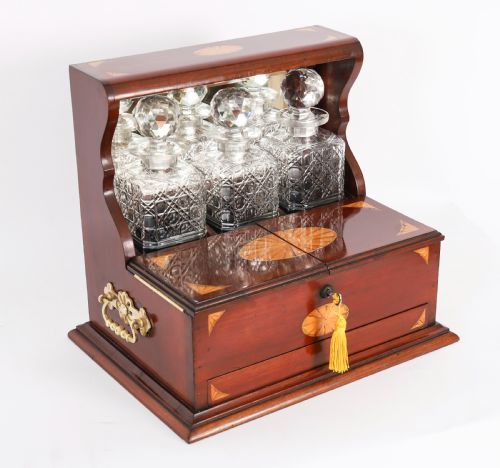


Victorian Spirit Chest
A Victorian spirit chest secures your finest bottles with clever locking mechanisms while doubling as a handsome cabinet for decanters and glassware.
Victorian Spirit Chest
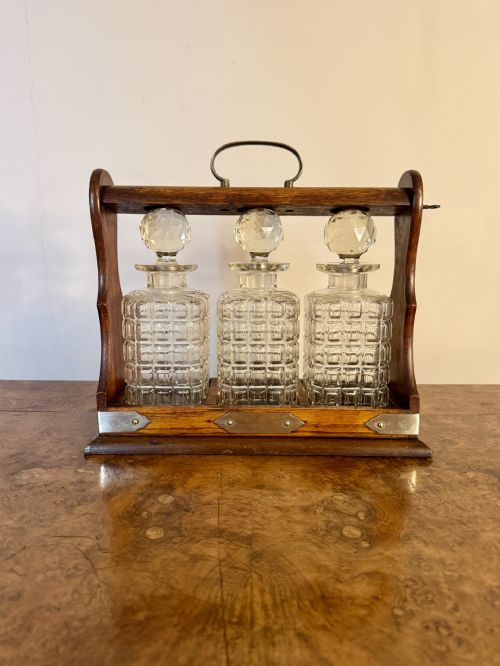
A Victorian spirit chest typically takes the form of a tantalus, a decanter box, or a combined games compendium designed to display and protect alcoholic beverages in the home. These pieces serve as functional barware that locks away the contents from unauthorized access while presenting cut glass decanters attractively.
The versions most commonly met on this page include oak and mahogany tantalus sets holding two, three, or four crystal decanters, often paired with compartments for playing cards and games. Originating primarily from the Victorian and Edwardian eras, these cabinets reflect the social entertaining habits of the late nineteenth and early twentieth centuries.
How they were made
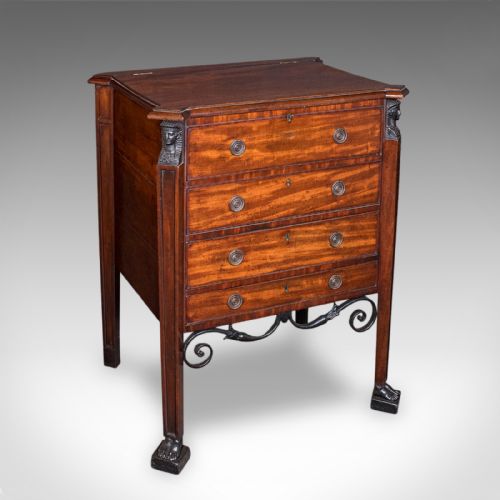
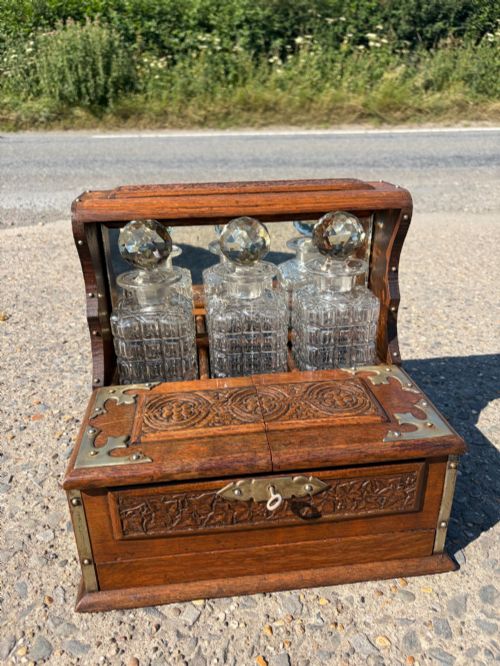
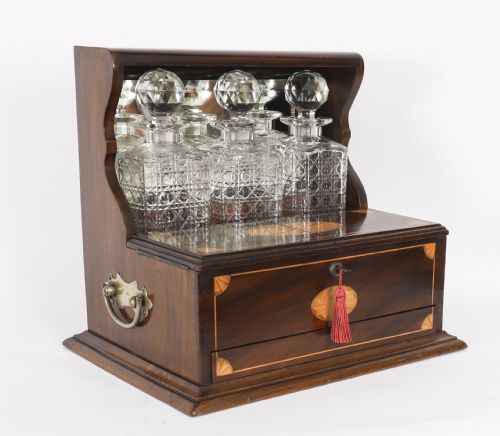
Cabinet makers utilised solid and veneered timbers such as oak, mahogany, walnut, satinwood, and coromandel to construct the heavy carcasses of these spirit chests. Brass mountings, corner braces, locks, and handles provide structural reinforcement and decorative contrast against the polished wood.
Interiors frequently feature fitted wooden inserts designed to securely hold cut glass decanters and crystal bottles, sometimes accompanied by mirrored backs and glass panels. Marquetry stringing and inlays, along with revival styles such as Egyptian Taste and Sheraton Revival, display the decorative woodworking techniques of the period.
Victorian Spirit Chest Retail Price Guide 2026
Typical asking prices for victorian spirit chest among the pieces listed under this phrase on Sellingantiques today, from the lower quarter to the upper quarter. They describe what is for sale here now, not the wider market.
The tantalus is named after the Greek mythological figure who was punished by standing in water that receded whenever he tried to drink.
What varies in quality
The standard of materials and complexity of the mechanism set the finest examples apart from standard utility pieces. Heavier timber selection, intricate marquetry stringing, and elaborate brass hardware indicate superior workshop production.
The inclusion of integrated games compendiums, multiple matching cut crystal decanters, and specialised locking mechanisms that engage the stoppers elevate the desirability and craftsmanship of a spirit chest.
The Victorian Spirit Chest Glossary
- Tantalus
- A locking device and stand that holds decanters by their necks, preventing the removal of the stoppers and pouring of the liquid while still displaying the contents. This clever mechanism derives its name from the mythological figure.
- Decanter Box
- A portable wooden case fitted internally to securely transport or store glass decanters and sometimes drinking glasses. These boxes often feature brass carrying handles and folding lids.
- Games Compendium
- A fitted box or cabinet containing equipment for multiple parlour games, such as cards, dominoes, and board games. They are frequently integrated into the lower sections of Victorian spirit chests.
- Marquetry
- The art and craft of applying pieces of veneer to a structure to form decorative patterns and pictures. Artisans used contrasting timbers to create geometric lines and floral motifs on the exterior of cabinets.
- Cut Glass
- Glassware decorated by grinding facets and patterns into the surface using a rotating wheel. The resulting deep cuts catch the light and enhance the appearance of the spirits held within.
Victorian Spirit Chest: Frequently Asked Questions
How do tantalus locks work?
A tantalus utilises a metal bar that locks down over the glass stoppers of the decanters, preventing them from being lifted out of their wooden base. Turning the key releases the retaining bar, allowing the bottles to be removed for pouring.
This design kept expensive spirits secure from household staff while openly displaying the host's hospitality collection to guests in the drawing room.
What is a decanter box?
A decanter box is a heavy wooden case specifically constructed to hold two or more glass bottles and sometimes small glasses in fitted interior compartments. They are typically equipped with robust brass handles for safe transport between rooms.
Unlike an upright tantalus cabinet, these box forms often feature hinged lids and drop fronts that open to reveal the entire glassware set.
How do I date a spirit chest?
Dating relies on identifying the prevailing timber choices, brass hardware styles, and decorative motifs characteristic of periods like the Victorian, Edwardian, or Regency eras. Oak and walnut gained popularity toward the end of the nineteenth century, often accompanied by machine-cut dovetails and factory-stamped locks.
Maker's marks, registration numbers stamped on the metalwork, and the specific revival style also provide reliable clues to the decade of manufacture.
Are keys usually included?
Many antique spirit chests retain their original working locks, though finding them with matching functional keys can vary considerably. Locks were frequently replaced or bypassed over decades of use as keys were lost.
Specialist locksmiths can often supply replacement keys or service the original brass mechanisms if the internal levers remain intact.
How should I clean the wood?
Maintenance requires gentle dusting with a soft, dry cloth to protect the aged polish and delicate veneer surfaces from moisture damage. Applying appropriate beeswax feeds the timber and enhances the natural grain without building up heavy chemical residues.
Harsh modern detergents and excessive water must be avoided to preserve the original patina and prevent lifting of decorative inlays.