
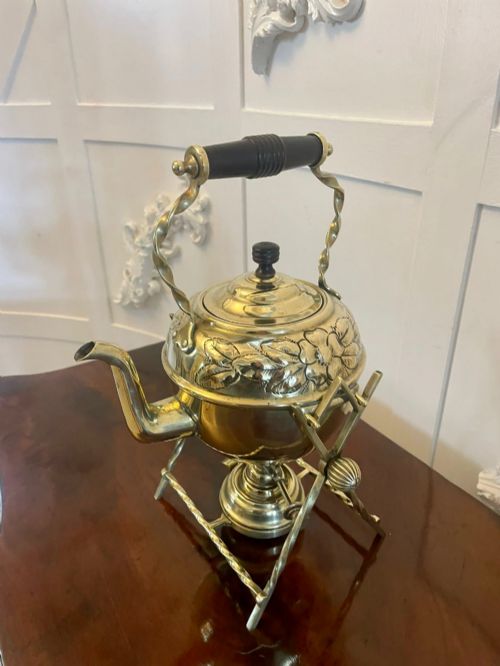
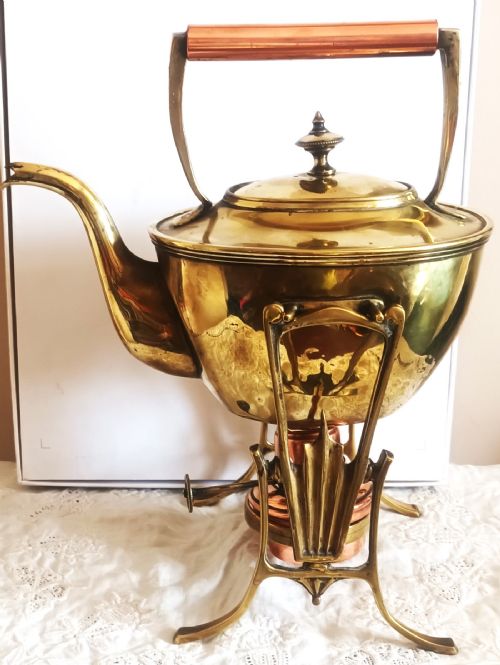

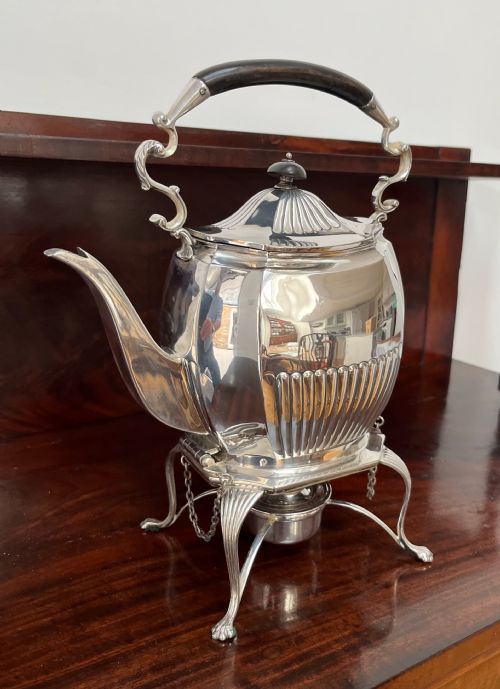


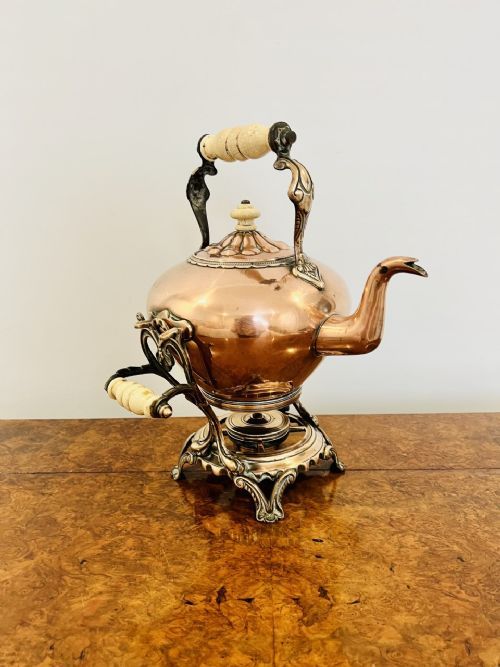


Victorian Spirit Burner Kettle
A victorian spirit burner kettle combines hot water service with a steady flame, bringing portable boiling water directly to the table.

Victorian Spirit Burner Kettle
A victorian spirit burner kettle typically comprises a kettle mounted on a dedicated stand above a small fuel burner. These vessels appear in forms spanning the Victorian and Edwardian periods, alongside a small number from the Arts and Crafts and Aesthetic Movement eras.
Most examples found here date from the late nineteenth century up through the Edwardian years. The selection includes standard table kettles on stands as well as hanging copper varieties and dresser style brass pieces.
Makers such as William Soutter & Sons, Fenton Brothers, and Frederik Ellis Tim & Co produced these tea kettles. They served a social role in pouring tea away from the main kitchen hearth.
Materials and construction
Constructed primarily in brass, copper, and silver plate, these kettles often incorporate insulating elements like wood, bone, or ebony on the handle grips. Wrought iron appears on stands, providing sturdy support for the boiling vessel above the naked flame.
Metalworking techniques of the period involved spinning or hammering sheet metals like copper and brass, alongside electroplating for the silver finished examples. Handles were frequently secured with insulated fittings to protect the hand from conducted heat.
Some burners still retain their tiny metal snuffers, designed to put out the flame with a gentle tap.
Assessing the workmanship
Quality rests in the heaviness of the metal gauge used for the body and the stability of the accompanying stand. Better examples display crisp detailing in the mountings, well-fitted burner components, and intact insulating spacers on the handles.
Design expression also separates standard production from finer work, with Aesthetic Movement and Arts and Crafts pieces showing more deliberate artistic attention in their form and surface finish.
William Soutter & Sons·Fenton Brothers·Frederik Ellis Tim & Co
The Victorian Spirit Burner Kettle Glossary
- Spirit burner
- A small container holding methylated spirit or alcohol beneath a wick, used to heat the kettle above. It sits securely within the frame of the metal stand.
- Spirit kettle
- A tea kettle permanently paired with a matching stand and burner unit designed for tabletop use. It allows guests to observe the brewing process in the drawing room.
- Silver plate
- A thin layer of silver bonded to a base metal core such as copper or brass. This finish offered the appearance of solid silver at a lower production cost.
- Aesthetic Movement
- A late nineteenth century design style emphasising visual beauty over narrative meaning. Objects from this movement often feature simplified lines and distinctive surface textures.
Victorian Spirit Burner Kettle: Frequently Asked Questions
How do I use a spirit burner?
Fill the small reservoir with methylated spirit and light the wick once the kettle is securely positioned on the stand. Adjust the flame height using the snuffer cap or regulator if the burner includes one.
Ensure the kettle contains water before lighting the fuel to prevent damage to the base metal. Extinguish the flame promptly once the water reaches boiling point.
Can I boil water in these kettles today?
Many of these pieces remain structurally sound for heating water, provided the internal lining is clean and intact. Silver plated and brass models require careful inspection of the solder joints before applying heat.
If you choose to use the kettle, fill it through the top opening and monitor the flame closely. Avoid letting the vessel boil dry to protect the historic metalwork.
How do I clean brass and copper?
Remove surface dust with a soft cloth and apply a mild, non-abrasive metal cleaner suited for brass or copper. Work gently around handles and decorative mounts to preserve any original patina.
Avoid harsh chemical dips that strip the aged surface character entirely. Silver plated examples require a gentler silver polish applied with minimal friction.
Were these kettles used every day?
These vessels were principal accessories for afternoon tea in Victorian and Edwardian drawing rooms. They provided a continuous supply of hot water without requiring servants to fetch fresh pots from the kitchen.
On less formal occasions, families used them in parlours or studies. Their portable nature made them practical for entertaining guests across different rooms of the house.