



Victorian Snake Jewellery
Victorian snake jewellery brings together coiled gold serpents, diamond-set heads and pearl eyes as enduring symbols of eternal love.
Victorian Snake Jewellery
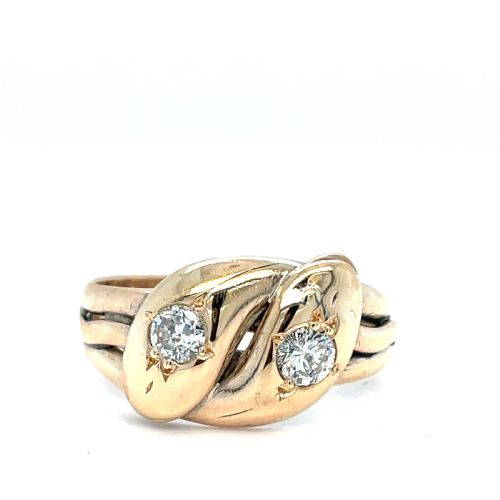
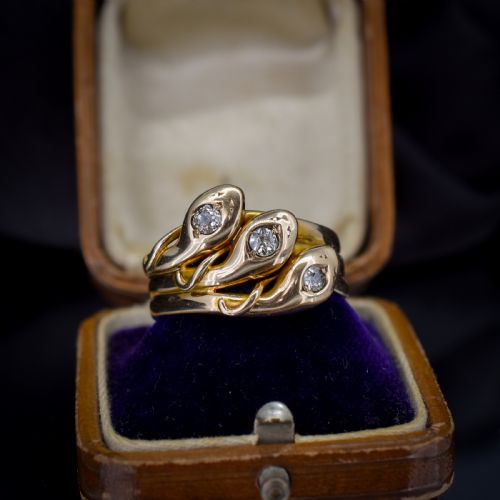
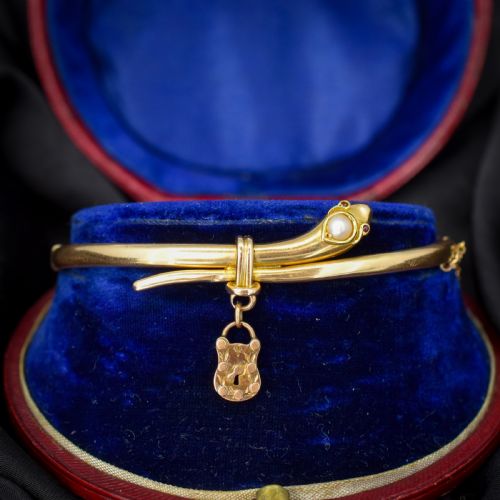
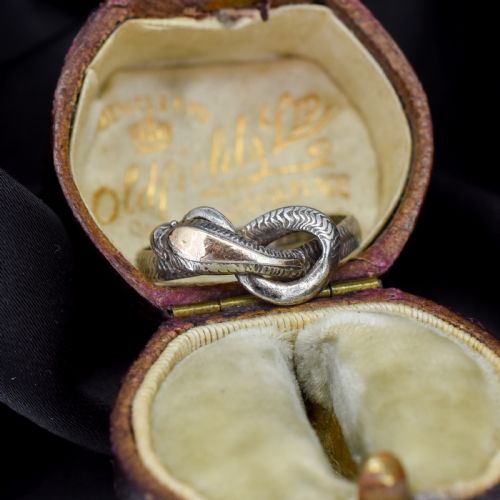
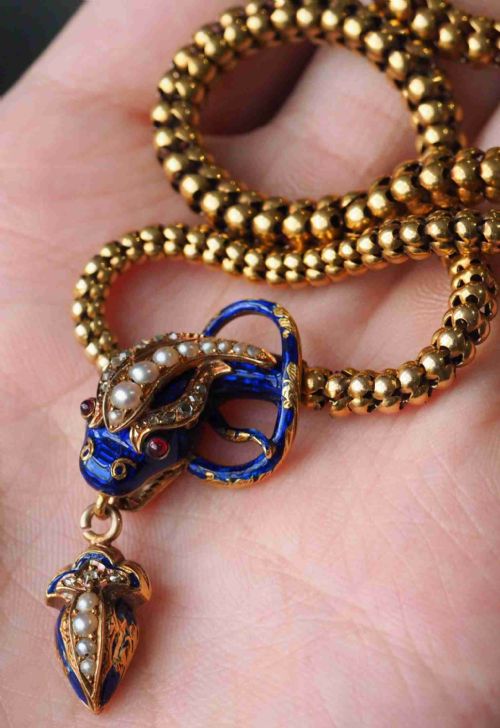
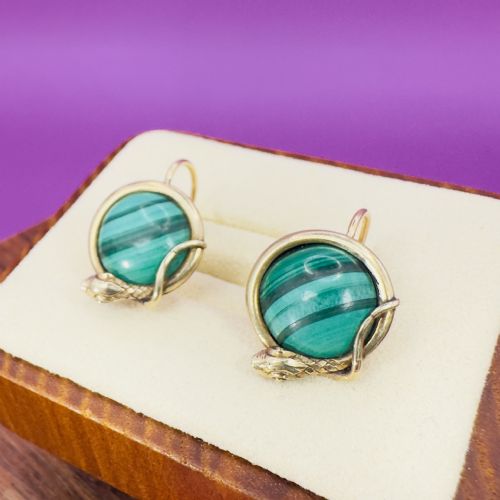
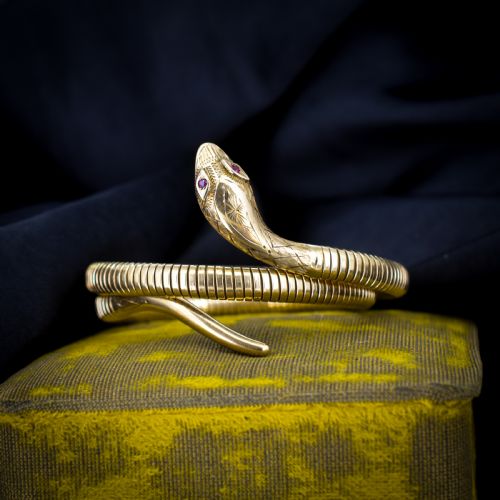
Victorian snake jewellery encompasses rings, bangles, necklaces and brooches shaped as serpents from the nineteenth century. These pieces emerge in various forms, from coiled gold bands to hinged bracelets and dangling drop earrings.
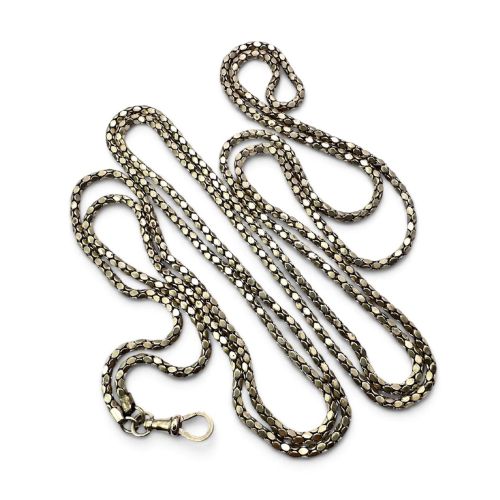
The version most commonly met on this page is the gold ring, often featuring old-cut diamonds or ruby eyes. Alongside rings, hinged bangles and long guard chains frequently appear, occasionally paired with belt buckles and pendants.
Makers produced these serpentine ornaments in 9ct, 15ct and 18ct gold, as well as silver and platinum. The aesthetic draws upon Victorian, Edwardian and Victorian Revival styles, spanning periods from the 1870s into the twentieth century.
How They Were Made
Goldsmiths shaped high-karat yellow and rose gold, alongside silver and platinum, to form the supple bodies of these serpents. Chasing and engraving created the overlapping scales along the coiled bands and pendants.
Setters mounted old-cut diamonds, rose-cut diamonds, rubies, sapphires, turquoises, malachite and pearls into the heads or eyes of the reptiles. Enamelwork frequently added colour to the gold surfaces of necklaces and rings.
Victorian Snake Jewellery Retail Price Guide 2026
Typical asking prices for victorian snake jewellery among the pieces listed under this phrase on Sellingantiques today, from the lower quarter to the upper quarter. They describe what is for sale here now, not the wider market.
Several snakes on this page wear emerald eyes, while others stare out with rose-cut diamonds or natural pearls.
What Varies in Quality
The selection and grading of gemstones, such as old-cut diamonds, natural pearls and rubies set into the eyes or heads, mark the division between standard production and fine jewellery.
The Victorian Snake Jewellery Glossary
- Old cut
- A diamond cut from the nineteenth century featuring a small table, high crown and deep pavilion, designed to sparkle in candlelight. These stones display irregular facets compared to modern brilliant cuts.
- Longuard chain
- A very long Victorian chain worn around the neck, often used to secure a pocket watch or locket. They frequently incorporate a swivel clasp or Albert clip.
- Bangle
- A rigid bracelet that slips over the hand or opens on a hinge. Many serpent examples wrap around the wrist in multiple coils.
- Enamel
- A glassy substance fused to metal through firing to add colour and decoration. It frequently highlights the heads or bodies of antique snake jewellery.
- Hallmark
- An official mark stamped into precious metal indicating the standard of purity and the assay office. These marks help date pieces accurately.
Victorian Snake Jewellery: Frequently Asked Questions
What does a snake symbolise in antique jewellery?
Serpents in nineteenth-century design represent eternal love, wisdom and rebirth. Prince Albert gave Queen Victoria an engagement ring featuring a snake set with an emerald, which popularised the motif across Britain.
Jewellery makers adopted the serpent for rings, bracelets and necklaces throughout the Victorian and Edwardian eras. The coiled form symbolised endless devotion and fidelity.
How do I date Victorian snake jewellery?
Dating relies upon hallmarks, stylistic shifts and material combinations. British pieces often feature assay office marks and date letters stamped into the gold or silver.
Earlier nineteenth-century examples tend to utilise higher karat golds and flat-cut stones, while late Victorian and Edwardian pieces incorporate distinct diamond cuts and platinum settings.
Are these snake rings comfortable to wear daily?
Most coiled snake rings sit smoothly against the finger because the bands taper or wrap evenly. Low-set diamond eyes and flush gemstone settings prevent snagging on clothing during everyday activities.
Sturdier gold weights, such as 18ct or 15ct, provide the necessary durability for regular wear. Lighter hollow forms require more mindful care to avoid denting.
What is the difference between Victorian and Edwardian snake jewellery?
Victorian serpent pieces often feature substantial yellow or rose gold, sometimes paired with turquoise, malachite or enamel. The focus rests on tactile, heavy coiled forms and sentimental symbolism.
Edwardian variations tend to introduce platinum settings, lighter 9ct or 18ct gold frames, and brighter diamond or sapphire combinations. The aesthetic shifts towards lighter, airier interpretations of the motif.