



Victorian Smelling Salts Bottle
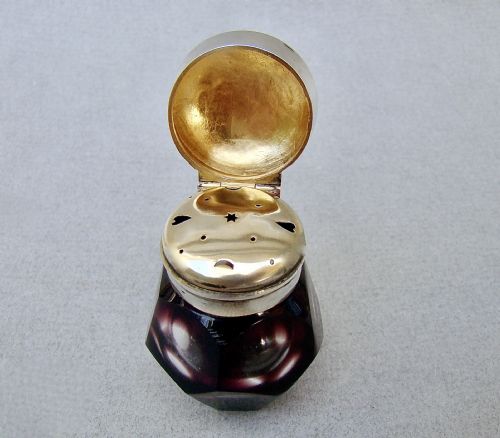
A victorian smelling salts bottle is a pocket companion of glass and silver designed to revive the faint, combining utility with distinct period elegance.
Victorian Smelling Salts Bottle
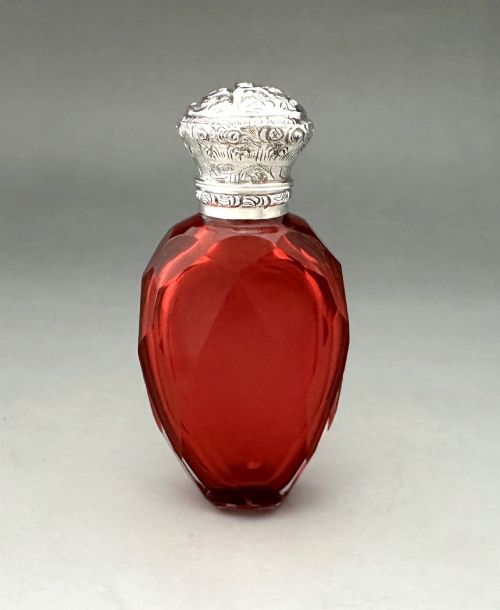
A victorian smelling salts bottle typically takes the form of a small glass vessel fitted with a metal cap or hinged mount, often serving as a dual purpose container for liquid scent and volatile salts. The pieces found on this page span the nineteenth century and extend into the early twentieth century, showing both single ended flasks and double ended designs.
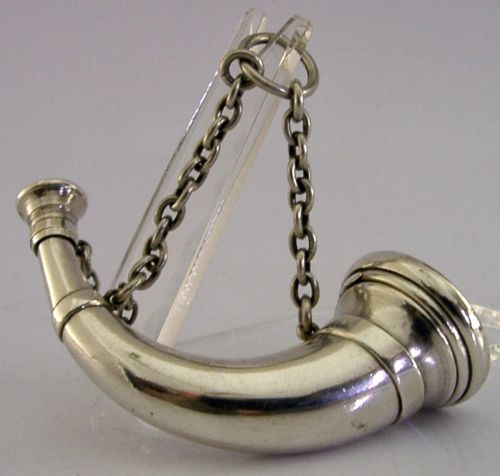
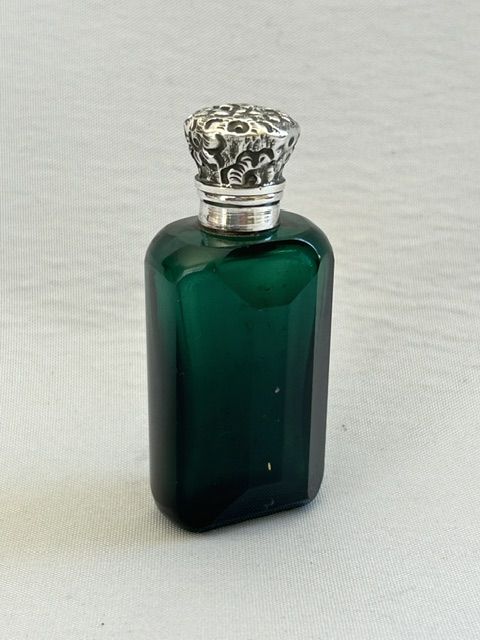
The materials range from clear cut glass to coloured vessels in ruby, green, amethyst, blue and opaline glass, frequently encased in sterling silver or silver gilt. Forms vary from straightforward cylindrical bottles to more inventive shapes such as hunting horns and miniature champagne bottles.
Makers and retailers of the era produced these items for daily personal use, carrying them in pocketbooks or reticules. Collectors encounter them grouped alongside related scent bottles and vinaigrettes from the same decades.
Materials and Craftsmanship
Glassmakers utilised techniques of cutting, etching and moulding to shape the vessels, producing faceted surfaces that caught the light. Coloured glass was achieved through mineral additions to the molten batch, creating deep tones of ruby, cranberry, emerald and opaque opaline.
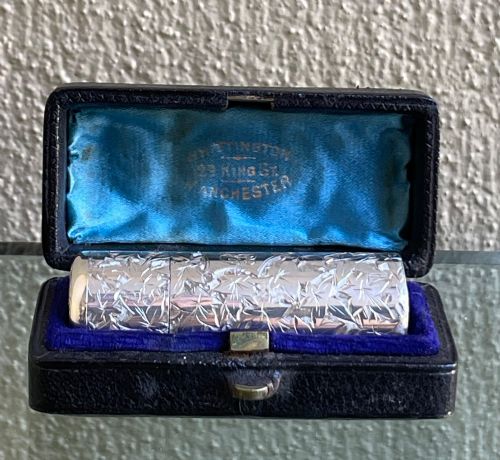
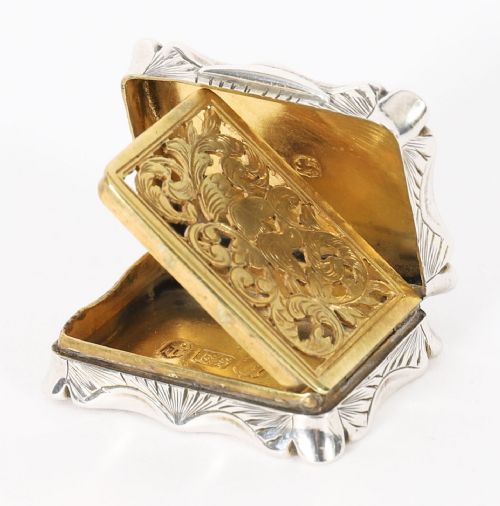
Silversmiths formed the mounts, hinged lids and inner stoppers from sterling silver, frequently adding engraved decoration, chased patterns or silver gilt finishes. Leather casing also appears as an exterior protective layer on select examples.
Listings on this page span the Victorian and Edwardian periods, featuring sterling silver alongside ruby, green, amethyst, blue and opaline glass forms.
Judging Quality
Quality rests in the crispness of the glass cutting, the depth and consistency of the coloured glass body, and the weight and finish of the silver mounts. Finer examples display intricate hand engraving upon the silver caps and secure, well fitting hinges that seal the interior effectively.
The presence of crisp hallmarks, maker marks, and well preserved interior glass stoppers elevate a piece within the range. The integration of dual compartments, combining a scent bottle with a vinaigrette, demonstrates a higher tier of period manufacturing.
Horton And Allday·Sampson Mordan·Edward Smith·S Morden And Co
The Victorian Smelling Salts Bottle Glossary
- Vinaigrette
- A small container holding a perforated grille beneath a lid, used to diffuse sponge soaked aromatic vinegar rather than liquid perfume.
- Silver Gilt
- Silver that has been coated with a thin layer of gold on its surface, often seen on the interior mounts of better bottles to prevent corrosion from salts.
- Opaline Glass
- An opaque or semi translucent glass popular in the nineteenth century, produced in shades of white, blue and other pale hues.
- Double Ended
- A bottle configuration featuring hinged caps at both extremities, typically dividing two different compartments for liquids or salts.
- Hallmark
- A series of official marks stamped on precious metals indicating the standard of purity, the assay office, and the date letter.
Victorian Smelling Salts Bottle: Frequently Asked Questions
What is inside a victorian smelling salts bottle?
These vessels originally contained a coarse sponge or cotton soaked in ammonium carbonate, commonly known as hartshorn or smelling salts, which released a pungent vapour.
Today, most examples are found empty with their inner stoppers intact, preserved as decorative objects rather than functional medical aids.
How do you open a stiff silver lid?
Many silver caps rely on a spring mechanism or a snug friction fit that can stiffen over decades of disuse. Gentle, steady pressure applied directly to the hinge rather than the edge of the lid usually releases the catch safely.
Applying force without checking for internal corrosion can damage the delicate silver mount or crack the glass neck.
Can these bottles still hold liquid scent?
While the glass bodies remain impermeable, original cork or ground glass inner stoppers frequently degrade or shrink over time. Testing a bottle with water is discouraged unless the inner seal is confirmed to be airtight.
Most buyers display them dry to protect the interior metal components and fragile glass from moisture damage.
How are nineteenth century pieces dated?
Silver mounts carry hallmarks that indicate the assay office, standard mark, and a specific date letter corresponding to the exact year of testing. When hallmarks are absent or worn, dating relies on the style of the glass cutting, the colour palette, and the overall form of the vessel.