







Victorian Silver Utensil
These victorian silver utensil pieces are functional table items shaped by nineteenth-century dining customs, offering solid metals and natural handles for a collector.
Victorian Silver Utensil
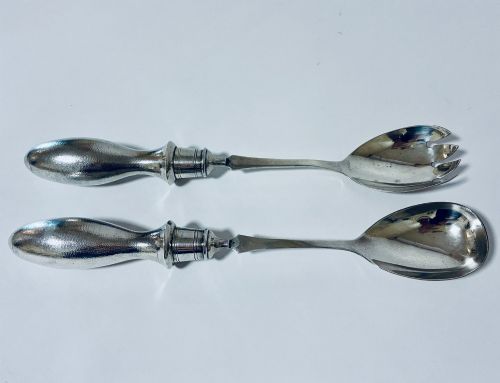
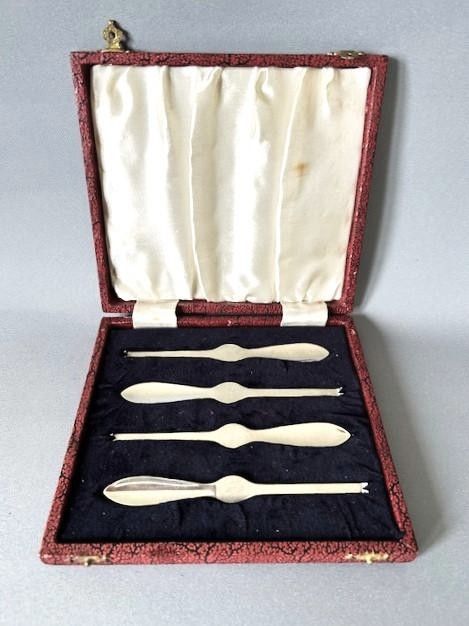
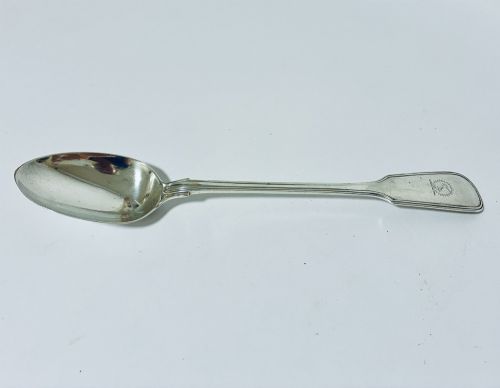
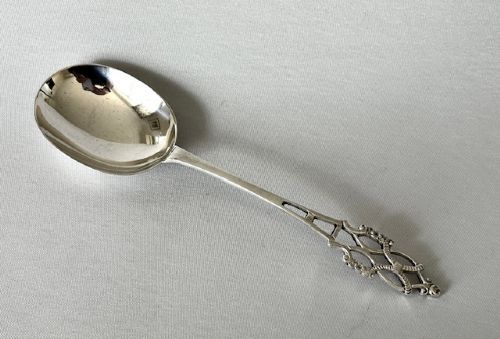
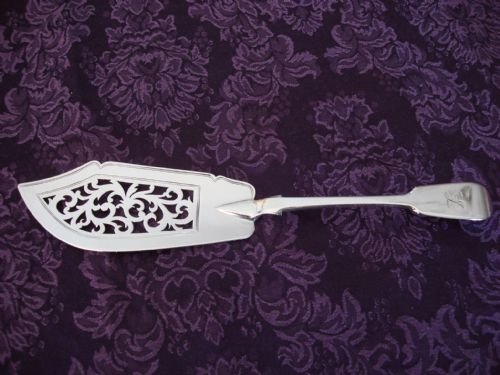
A victorian silver utensil encompasses a diverse array of dining implements from the nineteenth century, ranging from serving spoons and fish slices to caddy spoons, marrow scoops, and grape scissors.
The pieces on this page span the Victorian era alongside related Georgian, Edwardian, and mid-twentieth-century examples, reflecting shifting dining habits over decades.
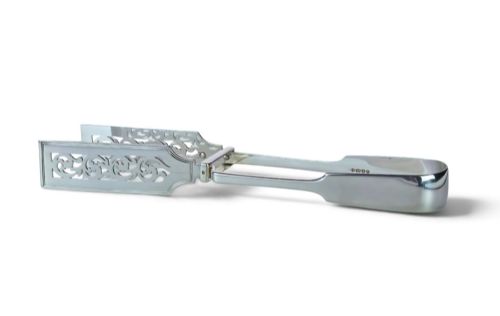
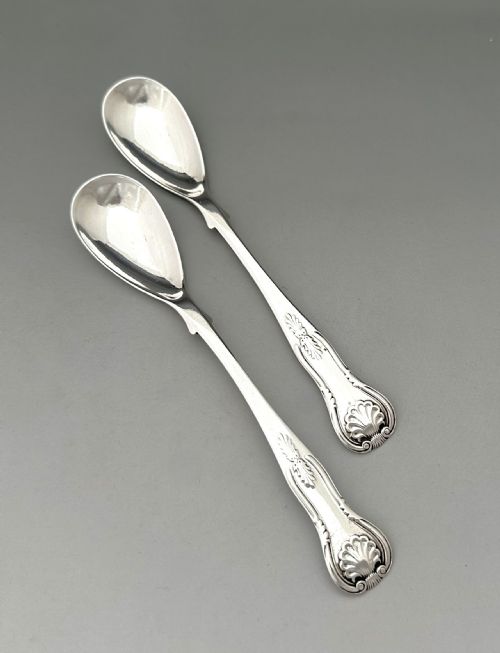
Forms include specialised tools like asparagus tongs, sardine servers, mustard spoons, and butter knives, often appearing as matched pairs or within fitted presentation cases.
Materials and Technique
The primary metal utilised across these items is sterling silver or silver plate, shaped through casting, piercing, and hammering techniques.
Handles frequently incorporate natural materials such as mother-of-pearl, horn, and velvet or leather accents found within fitted storage boxes.
Victorian Silver Utensil Retail Price Guide 2026
Typical asking prices for victorian silver utensil among the pieces listed under this phrase on Sellingantiques today, from the lower quarter to the upper quarter. They describe what is for sale here now, not the wider market.
Listings feature sterling silver, silver plate, mother-of-pearl, and horn across Victorian, Georgian, and Edwardian periods.
Evaluating Quality
Distinctions in quality often rest upon the crispness of pierced decoration, the structural integrity of cast elements such as grape scissors, and the careful integration of organic handles like mother-of-pearl.
The presence of clear hallmarks indicating recognised workshops and specialist silversmiths elevates a piece above standard unmarked production.
Elizabeth Eaton·Henry Wilkinson·Hamilton and Inches·George Adams·Charles Boyton
The Victorian Silver Utensil Glossary
- Hallmark
- Official stamps applied to precious metals indicating the assay office, purity, and year of manufacture. These marks provide the primary documentation for dating an antique.
- Marrow scoop
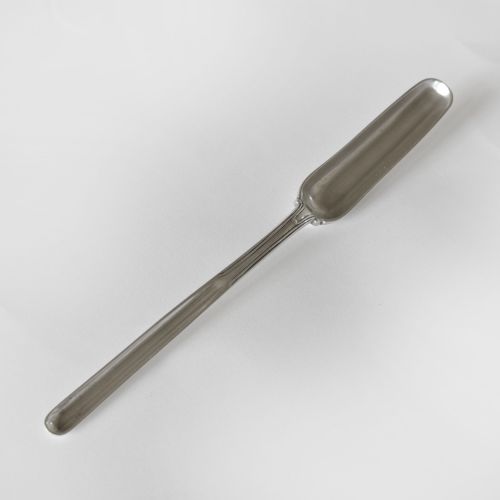
- A narrow, trough-like implement designed for extracting bone marrow during formal dining. Eighteenth and nineteenth-century examples often feature double-ended bowls of differing sizes.
- Fish slice
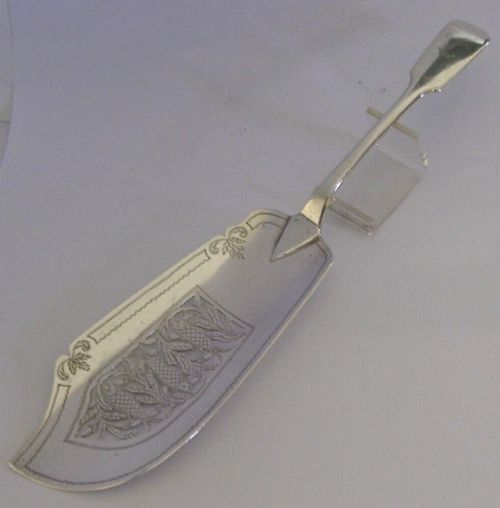
- A wide, flat blade utilised for serving fish courses at the table. Many Victorian iterations display intricate pierced and engraved ornamentation.
- Caddy spoon
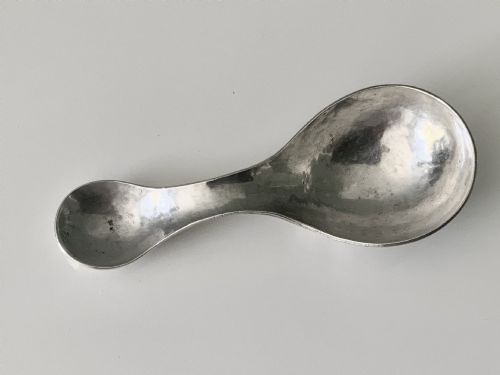
- A short-handled spoon specifically created for measuring dry tea leaves from a caddy. They frequently exhibit novel leaf or shell bowl designs.
- Sterling silver
- An alloy consisting of pure silver and other metals, typically copper, standardised to a specific fineness. It forms the foundation of most high-grade antique tableware.
Victorian Silver Utensil: Frequently Asked Questions
What is a Victorian silver utensil?
A Victorian silver utensil is a dining or serving implement manufactured during the nineteenth century, utilising silver or silver plate alongside materials like mother-of-pearl and horn.
These objects include specialised tools for fish, marrow, fruit, and condiments that reflect the elaborate dining rituals of the period.
How do I clean antique silver utensils?
Cleaning requires a soft cloth and a gentle silver polish specifically formulated for antiques to preserve delicate details and hallmarks.
Avoid abrasive dips or stiff brushes that can damage engraved surfaces or loosen organic handle materials like mother-of-pearl or horn.
Can I use these utensils daily?
Many of these pieces remain robust enough for regular dining use, particularly solid sterling silver flatware and serving spoons.
Items with hollow handles, organic inlays, or delicate piercing benefit from careful hand washing rather than automated dishwashers.
How do I identify the date of a piece?
Dating relies heavily on stamped hallmarks that record specific town marks, date letters, and maker's initials.
Stylistic indicators such as Victorian aesthetic movement engraving or specific handle construction also help narrow down the decade of production.