


Victorian Silver Toast Holder
A victorian silver toast holder brings crisp morning dining to life with architectural wirework and bright polished metal.
Victorian Silver Toast Holder
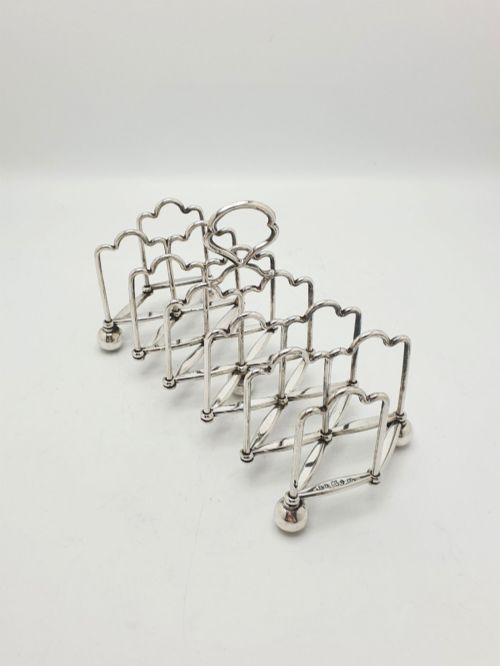
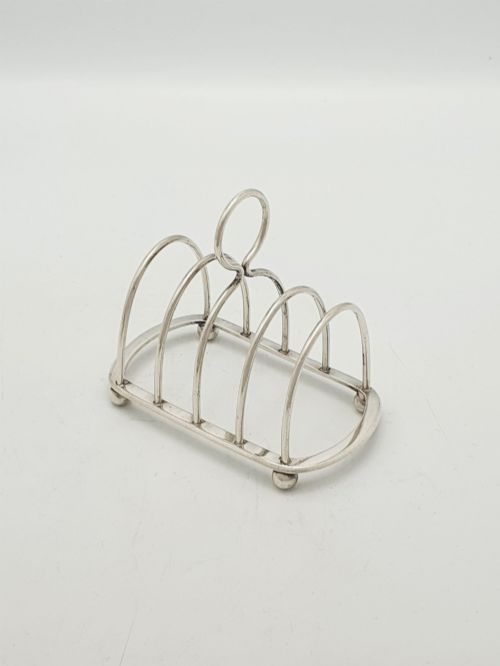
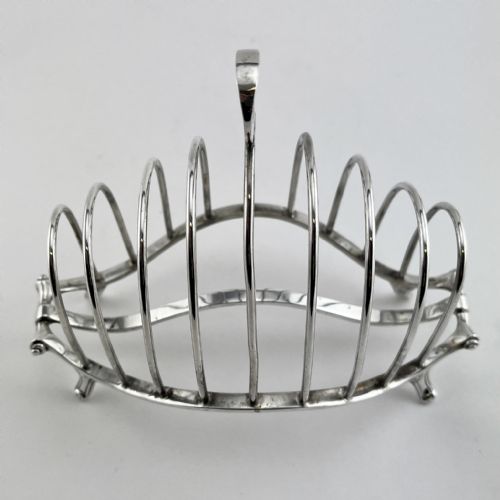
A victorian silver toast holder sits on the breakfast table with stiff vertical divisions designed to keep slices crisp and upright. The form appears primarily through the Victorian era alongside Georgian examples and Edwardian touches, reflecting a formal morning ritual.
Most examples found here take the form of traditional toast racks or dual-purpose letter holders. Makers produced both sterling silver and silver plate versions, ranging from simple wire frames to novelty designs.
The architectural wirework creates distinct arched or pointed dividers to separate individual rounds of toast. These domestic pieces capture a specific period of dining history where every food item held a dedicated silver vessel.
How they were made
Silversmiths constructed these pieces using sterling silver or through electroplating techniques onto a base metal or nickel silver foundation. Silver plate and electroplated nickel silver provided an accessible alternative to solid sterling without losing the bright reflective finish.
Makers formed the dividers from shaped wire soldered to a pierced or cast metal base, often supported on small ball or bracket feet. More elaborate pieces incorporated extending mechanisms or novelty forms cast in recognisable shapes like wagons or wishbones.
Some nineteenth century breakfast tables featured toast shaped like tiny railway wagons.
What varies in quality
Quality rests on the crispness of the wirework construction and the integrity of the soldered joints connecting the dividers to the base. Solid sterling silver examples carry distinct assay office marks, whereas plated pieces rely on the thickness of the silver coating over the base metal.
Design ambition separates standard wire frames from novelty pieces or items attributed to known designers like Christopher Dresser and firms such as Elkington. The weight of the metal and the balance of the feet dictate how substantial the piece feels on the table.
Elkington·Hukin and Heath
The Victorian Silver Toast Holder Glossary
- Sterling Silver
- A standard alloy composed of pure silver and other metals to ensure durability in domestic objects. It bears hallmarks indicating the maker, town, and date of assay.
- Silver Plate
- A manufacturing method applying a thin layer of silver over a base metal foundation. This technique allowed wider access to bright silver tableware during the nineteenth century.
- Electroplated Nickel Silver
- A specific base metal alloy of copper, nickel, and zinc coated with silver through an electrolytic process. It offered strength and a bright surface for intricate wirework.
- Novelty Toast Rack
- A decorative form shaped to resemble objects, animals, or transport rather than standard architectural wire frames. These pieces often doubled as letter holders on a desk.
- Aesthetic Movement
- A late nineteenth century design style emphasising visual qualities over narrative content. It produced clean, geometric forms that moved away from heavy Victorian ornamentation.
Victorian Silver Toast Holder: Frequently Asked Questions
Were toast racks used for letters?
Makers designed several nineteenth century examples with wider spacing to accommodate both toast and household correspondence on a desk or breakfast table.
Dual purpose pieces appear frequently in the archive, showing how Victorian households repurposed dining silver for daily correspondence.
How do I clean silver plate?
Gentle washing in warm soapy water removes everyday dust without harming the delicate plated surface or solder joints. Avoid harsh abrasive dips that strip the thin layer of silver from the base metal over time.
Soft cotton cloths help maintain the polish on intricate wire dividers without putting pressure on fragile joints.
What is a novelty toast rack?
Novelty pieces take whimsical shapes such as wishbones, wagons, or caravans instead of standard arched wire loops. These items reflect the playful side of Victorian dining table accessories.
Makers registered specific designs to protect their inventive shapes from competing firms.
How do I date an unmarked rack?
Stylistic clues like Aesthetic Movement geometry or Elkington stamps help narrow down the period when official hallmarks are absent. The transition from Georgian heavy casting to Victorian wirework also indicates the era of production.
Materials shift from early sterling and base metal plating to electroplated nickel silver as manufacturing techniques evolved through the nineteenth century.