




Victorian Silver Plate Basket
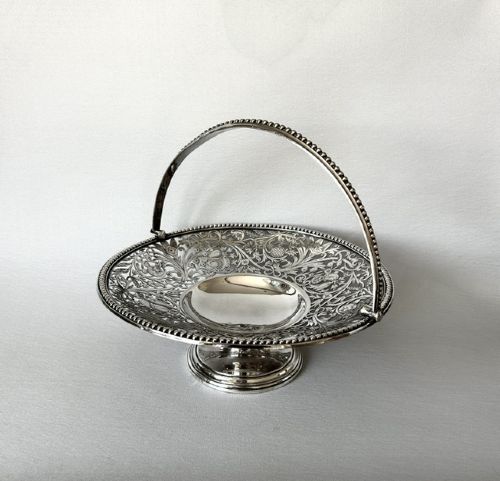
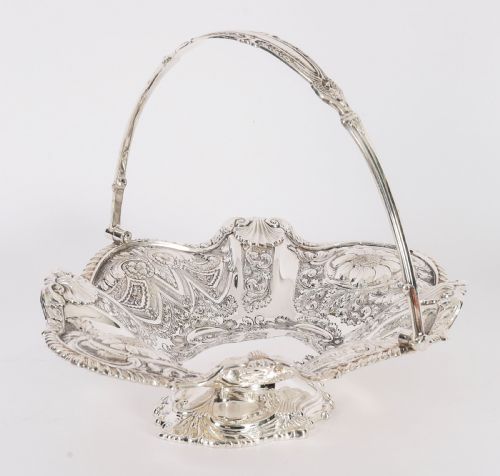
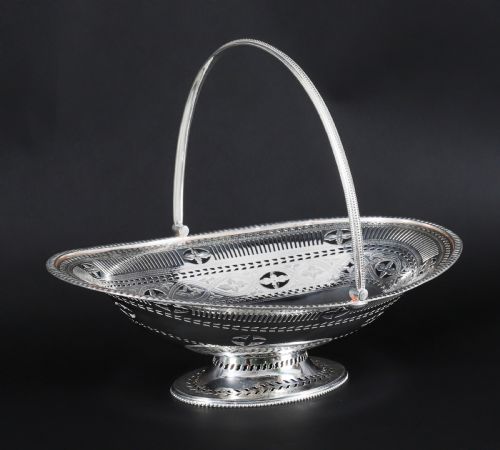
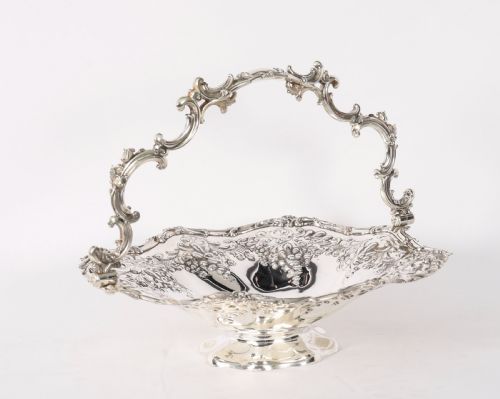
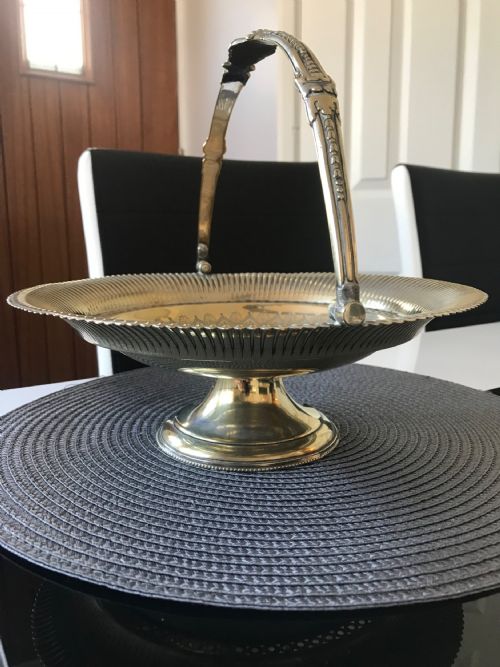
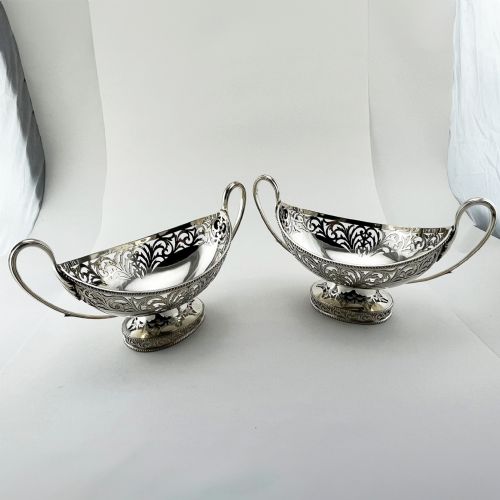
A victorian silver plate basket brings ornate nineteenth-century craftsmanship to the dining table through pierced metalwork and coloured glass inserts.
Victorian Silver Plate Basket
A victorian silver plate basket encompasses serverware forms such as fruit baskets, bread baskets, sugar baskets, centrepieces, and bonbon dishes. These pieces originate primarily from the nineteenth century and the Edwardian era, spanning the Victorian, Art Nouveau, and Aesthetic Movement styles.
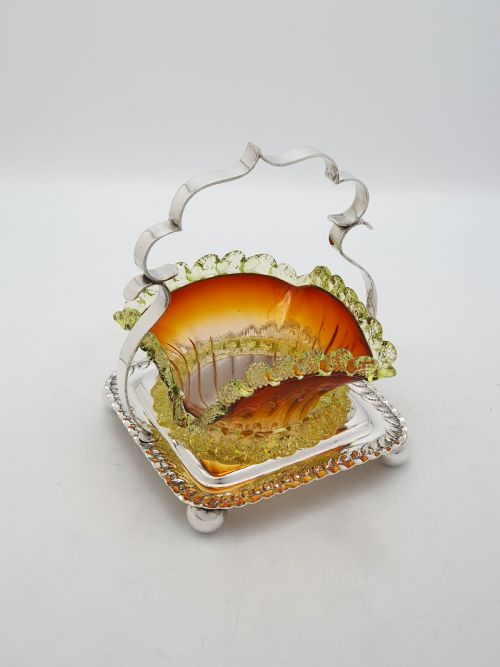
The version most commonly encountered on this page combines a silver plated frame with a coloured glass liner, such as cranberry, vaseline, or opaline glass. They function as decorative serving dishes for the table, often featuring swing handles and footed bases.
Materials and Techniques
Makers utilised silver plate and electroplated nickel silver as the primary base metals, shaping them through casting, piercing, and wire work. Structural components often incorporate brass or oak elements alongside the plated surfaces.
Glass inserts were produced using techniques like cut crystal and mould blowing to create coloured vessels in amber, green, and blue. Engraving and embossing finish the metalwork with floral motifs, wheat borders, and scroll feet.
Several designs abandon traditional symmetry altogether, opting instead for baskets shaped like coiled wicker or resting on swimming swans.
Judging Quality
Quality rests upon the crispness of the chased or engraved ornamentation and the structural integrity of the metal frame. Pieces featuring cast figural elements or original coloured glass liners demonstrate higher standards of production.
The weight of the silver plate and the precision of pierced latticework distinguish standard utilitarian items from finer table service pieces. Maker signatures from prominent firms provide a further indication of superior manufacturing.
George W. Scott & Sons Ltd·Walker & Hall·Thomas Bradbury·Roberts and Belk·James Dixon·Martin Hall·Samuel Godbehere·William Gallimore & Co·John Figg·Daniel & Arter·W.C.Griffiths·Elkington & Co
The Victorian Silver Plate Basket Glossary
- Silver Plate
- A thin layer of silver bonded to a base metal, commonly nickel silver or brass. This technique allowed nineteenth-century manufacturers to produce domestic metalware with the appearance of solid silver.
- Electroplated Nickel Silver
- A copper, nickel, and zinc alloy coated with silver through an electrolytic process. This material formed the durable foundation for much of the late Victorian serving ware.
- Vaseline Glass
- A transparent yellowish-green glass coloured with uranium dioxide. It glows brightly under ultraviolet light and frequently appears in Edwardian and Art Nouveau sweetmeat dishes.
- Bonbon Dish
- A small vessel designed for holding sweets, nuts, or small confections. These items often feature delicate swing handles and sit upon small decorative feet.
- Cranberry Glass
- A pinkish-red glass created by adding gold chloride to the molten glass batch. It provides a vibrant contrasting liner for open-work silver plated stands.
Victorian Silver Plate Basket: Frequently Asked Questions
What were silver plate baskets used for?
These vessels served functional roles on the nineteenth-century dining table for presenting bread, fruit, sugar, or sweetmeats during formal meals.
They also functioned as decorative centrepieces, utilising coloured glass inserts to catch the light during afternoon tea or dinner service.
How do you clean silver plate baskets?
Maintenance requires gentle washing with warm soapy water and a soft cloth to protect the plated surface from abrasive wear.
Harsh chemical dips should be avoided, particularly on pieces with fitted glass liners or delicate engraved decoration.
Are the glass liners usually original?
Many surviving pieces retain their matching coloured glass inserts, though replacement liners are common in antique tablewares.
Examining how the glass sits within the wirework or rim helps determine whether the liner matches the period of the stand.
How do you tell Victorian from Edwardian styles?
Victorian designs often display heavy ornamentation, such as neoclassical scrolls, floral embossing, and rich cranberry or blue glass liners.
Edwardian and Art Nouveau examples tend to feature more flowing, organic lines, lighter wirework, and lighter shades of green vaseline glass.