


Victorian Silver Novelty Bottle
These Victorian silver novelty bottle pieces combine practical utility with whimsical mimicry, offering collectors tangible fragments of nineteenth-century wit.
Victorian Silver Novelty Bottle
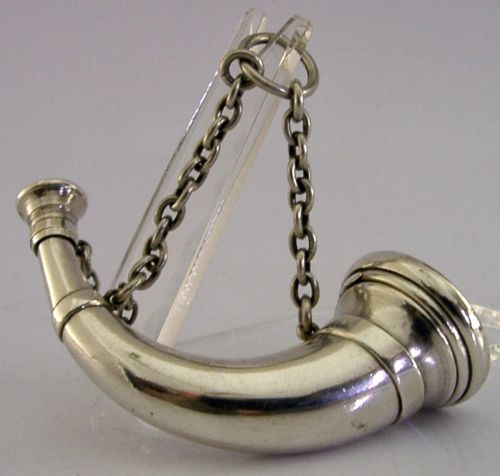
A victorian silver novelty bottle encompasses an imaginative array of functional containers and stoppers shaped as animals, instruments, and everyday objects. Collectors searching for a victorian silver novelty bottle will encounter items ranging from miniature hunting horns and violins to avian eggs and champagne flasks.
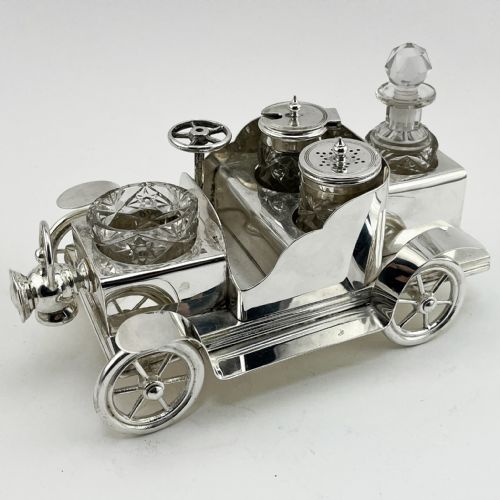
The selections span the nineteenth century into the early twentieth century, incorporating styles from Victorian novelty to Highland revival and Edwardian pieces. Formats include scent bottles, inkwells, decanters, cruet sets, and wine bottle stoppers.
Origins stretch across British workshops as well as continental makers in Holland and Germany. The unifying thread is the transformation of a mundane receptacle into a sculptural talking piece.
Assessing craftsmanship and finish
Quality rests in the fidelity of the sculptural form and the crispness of the chased or engraved detail on the silver surface. Superior examples maintain functional integrity alongside convincing anatomical or mechanical mimicry.
The integration of secondary materials, such as fitted glass liners or intact ceramic bodies, influences the overall cohesion of the piece. Hallmarks and maker marks add documentary weight to the physical execution.
The inventory records multiple instances of avian egg forms alongside botanical motifs like Scottish thistles and hunting horns.
Sampson Mordan·MacIntyre
The Victorian Silver Novelty Bottle Glossary
- Vinaigrette
- A small ornamental box or bottle containing a sponge soaked in aromatic vinegar. These fitted inner grilles often feature pierced scrollwork.
- Cruet set
- A collection of small bottles or cruets for holding condiments, typically housed in a dedicated stand. Stands range from simple frames to elaborate architectural styles.
- Sterling silver
- An alloy of silver containing ninety-two point five percent silver by mass and seven point five percent other metals, usually copper. This standard dominated British silver manufacture.
- Chasing
- A metalsmithing technique where the design is hammered into the front surface of the metal from the outside to sink it. This creates low relief without removing material.
- Silver plate
- A layer of silver applied to a base metal core such as copper or Britannia metal. Manufacturers adopted this method to offer decorative metalwork at lower cost.
Victorian Silver Novelty Bottle: Frequently Asked Questions
What were novelty scent bottles used for?
These vessels held liquid perfumes or smelling salts used to counteract unpleasant odours or fainting spells in crowded rooms.
Their miniature, disguised forms allowed owners to carry personal fragrances discreetly inside a pocket or reticule.
How do I care for silver and glass?
Clean silver components gently with a soft cloth to preserve delicate hallmarks and chased details, avoiding abrasive polishes.
Wash glass inserts by hand in warm water, ensuring cork or ceramic elements remain dry to prevent degradation.
Are these pieces marked with hallmarks?
Many British items bear standard hallmarks indicating the assay office, date letter, and maker's mark.
Continental pieces or plated items often feature maker stamps or alternative purity marks instead of standard British sterling stamps.
How can I tell the period?
Stylistic cues such as Victorian naturalism or Edwardian restraint point toward specific decades of manufacture.
Assay marks and registry numbers provide the most precise chronological indicators for dated pieces.