


Victorian Silver Mounted Bowl
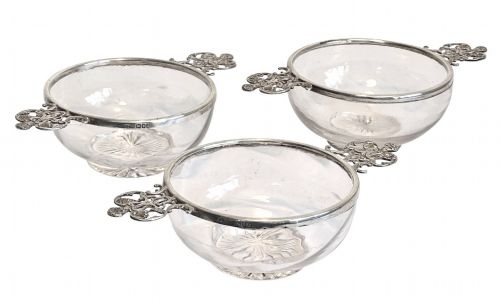
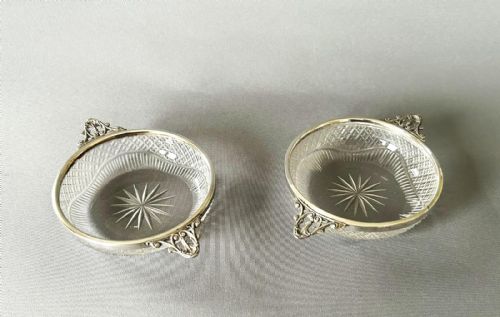
These victorian silver mounted bowl pieces pair precious metal rims and mounts with cut crystal, glass, stoneware, or carved horn.
Victorian Silver Mounted Bowl
A victorian silver mounted bowl combines a vessel body of glass, crystal, stoneware, ceramic, horn, or oak with fitted metal rims, handles, or servers. You will encounter various forms here, ranging from small trinket dishes and sweet bowls to large salad servers and preserve pots.
The objects span the nineteenth century into the Edwardian era, carrying designations such as Arts and Crafts, Gothic, and Aesthetic Movement alongside standard Victorian and Edwardian periods. Most examples rely on cut glass and crystal bodies paired with sterling silver or silver-plated mounts.
Materials and construction
Makers combined heavy-walled cut crystal, moulded glass, or fired stoneware with cast and hammered silver or silver plate. Glass bodies feature deep wheel-cut patterns, while stoneware surfaces display relief-carved botanical or geometric decoration.
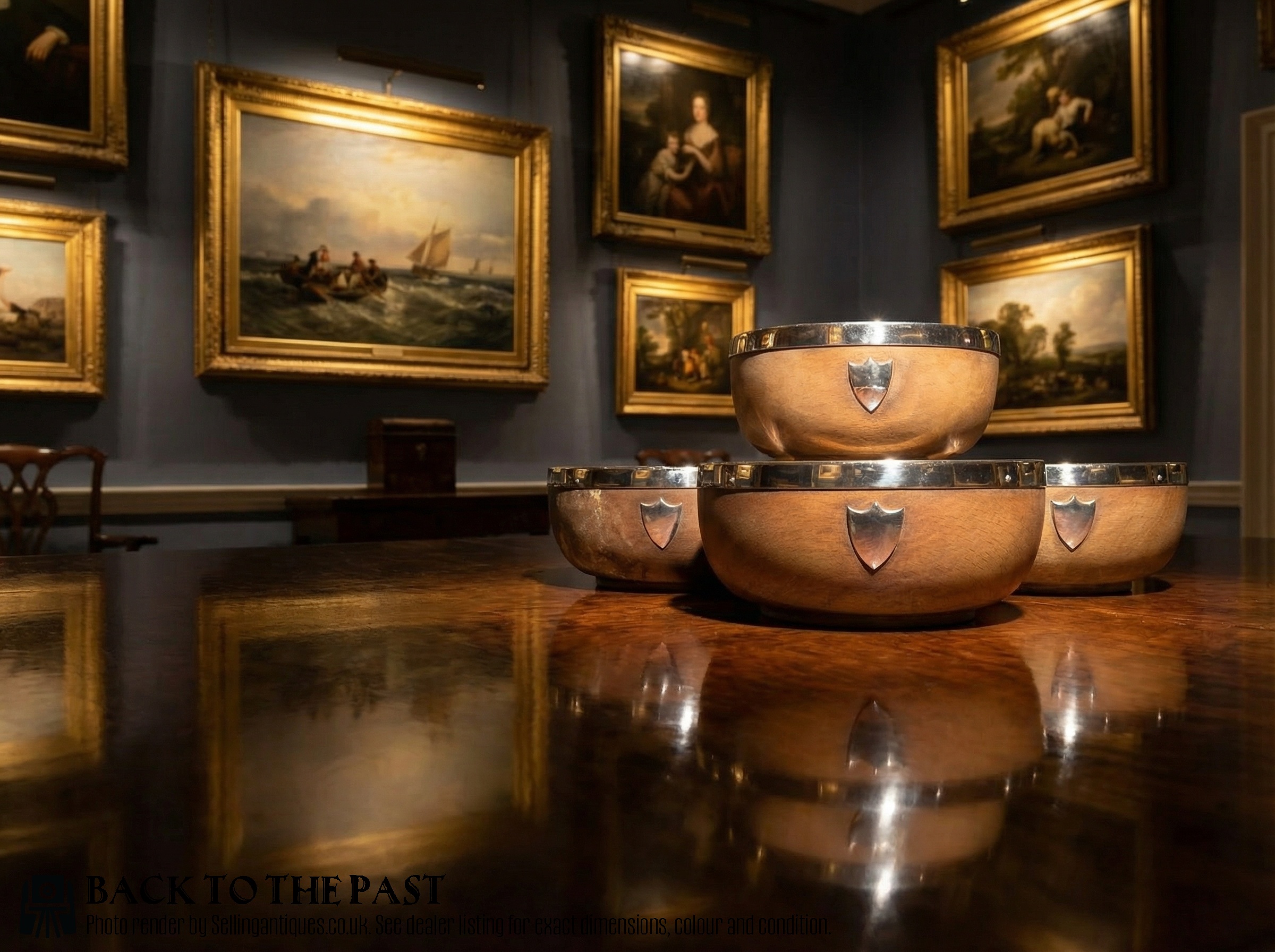
Metal mounts were shaped to fit the rim or base of each vessel precisely, secured with pins, collars, or adhesives. Oak and carved horn versions utilise similar metal rims and handle attachments to reinforce natural organic materials.
Materials recorded across the inventory include sterling silver, silver plate, cut crystal, stoneware, ceramic, oak, and carved horn.
Judging quality and execution
Superior examples demonstrate crisp, deep cutting in the crystal or precise hand-carving in stoneware and horn, paired with heavy gauge silver mounts bearing clear hallmarks. Lesser pieces feature thinner glass, pressed rather than cut patterns, and light silver plating over base metal.
The integration of the metal mount to the vessel dictates the overall refinement, with top-tier pieces showing seamless fitting and balanced proportions between the mount and the body.
William Comyns·Doulton Lambeth·Frank Butler
The Victorian Silver Mounted Bowl Glossary
- Hallmark
- Official stamps applied to precious metals indicating the assay office, standard of purity, and year of manufacture. These small stamped marks help date and attribute silver mounts accurately.
- Cut Crystal
- Glass containing lead oxide that increases weight and refractive index, allowing for deep, sharp geometric facets. This material forms the sparkling body of many serving bowls and sweet dishes.
- Stoneware
- A dense, impermeable ceramic fired at high temperatures, often seen in pieces from potteries like Doulton Lambeth. It provides a robust, textured alternative to clear glass.
- Silver Plate
- A thin layer of silver bonded to a base metal core such as copper or Britannia metal. This technique offered the visual appeal of solid silver at a lower production cost.
- Mount
- A fitted metal element attached to the rim, base, or handles of a non-metal vessel. Mounts provide structural reinforcement and decorative contrast.
Victorian Silver Mounted Bowl: Frequently Asked Questions
What are victorian silver mounted bowl items made from?
These pieces combine bodies of cut glass, cut crystal, stoneware, ceramic, polished oak, or carved horn with mounts made of sterling silver, silver plate, or white metal.
The variety of materials reflects both everyday domestic use and formal dining traditions across the nineteenth and early twentieth centuries.
How were these bowls originally used?
They served multiple dining and dressing table functions, operating as salad bowls, sweet or candy dishes, preserve pots, and trinket containers.
Larger versions often came equipped with matching servers, while smaller dishes held personal accessories or confectionery.
How do I tell Victorian pieces from Edwardian ones?
Victorian examples often lean towards ornate cut crystal, Gothic influences, or Aesthetic Movement decoration, frequently bearing hallmarks from the late nineteenth century.
Edwardian pieces tend to introduce materials like polished oak and carved horn, showing simpler lines associated with early twentieth-century design.
Are the silver mounts usually solid silver or plated?
The listings show a split between sterling silver and silver-plated mounts, alongside occasional white metal elements on specific items.
Hallmarks on the metal components generally confirm whether the mount is solid silver or plated.