

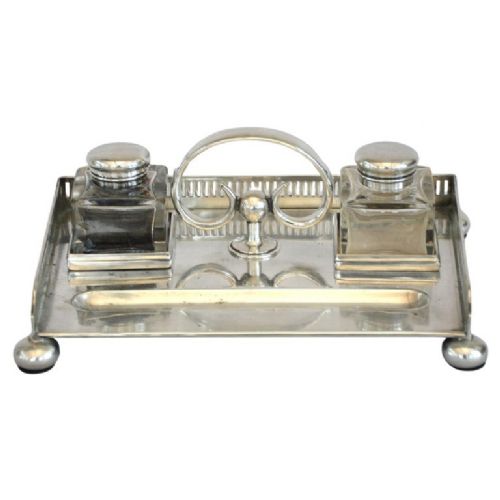
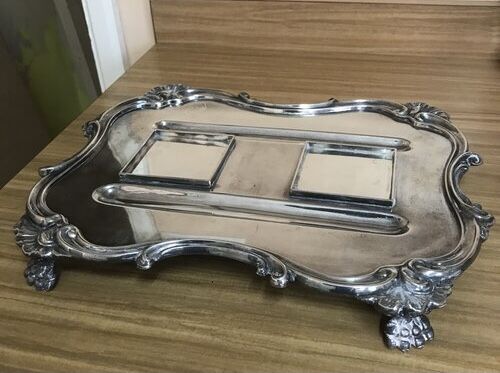


Victorian Silver Ink Stand
A victorian silver ink stand brings period writing gear to the modern desk, offering heavy metal mounts and fitted glass inkwells.
Victorian Silver Ink Stand
A victorian silver ink stand serves as a desk accessory designed to hold inkwells, pens and other writing implements in a single orderly tray. Most examples on this page date from the Victorian and Edwardian periods, stretching from the late nineteenth century into the early twentieth century.
The forms range from simple desk tidies in oak or silver plate to elaborate trays with glass wells and novelty bell shapes. Buyers encounter items made for personal writing desks, often incorporating spaces for nibs, stamps and pens alongside the central well.
Makers utilised various base materials including sterling silver, silver plate, and exotic timbers such as coromandel and satinwood fitted with silver mounts. These desk pieces reflect the formality of nineteenth-century correspondence and the high standard of period metalwork.
How they were made
Silversmiths combined sterling silver or heavy silver plate with cut glass and heavy hardwoods like oak, coromandel and satinwood. Metal mounts were cast, chased or stamped, then fixed to wooden bases or formed entirely as self-contained silver trays.
Glass inkwells featured heavily cut patterns to catch the light on the desktop, often capped with hinged silver lids that sealed the well against dust and evaporation. Makers integrated pen rests directly into the cast frame or wooden tray during construction.
Victorian Silver Ink Stand Retail Price Guide 2026
Typical asking prices for victorian silver ink stand among the pieces listed under this phrase on Sellingantiques today, from the lower quarter to the upper quarter. They describe what is for sale here now, not the wider market.
One listed piece takes the form of a functional silver bell, allowing a writer to summon assistance without putting down the pen.
What varies in quality
The distinction between standard desk accessories and finer items lies in the weight of the metal and the complexity of the cast decoration, such as Rococo Revival or Gothic Revival motifs. Heavier plating and solid sterling construction set apart the more substantial pieces.
Material combination also defines the standard, with timber trays featuring substantial silver mounts and detailed cabinetry representing superior workmanship compared to basic plated brass forms.
Walker And Hall·Rupert Favell·Elkington
The Victorian Silver Ink Stand Glossary
- Silver plate
- A layer of silver fused to a base metal core, commonly utilised by manufacturers for large desk stands.
- Cut glass
- Glass decorated by cutting facets or patterns into the surface, frequently used for the internal ink bottles.
- Coromandel
- A dense, dark cabinet wood with contrasting light grain, employed for luxury desk trays.
- Desk tidy
- A multi-compartment tray designed to organise stationery, pens and small desk accessories.
- Novelty silver
- Silver items shaped to represent familiar objects or animals, such as bells or figures.
Victorian Silver Ink Stand: Frequently Asked Questions
What is a victorian silver ink stand?
It is a desk tray fitted with glass inkwells and pen rests, made to organise writing materials in the nineteenth and early twentieth centuries.
These items were kept on writing desks in studies and offices to hold ink and prevent spills during correspondence.
How do I identify the period?
Period markers include hallmarks on the silver mounts, registry dates stamped into the metal, and the overall decorative style such as Gothic Revival or Rococo Revival.
Cabinet woods like coromandel and satinwood alongside cut glass inserts also point toward late nineteenth-century manufacturing practices.
Were these used in homes?
They were standard furnishings for middle and upper-class homes, placed on library desks and Davenport writing slopes.
Households utilised them daily for writing letters, managing household accounts, and recording journal entries before the widespread adoption of fountain pens.
How do I clean the silver parts?
Silver mounts require gentle cleaning with a specialist silver cloth to remove tarnish without disturbing the underlying metal or plate.
Harsh abrasive pastes should be avoided, particularly near fitted wooden bases and glass inserts where moisture might cause damage.