


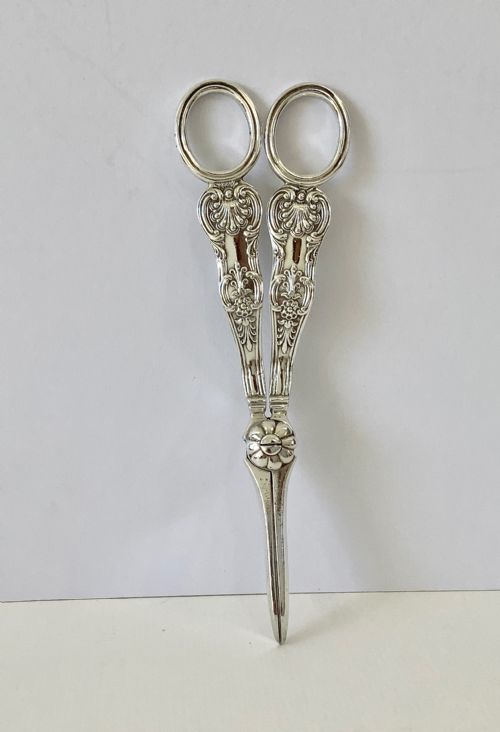

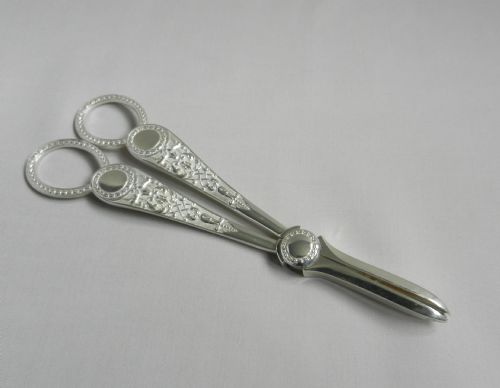
Victorian Silver Grape Shears
Victorian silver grape shears are purpose-built dining implements designed to snip grape clusters at the table, offering a touch of formal elegance.
Victorian Silver Grape Shears
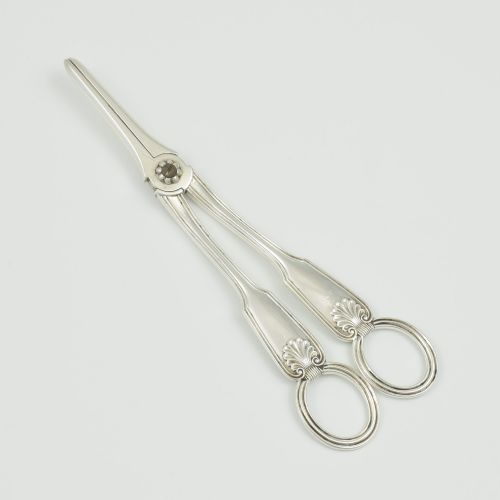
Victorian silver grape shears are specialist cutting implements designed specifically for portioning fruit at the dining table during the nineteenth century. The forms appearing on this page span the Victorian, William IV, and Edwardian periods, stretching from eighteen hundred into the early twentieth century.
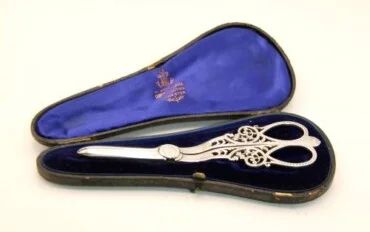
Buyers will encounter both standalone pairs of grape scissors and comprehensive fruit sets housed in fitted cases lined with silk, velvet, or leatherette. The dominant materials are sterling silver and silver plate, occasionally accompanied by silver gilt finishes.
Makers often fashioned these objects as grape shears or grape scissors, sometimes incorporating them into larger cutlery services alongside nutcrackers and fruit spoons.
Materials and construction
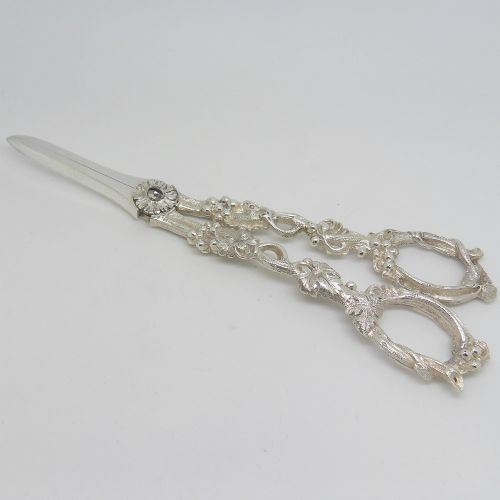
Silversmiths utilised sterling silver and silver plate as the primary metals, applying techniques such as casting, engraving, and gilding to shape the handles and blades. Cast acanthus designs and naturalistic grape vine decoration required skilled moulding and hand-chasing by master craftsmen.
Many examples pair solid sterling silver construction with fitted presentation boxes lined in velvet, silk, leather, and leatherette to protect the metal during storage.
Listings feature sterling silver and silver plate across Victorian, William IV, and Edwardian periods, alongside fitted cases in velvet, silk, and leatherette.
Judging the work
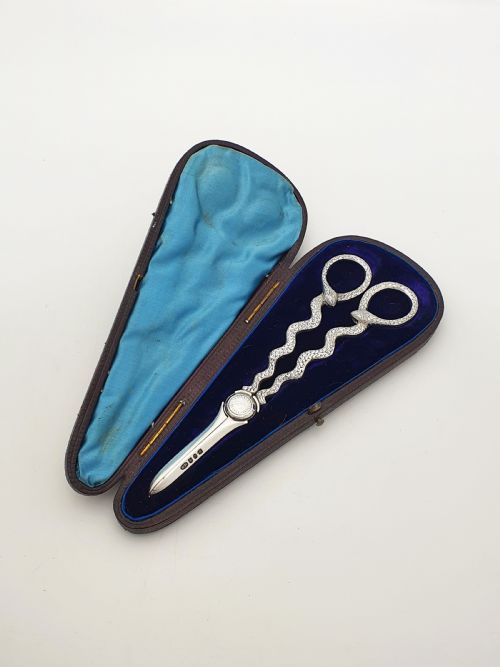
Quality rests in the crispness of the cast decoration and the weight of the metal, where heavy cast silver surpasses lighter stamped alternatives. Elaborate details like snake handles or fully chased acanthus leaves demonstrate superior craftsmanship compared to plain functional blades.
The presence of an original fitted case lined in silk and velvet elevates the object, particularly when maker marks remain sharp and clear on the silver surface.
Goldsmiths & Silversmiths Co.·Gibson & Langman·Paul Storr·Chawner & Co·Reilly & Storer·Elizabeth Eaton·Francis Higgins·Charles Boyton·Martin, Hall & Co.
The Victorian Silver Grape Shears Glossary
- Sterling silver
- A silver alloy containing ninety-two point five percent pure silver by mass, standard for quality British tableware.
- Silver gilt
- Sterling silver coated with a thin layer of gold on the surface, providing a rich two-tone appearance.
- Cast silver
- Molten metal poured into a mould to create three-dimensional relief patterns such as acanthus leaves or grape vines.
- Kings Pattern
- A traditional ornate cutlery pattern featuring a shell and scroll motif at the terminal of the handle.
- Hallmark
- Official stamps struck into precious metals to indicate the assay office, maker, and year of manufacture.
Victorian Silver Grape Shears: Frequently Asked Questions
What are victorian silver grape shears used for?
These specialist implements were used at the dining table to sever individual small clusters of grapes from a larger bunch without damaging the fruit.
They allowed diners to serve themselves cleanly during formal dessert courses in the nineteenth century.
How do I store cased grape shears?
Cased sets should be kept in their original fitted boxes lined with silk and velvet to prevent the silver from scratching against other objects.
Store them in a dry environment away from direct sunlight to preserve the leatherette and fabric interiors.
Why do some grape shears feature animal motifs?
Victorian designers frequently incorporated naturalistic elements, such as snake handles or grape vine decoration, to reflect the organic shape of the fruit.
These decorative choices elevated practical dining tools into ornate works of art.