

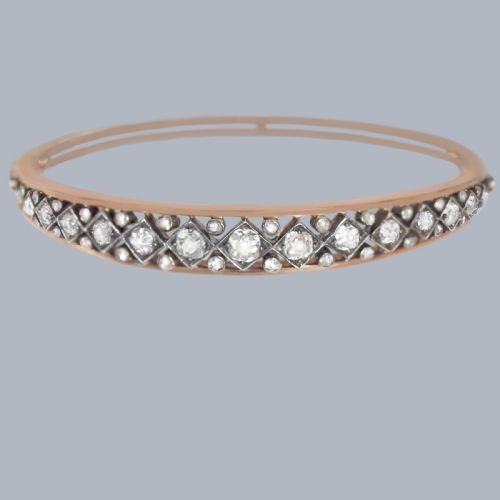
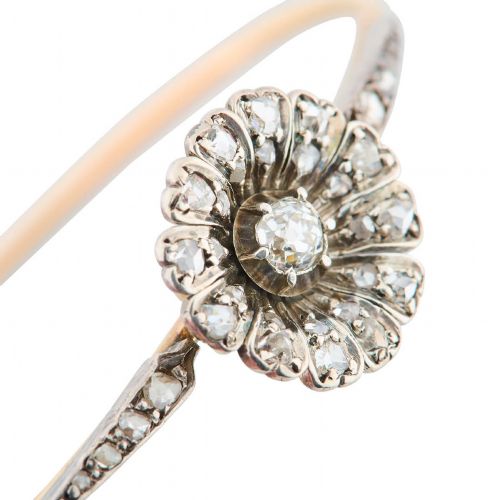


Victorian Silver Cuff Bracelet
These Victorian silver cuff bracelets combine substance and intricate detail, offering a wearable piece of nineteenth-century craftsmanship.
Victorian Silver Cuff Bracelet
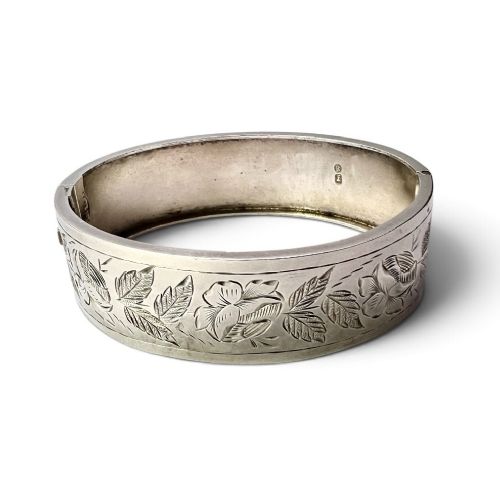
When you search for a Victorian silver cuff bracelet, you encounter hinged bangles and wide cuffs originating from the nineteenth century. These pieces predominantly take the form of substantial hinged bangles and wide cuffs designed to sit snugly on the wrist.
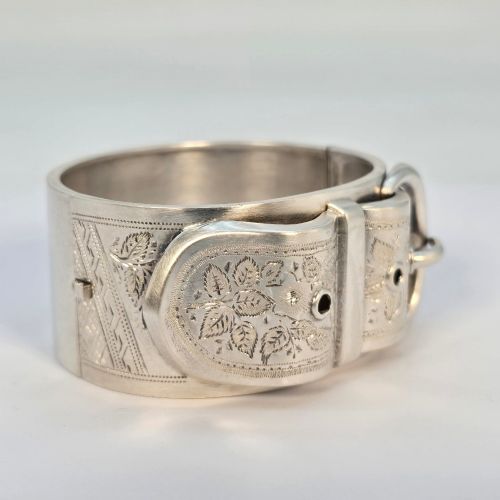
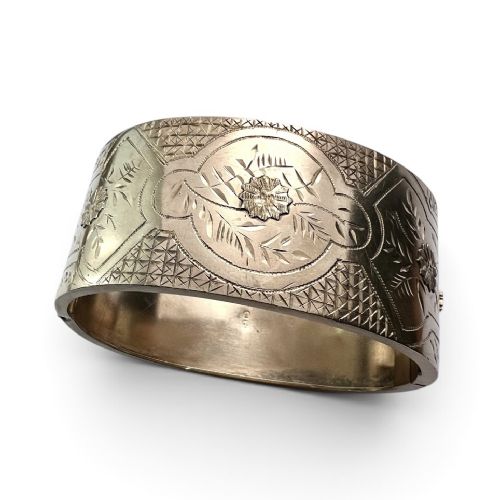
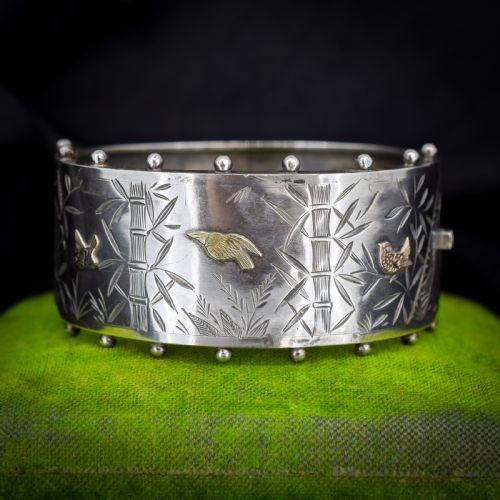
The versions you are most likely to meet on this page span the Victorian period and the Victorian Aesthetic Movement. They showcase varied motifs including floral engravings, birds, bamboo, and buckle designs.
Originating largely from British workshops, some examples incorporate regional assay office dates such as Chester 1882 or English hallmarks from 1893. Alongside solid sterling silver, certain pieces integrate contrasting gold accents and gemstones.
How they were made
Makers utilised sterling silver and solid silver as the primary foundation for these hinged cuffs, often combining them with 15ct gold, rose gold, and yellow gold accents. This dual-metal technique created distinct colour contrasts on the wrist.
Surface decoration relied heavily on hand engraving to render floral and aesthetic movement patterns, occasionally enhanced by applied gold birds and bamboo imagery. Enamel, pearls, and old mine cut diamonds were also flush-set or mounted into the silver and gold framework.
Structural integrity was achieved through concealed hinges and secure clasps, allowing rigid cuffs to open and fit the arm comfortably. Hallmarks were stamped directly into the metal to verify the silver standard and year of production.
Victorian Silver Cuff Bracelet Retail Price Guide 2026
Typical asking prices for victorian silver cuff bracelet among the pieces listed under this phrase on Sellingantiques today, from the lower quarter to the upper quarter. They describe what is for sale here now, not the wider market.
Corset bangles earned their name because their rigid structure and mechanical clasps mirrored the laced architecture of Victorian undergarments.
What varies in quality
The depth and crispness of the hand engraving distinguish finer pieces from simpler productions. Sharply defined floral and avian motifs retain their clarity, whereas worn engraving indicates heavy past use or shallower initial work.
The integration of mixed metals and precious stones introduces another tier of distinction. Cuffs incorporating multi-coloured gold overlays, enamel work, pearls, or old mine cut diamonds represent a more ambitious standard of manufacturing than plain silver examples.
Structural robustness in the hinge and clasp mechanism dictates the daily wearability of the piece. A tightly fitted, secure hinge that aligns evenly when closed demonstrates superior original assembly.
The Victorian Silver Cuff Bracelet Glossary
- Hinged Bangle
- A rigid circular or oval bracelet divided by a hinge and secured with a clasp for ease of wear. This design allows the cuff to fit closely to the wrist.
- Old Mine Cut
- An early diamond cut characterised by a cushion shape, a high crown, and a small table. These stones were shaped by hand during the nineteenth century.
- Aesthetic Movement
- A nineteenth-century design style focusing on visual beauty rather than narrative meaning. It frequently employed asymmetrical floral and avian motifs.
- Hallmark
- An official stamp applied to precious metals indicating the purity, maker, and assay office. British pieces often display date letters and city marks.
- Assay Office
- An organisation that tests the purity of precious metals and stamps them with official marks. Towns such as Chester maintained their own offices during the Victorian era.
Victorian Silver Cuff Bracelet: Frequently Asked Questions
How do I wear a antique cuff?
These hinged bangles open via a side pivot, allowing you to slip them over the wrist before snapping the clasp securely shut. They are substantial enough to be worn alone as a statement piece.
Ensure the clasp clicks firmly into place before going about your day. Avoid wearing them during heavy manual tasks to protect the delicate engravings and any set stones.
What metals are used in these bracelets?
The primary metal across these items is sterling silver, frequently paired with yellow and rose gold highlights. Some pieces incorporate fifteen-carat gold sections to create contrasting two-tone colour schemes.
Diamonds, pearls, and enamel also appear as decorative additions upon the silver and gold foundations. Hallmarks stamped into the metal confirm the specific standard of the silver used.
How can I tell the period?
Nineteenth-century pieces often feature specific design vocabularies like Aesthetic Movement flora and fauna, alongside hand-engraved floral patterns. Structural elements such as wide hinged cuffs and integrated box clasps point directly to this era.
English pieces frequently carry legible hallmarks and date letters stamped inside the band. Comparing these against established assay records provides a reliable production year.
Are these bracelets sized for everyday wear?
Most of these nineteenth-century bangles are manufactured as rigid circular or oval cuffs designed to fit a standard wrist. Their internal diameters typically accommodate average adult sizing through the hinged opening mechanism.
Because they do not flex, checking the inner circumference and width listed is essential. They sit rigidly on the wrist rather than conforming to the arm.