

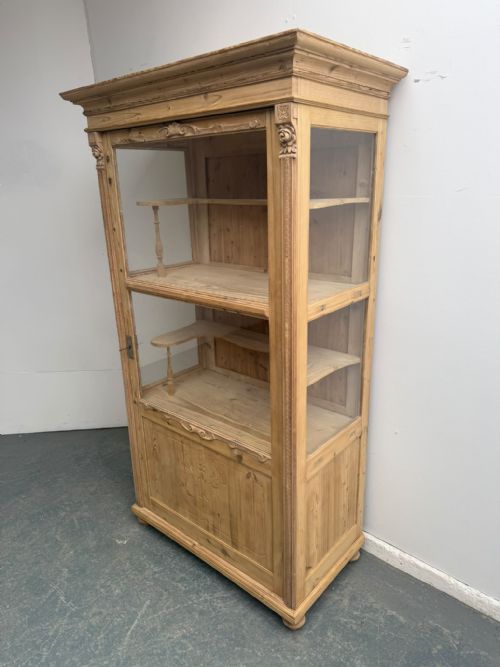


Victorian Shop Display Cabinet
When sourcing a victorian shop display cabinet, you are selecting a commercial showcase designed to present goods with absolute clarity.
Victorian Shop Display Cabinet
A victorian shop display cabinet bridges domestic furniture and commercial utility, originating from chemists, drapers, and grocers of the nineteenth century.
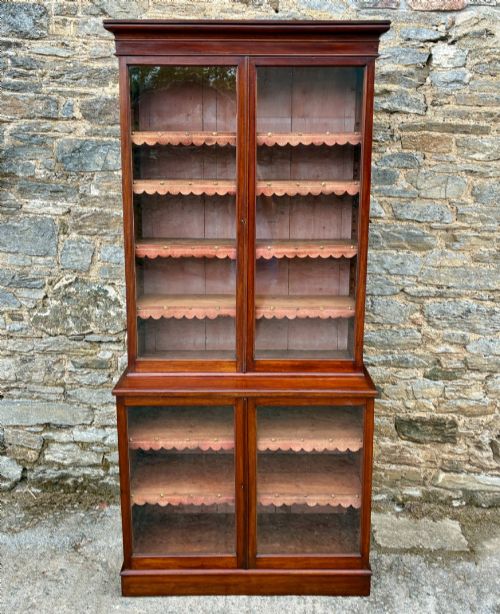
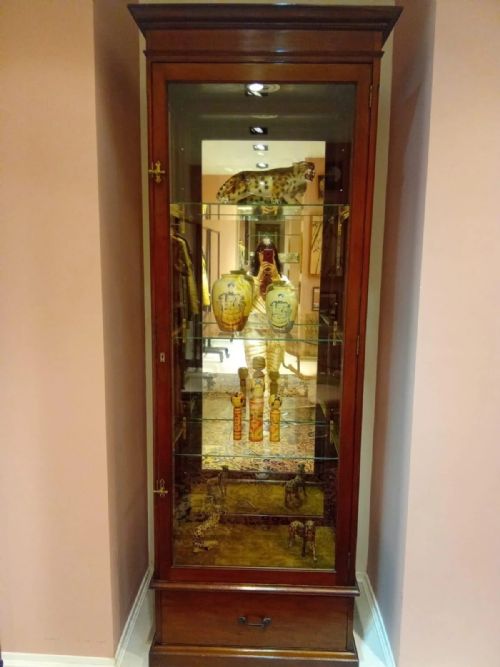
The most frequent examples encountered on this page are mahogany table-top counters, tall upright glazed showcases, and multi-drawer haberdashery units.
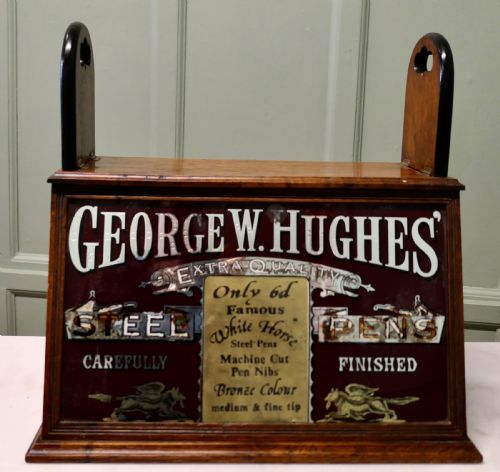
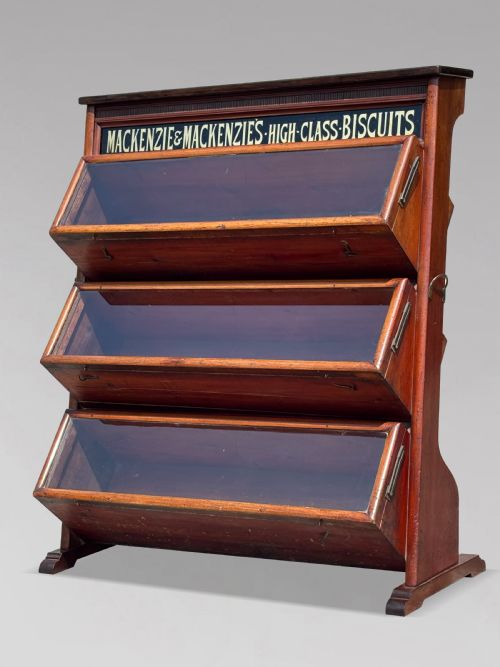
Commercial fixtures from this era often bear the original hand sign-written advertising for confectionery, tobacco, or pharmaceuticals, linking each piece directly to its retail past.
Materials and Construction
Makers relied primarily on dense hardwoods such as mahogany and American walnut to bear the weight of heavy plate glass and frequent customer interaction.
Pine and oak served extensively for internal framing and banks of multi-drawer units, while brass hardware, bevelled mirrors, and marble tops completed the commercial specification.
Victorian Shop Display Cabinet Retail Price Guide 2026
Typical asking prices for victorian shop display cabinet among the pieces listed under this phrase on Sellingantiques today, from the lower quarter to the upper quarter. They describe what is for sale here now, not the wider market.
Several cabinets retain hand-painted advertisements for chocolate and fishing gear, proving that Victorian shopkeepers understood the power of point-of-sale branding.
Gradations of Excellence
Quality rests upon the integrity of the original glazing, the precision of sliding or hinged door mechanisms, and whether internal shelves remain adjustable.
Finer commercial pieces exhibit superior timber selection, subtle architectural mouldings, and crisp, authentic hand-painted retail signage rather than later embellishment.
John Stow Ltd of Bradford·Manoah Rhodes & Sons Ltd·Philip Joseph & Sons London·John Sharpe Leicester
The Victorian Shop Display Cabinet Glossary
- Vitrine
- A glass-sided display case designed to protect delicate merchandise while offering all-round visibility. These enclosures form the core of commercial retail displays.
- Haberdashery cabinet
- A specialised storage unit featuring multiple shallow drawers, often with glass fronts, built for sorting ribbons, threads, and small drapery goods.
- Countertop cabinet
- A small display case scaled to sit upon a shop service counter for immediate customer engagement. They frequently feature rear-opening doors for the assistant.
- Sign-written
- Lettering applied by hand using signwriter's paint to advertise specific brands or proprietors directly onto the timber or glass. This acts as a primary indicator of historical trade use.
Victorian Shop Display Cabinet: Frequently Asked Questions
How were these cabinets used?
Merchants utilised these glazed enclosures on counters and shop floors to protect small, valuable goods from dust and handling while tempting buyers with clear visibility. Confectionery, pharmaceuticals, and sewing cottons all found their place behind the glass.
At the close of the trading day, merchants locked the timber and brass fastenings to secure valuable stock overnight, combining practical security with elegant merchandising.
How do I clean the glass?
Old plate glass requires gentle treatment using a mild, non-ammonia cleaner applied to a soft cloth rather than directly onto the surface. This prevents moisture from seeping into aged wooden frames or damaging original putty.
Take care around hand sign-written lettering, as harsh chemicals or excessive scrubbing can lift historic paintwork from the timber or glass.
Are the shelves adjustable?
Many upright models feature wooden or brass ratchets allowing internal glass shelves to be moved for varying heights of stock. Table-top versions typically rely on fixed supports due to their compact proportions.
Checking the internal fittings reveals whether the shelving configuration remains entirely original to the cabinet's commercial manufacturing period.
Can I use one at home?
These commercial fittings adapt readily to domestic interiors for housing collections of ceramics, glassware, or books. Their slender proportions and glazed panels draw light into modern rooms while providing dust-free storage.
Placing a tall showcase or counter unit requires measuring ceiling clearance and floor space carefully, as nineteenth-century proportions can prove surprisingly substantial.