



Victorian Shell Art
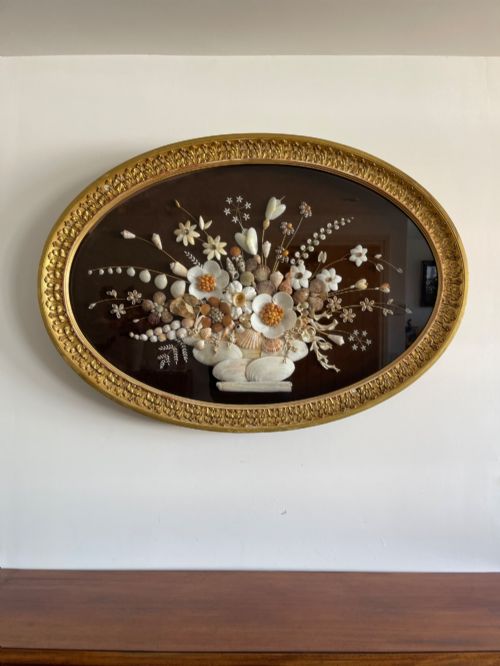
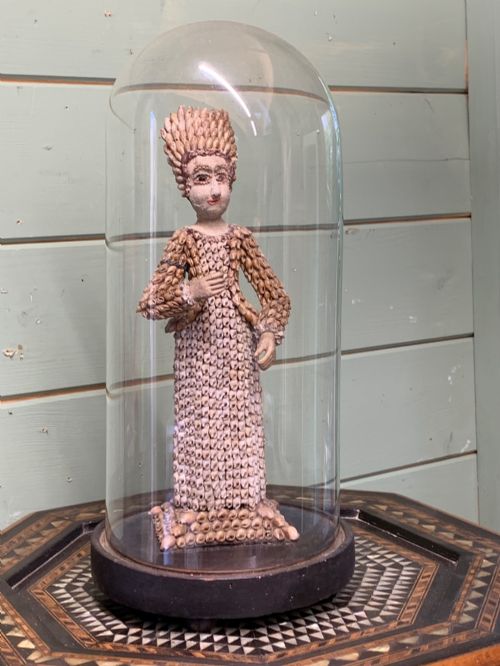
Victorian shell art brings maritime folk tradition into the home through intricate groupings of seashells applied to boxes, jars, and architectural models.
Victorian Shell Art
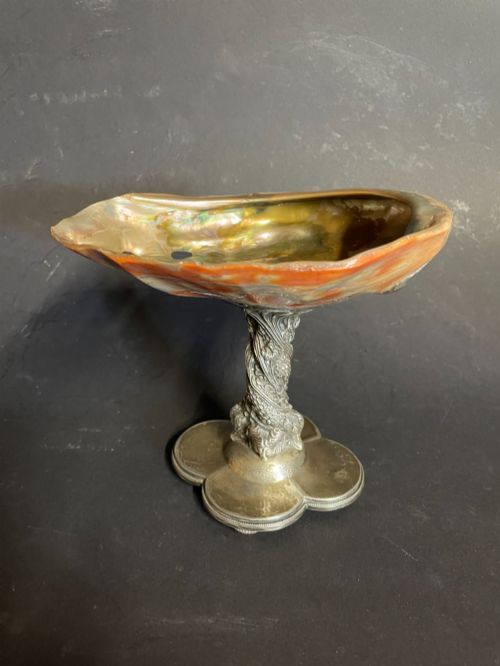
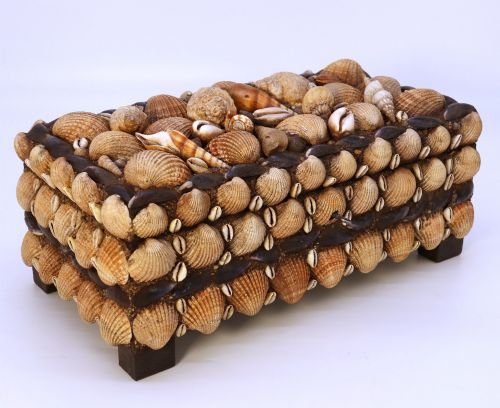
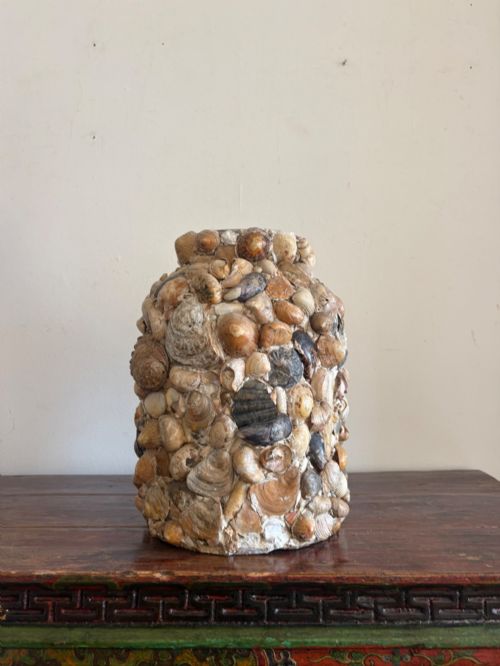
Victorian shell art encompasses tactile decorative pieces formed from natural marine specimens, including trinket boxes, jars, and architectural models. These objects capture the nineteenth-century fascination with coastal souvenirs and maritime craft.
The versions most commonly met on this page range from English folk art shellwork boxes to French jars and dioramas. Each piece demonstrates how makers arranged shells into geometric patterns and figurative displays.
How they were made
Makers built these pieces using wood, glass, and plaster as a foundation to support the weight of numerous seashells. Sea shells were meticulously pressed into adhesive bases, sometimes supplemented by gesso to secure smaller specimens.
Artisans combined organic materials like coconut shell and mother of pearl alongside textiles and framing to complete complex pictorial and structural compositions.
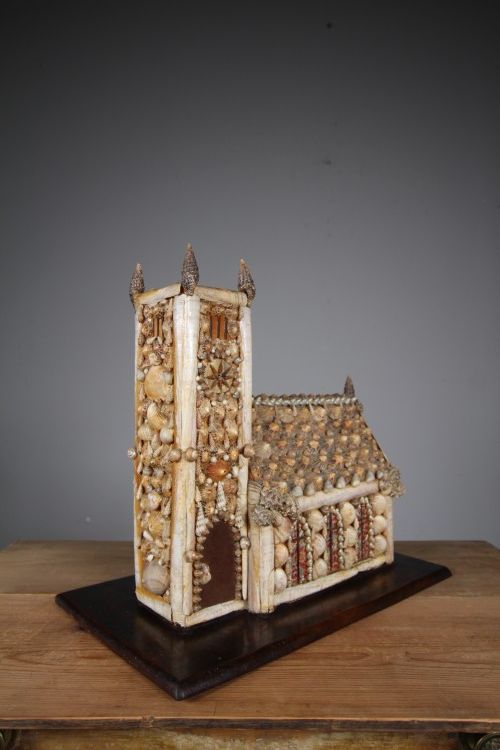
A detached house made entirely of shells sits quietly among the boxes, waiting for a very small tenant.
What varies in quality
The division between simpler items and the finest work lies in the density and variety of the shell application. Superior examples display complete, unbroken specimens arranged with tight geometry that completely conceals the underlying base.
Condition and structural integrity govern value, as missing shells disrupt the rhythm of decorative patterns. Pieces retaining their original glass domes or wooden frames demonstrate better preservation of delicate maritime elements.
The Victorian Shell Art Glossary
- Folk art
- Utilitarian and decorative objects created by self-taught or traditional makers outside academic traditions. This style defines much of the nineteenth-century maritime work found here.
- Gesso
- A plaster-based compound used to prepare surfaces or act as a sculptural binder. Makers utilised it to anchor intricate shell arrangements.
- Diorama
- A three-dimensional scene housed within a shallow box or frame. These displays often incorporate layered shells to create depth.
- Mother of pearl
- The iridescent inner layer of mollusc shells, harvested for its lustrous surface. It appears frequently in inlaid plaques and decorative panels.
Victorian Shell Art: Frequently Asked Questions
What is Victorian shell art?
Victorian shell art comprises decorative objects, boxes, and models created by applying natural seashells to solid foundations. These pieces reflect nineteenth-century folk traditions and maritime interests.
They serve as tactile reminders of coastal culture, utilising varied species of sea shells arranged in repetitive patterns and architectural forms.
How were shell boxes used?
Shellwork boxes functioned as trinket containers and decorative desk accessories in nineteenth-century interiors. Their textured surfaces made them popular display items on mantelpieces and parlour tables.
Makers constructed them from wood or cardboard before covering the exteriors entirely in pasted marine specimens.
How do I care for shell art?
Protect delicate shell pieces from direct sunlight and excessive humidity to prevent the underlying adhesives from failing. Gentle dusting with a soft, dry brush maintains the surface without dislodging small specimens.
Avoid using liquid cleaners or polishing agents on the shell surfaces, as moisture damages old plaster and paper backings.
How old is this art?
The pieces listed span primarily the nineteenth and early twentieth centuries, encompassing the Victorian and Edwardian eras. Certain items extend into the interwar period of folk art production.
Stylistic markers and material analysis help distinguish genuine nineteenth-century examples from later folk revivals.