




Victorian Serving Cabinet
A victorian serving cabinet brings heavy timber and formal utility into a dining room, offering deep storage for silver and china.
Victorian Serving Cabinet
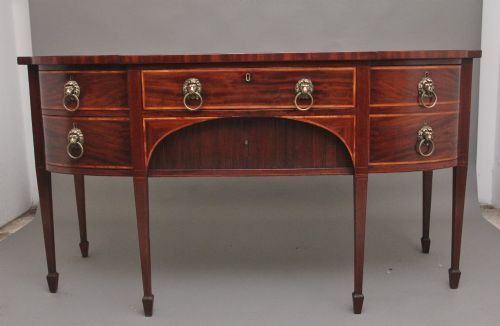
When you search for a victorian serving cabinet, you encounter sturdy timber furniture designed for dining rooms and large parlours to hold tableware and food. These pieces span the nineteenth century and encompass heavy sideboards, buffets, and servers alongside large wooden cabinets.
The most common versions on this page are constructed from mahogany, rosewood, and pollard oak, often featuring enclosed cupboards beneath a display surface or serving top. Many incorporate practical additions such as drawers for cutlery and lower shelves for larger dishes.
Some examples lean towards revival styles, displaying ornate carving and figures derived from earlier eras while retaining the heavy proportions typical of the period. A buyer selects these items to anchor a dining space with functional historical furniture.
Materials and construction methods
Makers relied on dense hardwoods such as mahogany and walnut, frequently selecting figured veneers and pollard oak to create striking patterns across large flat surfaces. Timber frames were joined with traditional techniques to support heavy loads of serving vessels and silverware.
Decorative details included applied carvings, brass hardware, and occasional inlay work to highlight doors and drawer fronts. Finishers applied shellac or polish to seal the wood and bring out the natural grain.
Victorian Serving Cabinet Retail Price Guide 2026
Typical asking prices for victorian serving cabinet among the pieces listed under this phrase on Sellingantiques today, from the lower quarter to the upper quarter. They describe what is for sale here now, not the wider market.
Several items include adjustable feet and hidden dry bar compartments designed for discreet nineteenth century hospitality.
Assessing quality in construction
The standard of a victorian serving cabinet depends upon the selection of timber and the precision of the cabinet work in structural joints and drawer construction. Superior examples display carefully matched veneers and solid timber framing that remains stable over generations.
Hardware and internal fittings also distinguish finer pieces, where original brass pulls, working locks, and cleanly divided cutlery drawers indicate careful workshop production. Lesser pieces might show simpler secondary timbers and replaced fittings that alter the original character.
Royal Crown Derby·Coalport·Meissen·Royal Doulton·John Ridgway·Minton
The Victorian Serving Cabinet Glossary
- Sideboard
- A large dining room furniture piece used for serving food and storing tableware. These items usually feature a combination of cupboards and drawers.
- Chiffonier
- A compact sideboard or cabinet equipped with enclosed shelving below and sometimes a raised back. This form became popular during the nineteenth century for smaller parlours.
- Buffet
- A low sideboard or serving table designed specifically for presenting food during meals. They often include flat surfaces for dishes and lower storage compartments.
- Veneer
- A thin slice of figured wood applied over a secondary timber base to create a decorative surface pattern. This technique allowed cabinet makers to display expensive grains efficiently.
- Barley twist
- A spiral turning technique applied to wooden furniture legs and supports. This decorative carving style appears frequently on nineteenth century case pieces.
Victorian Serving Cabinet: Frequently Asked Questions
What is a victorian serving cabinet used for?
These cabinets served dining rooms by providing dedicated space for storing heavy platters, cutlery, and glassware while offering a surface to present food during large meals.
Today, they function well in modern dining spaces or living rooms as storage credenzas that display decorative objects on top.
How do I identify the timber?
Inspect the grain patterns and colour variations across the main doors and drawer fronts to determine if the piece uses solid mahogany, walnut, or applied veneer over a secondary wood.
Sideboards from this era frequently utilise dense hardwoods that have darkened gracefully with age and polishing.
Where should I place a large buffet?
A large buffet requires a substantial wall space in a dining room or wide hallway where its proportions will not crowd surrounding furniture.
Ensure there is enough clearance in front of the piece for doors and drawers to open fully without obstruction.
How do I care for nineteenth century wood?
Maintain the finish by dusting regularly with a soft, dry cloth and avoiding placement near direct heat sources or strong sunlight that can dry out the timber.
Apply periodic applications of appropriate furniture wax to nourish the wood and protect the polished surface.