



Victorian Seed Pearl Star
These delicate victorian seed pearl star ornaments capture the celestial fascination of the nineteenth century through intricate arrangements of tiny pearls set in gold.
Victorian Seed Pearl Star
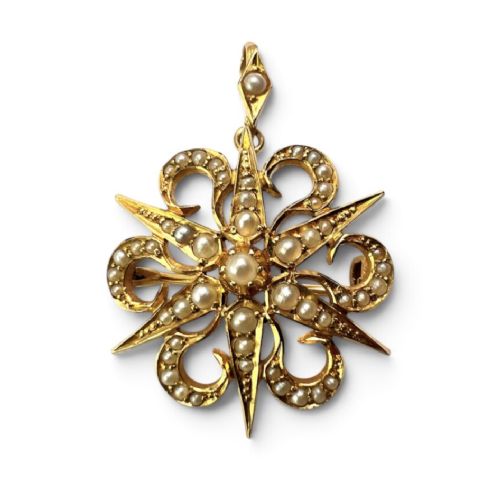
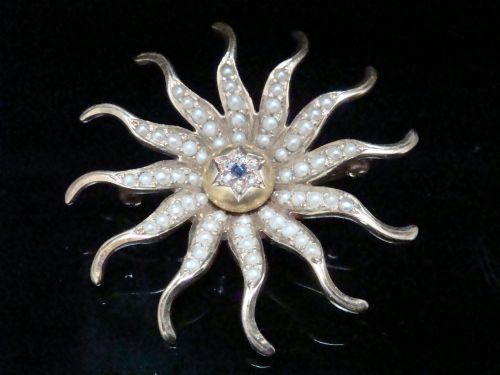
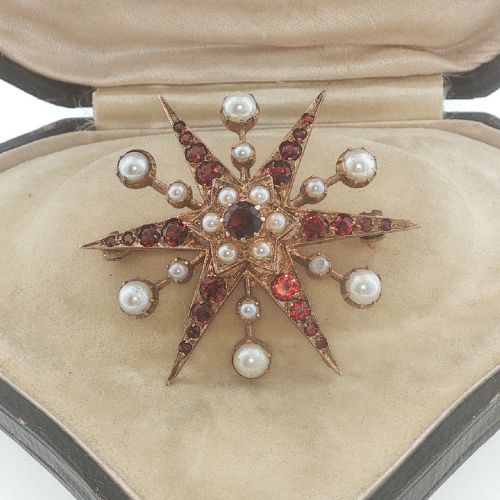
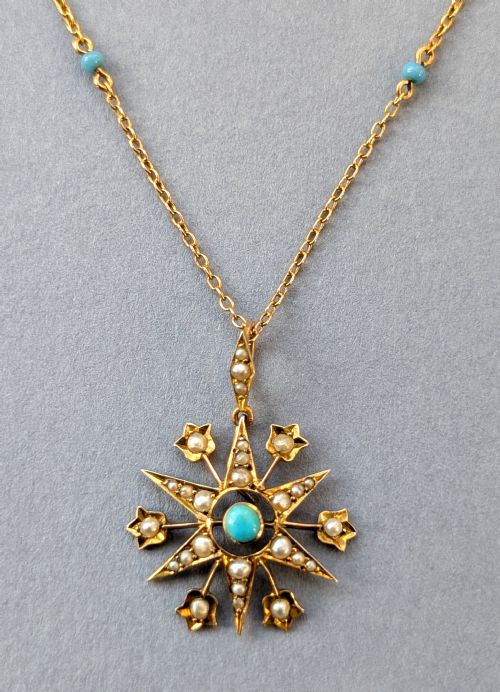
When you search for a victorian seed pearl star, you encounter intricate items produced across the Victorian and Edwardian eras alongside later revivals, configured as pendants, brooches, rings, lockets and bracelets.
The most frequent examples on this page are pendants and starburst brooches constructed in yellow gold, often combining tiny seed pearls with central gemstones like garnet, turquoise or diamond.
The aesthetic draws heavily on celestial motifs, presenting star, sunburst and crescent designs that reflect nineteenth-century romanticism and mourning traditions.
Materials and construction methods
These pieces utilise precious metals ranging from 9ct and 15ct yellow gold to 14K and 18ct gold, providing a warm metallic ground for the pale ornaments.
Makers set tiny seed pearls by hand into closed-back or open-work collets, frequently combining them with coloured stones such as turquoise, garnet, sapphire and old-cut diamonds to accentuate the stellar motif.
Victorian Seed Pearl Star Retail Price Guide 2026
Typical asking prices for victorian seed pearl star among the pieces listed under this phrase on Sellingantiques today, from the lower quarter to the upper quarter. They describe what is for sale here now, not the wider market.
Listings here feature items spanning the Victorian, Edwardian, and 1960 revival periods, executed in yellow gold with seed pearls, turquoise, garnet, and diamond.
Factors determining quality
Superior examples demonstrate meticulous alignment of every tiny seed pearl, secure claw or collet setting without excess solder, and substantial gold carats such as 15ct rather than lighter alloys.
Pieces that retain all original pearls without replacements, alongside well-preserved blue enamel work or high-grade central gemstones like old-cut diamonds, sit firmly at the top of the range.
The Victorian Seed Pearl Star Glossary
- Seed pearl
- A very small, naturally formed or early cultured pearl, typically measuring under two millimetres in diameter. These tiny spheres form the delicate clusters and rays characteristic of nineteenth-century star jewellery.
- Starburst
- A decorative design radiating outwards from a central point to resemble a shining star. This configuration is frequently seen in brooches and pendants from the Victorian period.
- Collet
- A small band or collar of metal that holds a gemstone or pearl securely in place. Fine examples show even, hand-finished metalwork around each individual pearl.
- Old-cut diamond
- A hand-faceted diamond cut prior to the development of modern brilliant-cut machinery, featuring a smaller table and a higher crown. These stones commonly appear in high-end Victorian star jewellery.
- Celestia
- A design theme incorporating stars, sunbursts, comets and moons. Such motifs gained immense popularity during the nineteenth century due to contemporary astronomical discoveries and romantic sentiment.
Victorian Seed Pearl Star: Frequently Asked Questions
How do I wear a seed pearl star brooch?
These versatile pieces attach securely to lapels, scarves or heavy velvet ribbons using their original pin mechanisms. Many examples feature hidden bails that also allow the piece to be suspended from a chain as a pendant.
Ensure the pin catch is secure before fastening to thicker fabrics to avoid bending the gold frame.
Can I wear my star pendant every day?
Seed pearls are organic gems that require gentle treatment, meaning daily wear can expose them to cosmetic chemicals and moisture that degrade their lustre over time. It is best to reserve these items for special occasions and remove them before swimming or bathing.
Store them separately in a lined box to prevent scratching from harder gemstones.
Are all star pieces strictly Victorian?
While the aesthetic originates firmly in the nineteenth century, celestial designs continued through the Edwardian era and reappeared during later revival periods in the twentieth century. Examining the gold hallmarks, pin fittings and construction style helps determine the exact period of manufacture.
Pieces bearing London hallmarks or specific carat standards like 15ct point clearly to nineteenth-century origins.