


Victorian Seed Pearl Drops
Victorian seed pearl drops bring delicate botanical motifs and warm gold tones together in wearable nineteenth-century craft.
Victorian Seed Pearl Drops
When you search for Victorian seed pearl drops, you encounter intricate items designed to catch the light with tiny, matched spheres of nacre. These pieces span earrings, pendants, necklaces, and brooches created across the nineteenth century and into later revival periods.
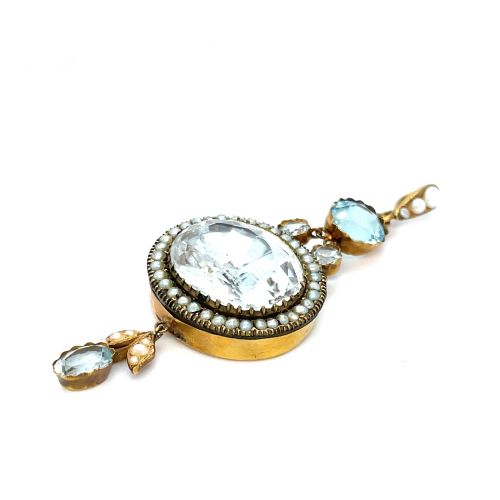
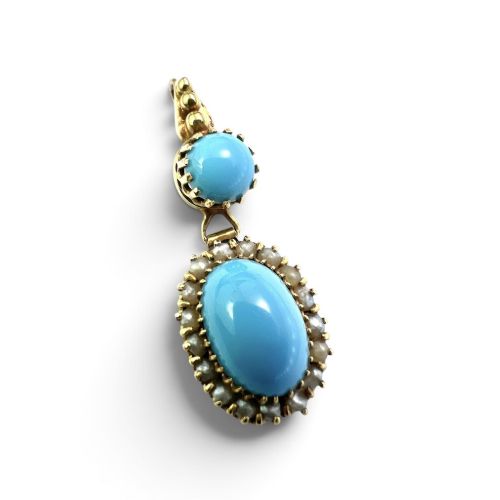
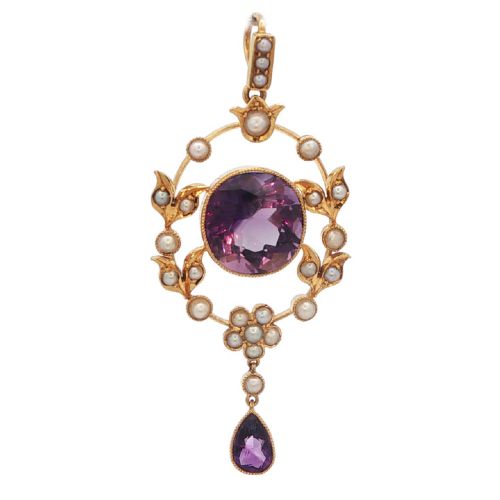
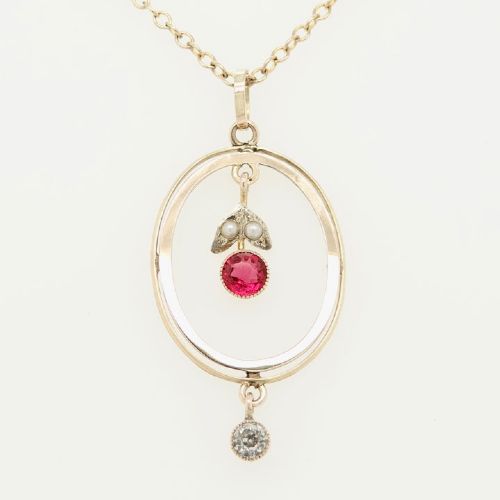
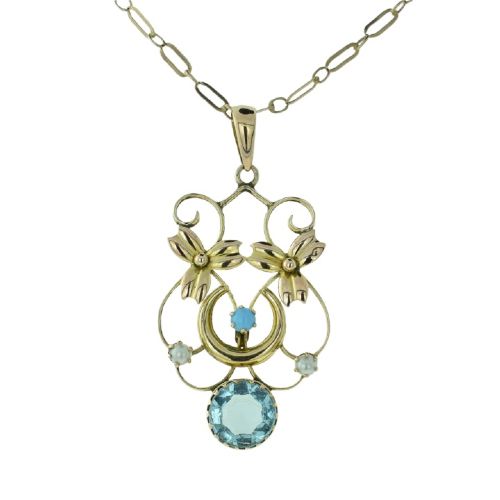
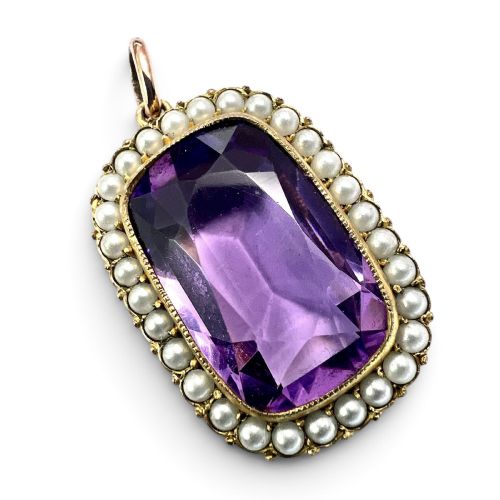
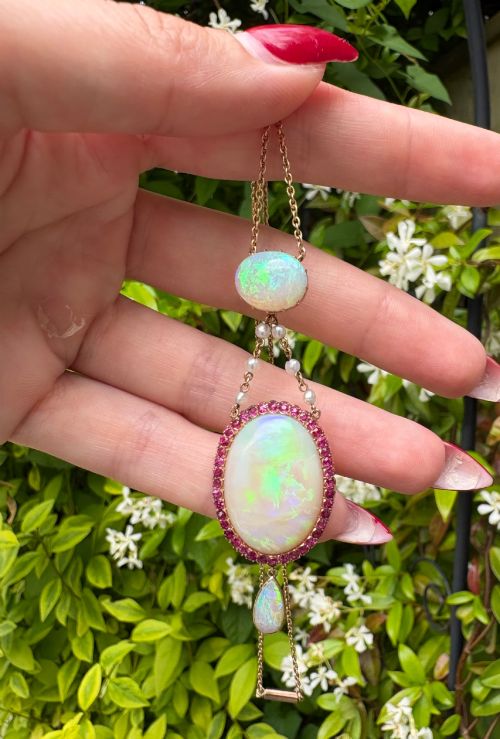
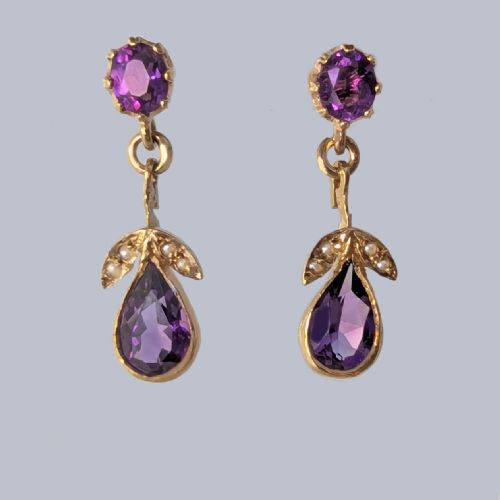
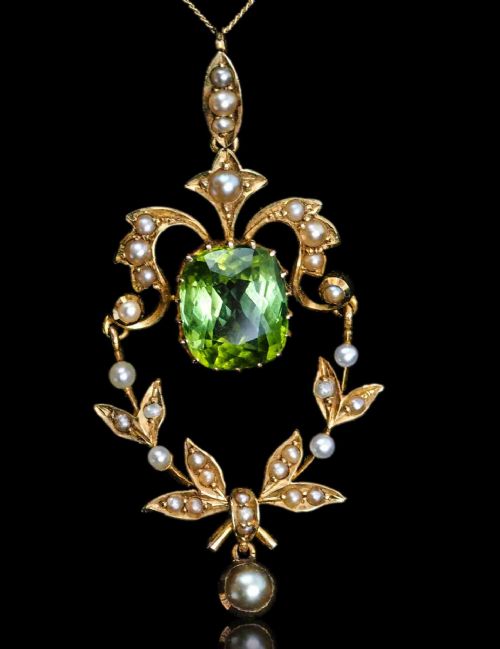
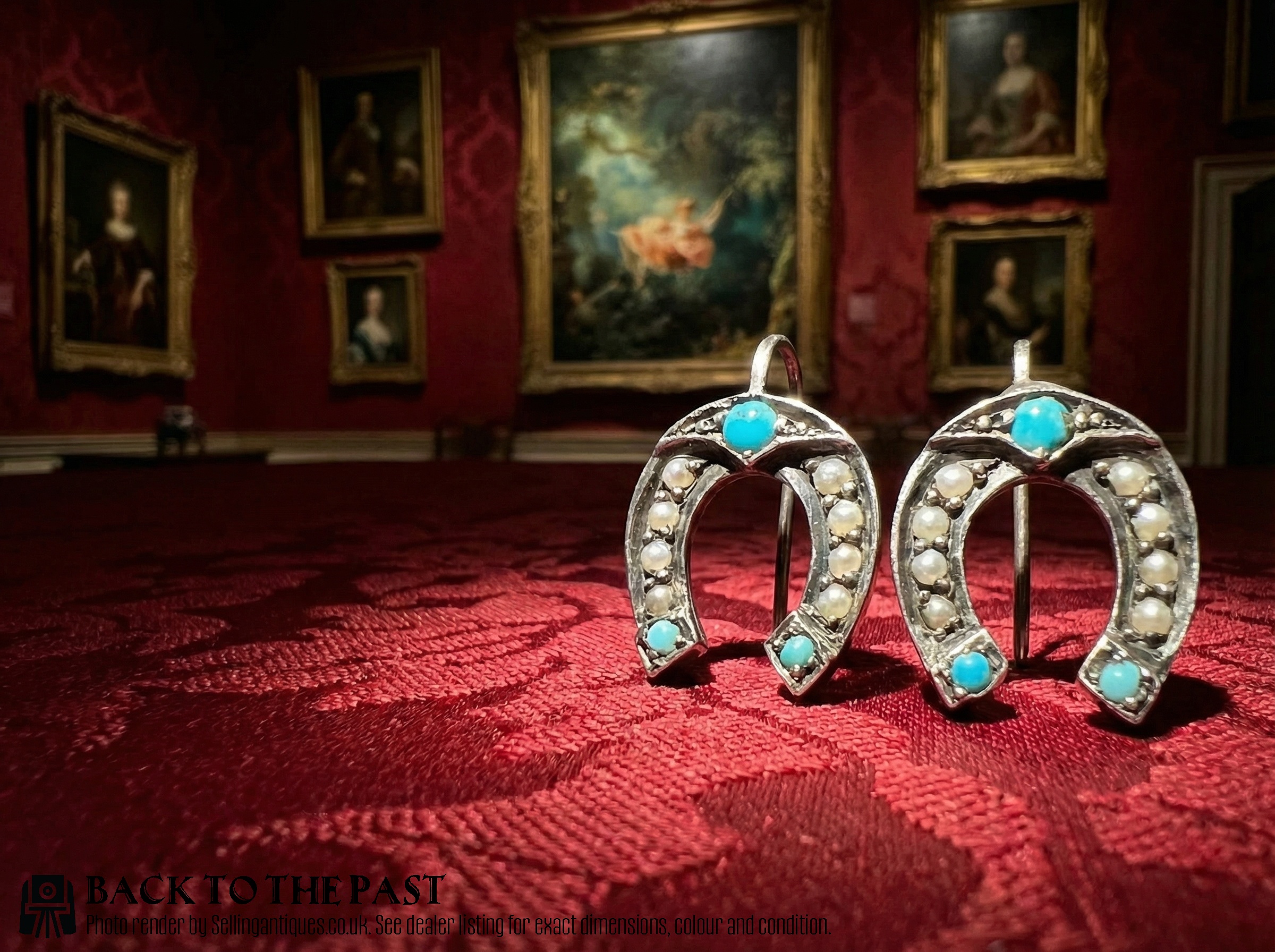
The version you are most likely to meet on this page is a pendant or drop earring combining seed pearls with gold and coloured gemstones. Amethyst, turquoise, peridot, and garnet frequently appear alongside the pearls in halo clusters, floral formations, and lavaliere drops.
Makers shaped these drops to dangle from necklines and ears, utilising hinged fittings and delicate swags. While many date to the strict Victorian era, related items from Edwardian and later twentieth-century periods also use the same traditional vocabulary.
Materials and construction
Goldsmiths built these drops using 9ct gold, 15ct gold, 18ct gold, and occasional silver settings, often shaping the metal into rose or yellow hues. Seed pearls were meticulously drilled and secured onto wire or pinned into tight clusters to form flowers, leaves, and halos.
Gemstones such as amethyst, turquoise, and peridot were bezel-set or claw-set as central focal points surrounded by the tiny pearls. Enamel work, foil backs, and hinged drops added movement and layered colour to the finished jewellery.
Some lucky buyers even inherit the original cardboard presentation box alongside their nineteenth-century pendant.
Quality differences
The standard of these drops rests upon the matching and uniformity of the seed pearls themselves. Better examples display pearls with consistent lustre, even colouration, and secure mounting that shows minimal adhesive or displacement.
The choice of accompanying gold carat and gemstone clarity further divides the range. Heavier 15ct or 18ct gold settings combined with clean, well-cut amethysts, peridots, or diamonds indicate superior workshop execution compared to lighter 9ct alternatives with lower-grade stones.
Hamilton and Co
The Victorian Seed Pearl Drops Glossary
- Seed pearl
- A very small, naturally formed pearl, typically under two grains, used in tight clusters or rows in antique jewellery.
- Lavaliere
- A pendant necklace featuring a central suspended drop, popular during the late Victorian and Edwardian periods.
- Parure
- A matched set of jewellery, such as earrings and a pendant, designed to be worn together.
- Dormeuse
- A type of secure earring fitting designed originally for comfortable wear during sleep, often seen in antique drop designs.
- Foil back
- A thin reflective sheet placed behind a gemstone within a closed setting to enhance its colour and brilliance.
Victorian Seed Pearl Drops: Frequently Asked Questions
What are seed pearl drops?
Seed pearl drops are antique jewellery items featuring tiny natural pearls arranged in clusters or fringes, often suspended from earrings or necklaces.
They rely on nineteenth-century goldsmithing techniques to combine the small pearls with coloured gemstones like turquoise and amethyst.
How were these drops worn?
Victorian wearers fastened these pieces as pendants, secured them to delicate neck chains, or hung them from the ears as swinging drops.
Parure sets allowed individuals to coordinate matching earrings and pendants for formal nineteenth-century occasions.
How do I care for pearl jewellery?
Seed pearls are delicate organic gems that require gentle cleaning with a soft cloth, avoiding harsh chemicals, ultrasonic cleaners, and prolonged exposure to moisture.
Storing them away from harder metals prevents the pearls from scratching or losing their iridescent nacre surface over time.
How can I tell the period?
Dating these items involves examining the gold purity marks, such as 9ct, 15ct, or 18ct, alongside the construction style of the settings and clasps.
Victorian pieces often feature closed-back settings or specific foliate motifs, while later revival pieces from the twentieth century show different hallmarks and modern fittings.