
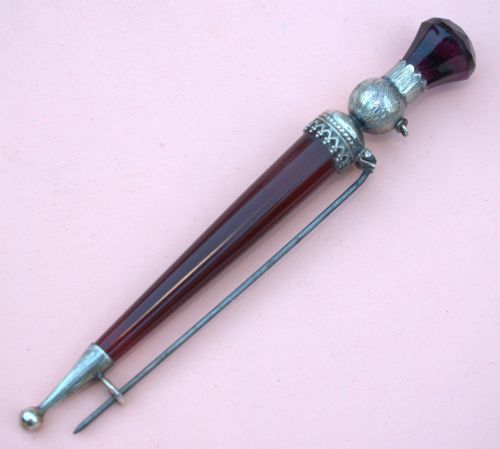


Victorian Scottish Agate Jewellery
Victorian Scottish agate jewellery brings together natural stones and traditional highland motifs to create wearable pieces of nineteenth-century history.
Victorian Scottish Agate Jewellery
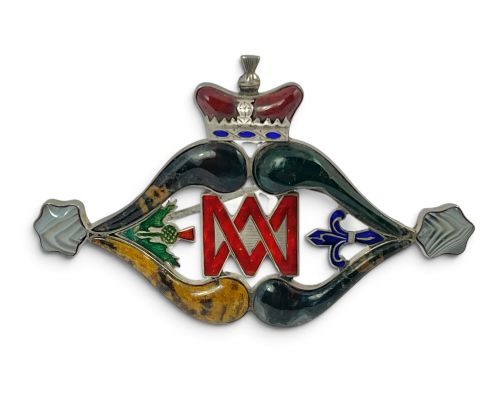
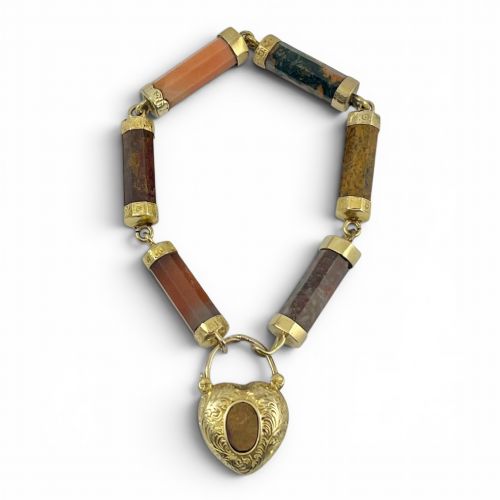
Victorian Scottish agate jewellery encompasses brooches, kilt pins, bracelets, snuff boxes, and lockets originating primarily from the nineteenth century. These pieces reflect the nineteenth-century revival of interest in highland traditions, championed by royal patronage and tourism.
The objects combine regional lapidary traditions with mainstream Victorian ornamentation, resulting in accessories designed for daily wear or formal highland dress. Most examples date from the middle to late decades of the nineteenth century, utilising stones sourced directly from Scottish locations.
Materials and construction
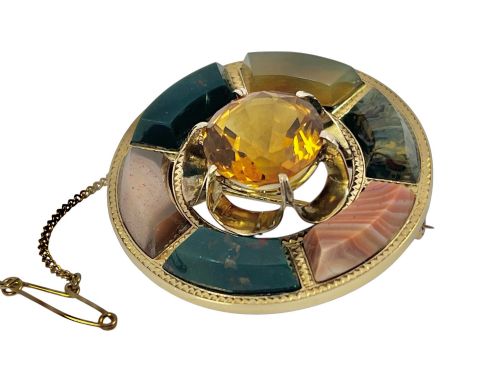
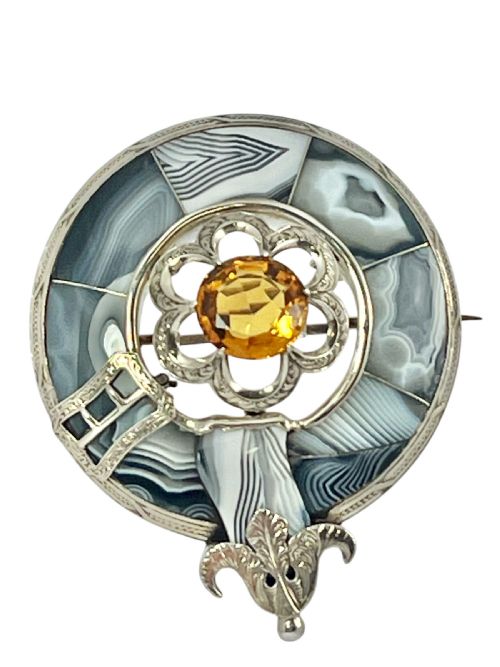
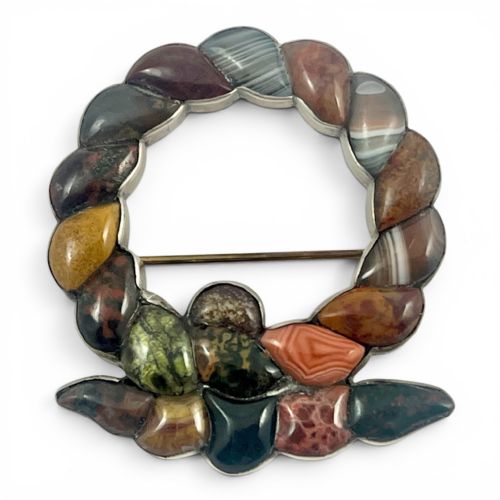
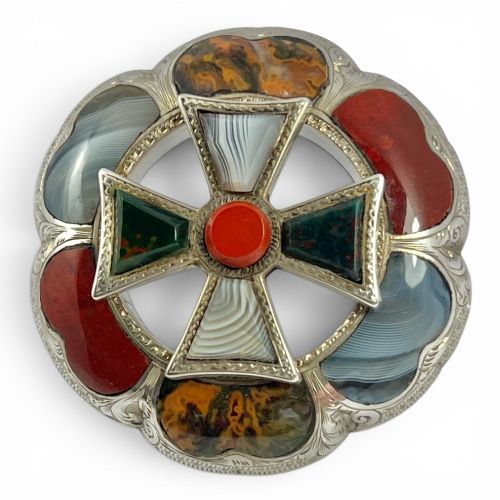
Craftsmen utilised native quartz varieties including banded agates, jasper, bloodstone, and Montrose agate, cutting and polishing them to reveal distinct natural striations. These coloured stones were meticulously set into frames of silver or 9ct gold.
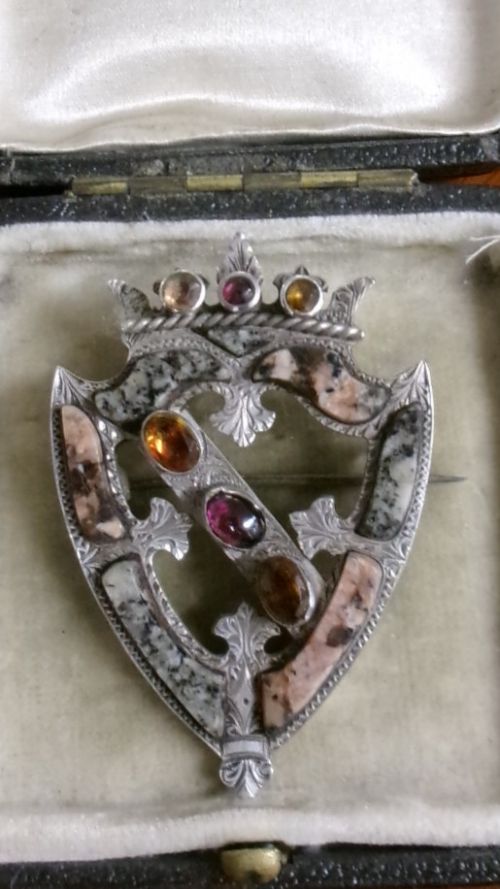
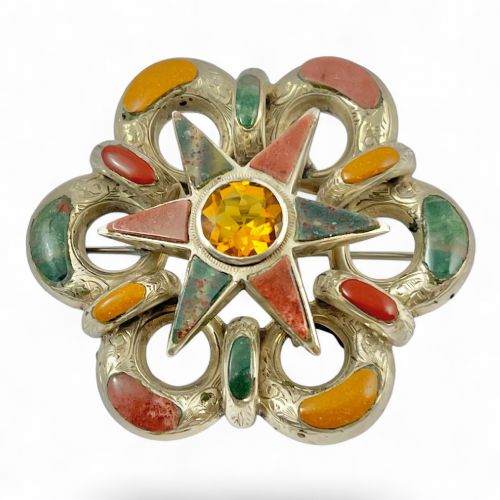
Metalsmiths employed techniques such as engraving, basket-hilted detailing, and braided designs to secure the heavy stones within robust mountings. Additional colour and sparkle were often introduced through the inclusion of faceted citrines alongside the patterned pebbles.
Listings feature items from the Victorian period, utilising silver, 9ct gold, agate, jasper, and citrine in forms ranging from brooches to snuff boxes.
Judging the work
Quality rests upon the precision of the stone-cutting and the complexity of the metal mounting. Tightly fitted mosaic patterns of multi-coloured agate demonstrate superior lapidary skill compared to simpler, uniform settings.
The weight and purity of the precious metal housing also distinguish the pieces. Heavier silver or 9ct gold mounts paired with scarce supplementary stones like citrine elevate an item above standard production.
The Victorian Scottish Agate Jewellery Glossary
- Agate
- A form of chalcedony quartz exhibiting natural concentric bands of colour. Lapidaries polished these stones smooth to highlight their intricate geological patterns.
- Montrose agate
- A specific variety of Scottish banded stone prized for its distinct tonal variations. It appears frequently in nineteenth-century regional jewellery.
- Dirk brooch
- A fastening pin styled after the traditional Scottish short dagger. These substantial pieces often feature elaborate silver mountings and central citrines.
- Plaid brooch
- A large fastening designed to secure heavy woollen garments across the shoulder. They incorporate robust mechanisms to bear the weight of stones and metal.
- Padlock locket
- A clasp or pendant shaped like a miniature security lock. Victorians utilised this symbolic form for charms and commemorative compartments.
Victorian Scottish Agate Jewellery: Frequently Asked Questions
What is Victorian Scottish agate jewellery?
These ornaments are nineteenth-century wearable items fashioned from native British stones and precious metals. They reflect a distinct regional aesthetic inspired by highland traditions.
Makers mounted polished pebbles into silver or gold to produce functional accessories including brooches, bracelets, and snuff boxes.
How were these pieces worn?
Victorian wearers pinned large pebble brooches to shawls, plaids, and heavy coats as both decoration and functional fasteners. Kilt pins secured traditional Scottish dress during formal gatherings.
Smaller items like bracelets and lockets formed part of daily attire, often coordinated into matching jewellery suites.
How do I date these items?
Dating relies on stylistic markers, hallmarks, and structural design conventions typical of the nineteenth century. Pieces frequently correspond to the Victorian period between eighteen-forty and nineteen-hundred.
Specific motifs, such as broadsword kilt pins and provincial silver marks, help narrow the timeline of manufacture.
What stones are used?
The primary material is banded agate, accompanied by jasper, bloodstone, and Montrose agate. These stones were gathered locally and shaped by regional lapidaries.
Faceted citrines frequently appear alongside the opaque pebbles to provide contrasting flashes of yellow and orange light.
Are these items durable?
The hard quartz minerals used in the jewellery resist scratching during normal handling. Secure silver and gold metalwork protects the edges of the polished stones.
Care should be taken to avoid impact against hard surfaces to prevent chipping the stone settings.