
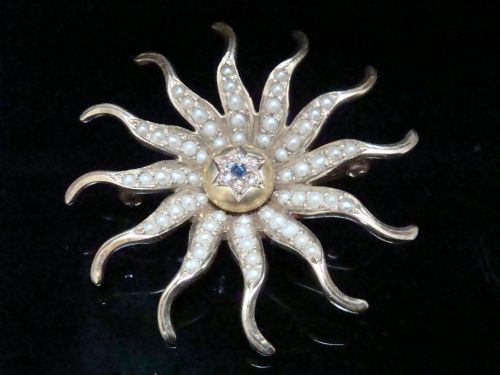


Victorian Sapphire Pendant
A victorian sapphire pendant brings deep blue colour and period charm, combining rich gemstones with intricate historical metalwork.
Victorian Sapphire Pendant
When you search for a victorian sapphire pendant, you encounter jewels shaped by nineteenth-century tastes, often appearing as pendants, lockets, or dual-purpose brooch pendants. These pieces bridge eras, occasionally spanning late Victorian production into Edwardian or Belle Epoque designs.
The most common formats on this page include drop pendants, cluster arrangements, and celestial motifs such as stars, crescents, and hearts. Gems are set alongside diamonds, pearls, or rubies within yellow gold, 9ct gold, 15ct gold, 18ct gold, or silver.
Makers utilised versatile mountings that allowed brooches to function as necklaces, reflecting a period preference for adaptable jewellery. Forms range from simple oval cuts to elaborate insect and floral designs.
How they were made
Craftsmen shaped these items using gold of varying carat weights, alongside silver and platinum settings designed to highlight stones. Sapphires are paired with old cut diamonds, rose cut diamonds, seed pearls, and rubies.
Metals were beaten, cast, and engraved by hand to form intricate locket cases, crescent frames, and cluster mounts. Stones were secured using traditional claw and collet settings appropriate to the period.
Common motifs include crescents, stars, hearts, and naturalistic insect forms like dragonflies and butterflies.
What varies in quality
Quality rests in the origin and depth of the sapphire, alongside the presence of accompanying diamonds and the fineness of the gold or silver work. Natural unheated stones and certified Ceylon origins distinguish exceptional examples from standard pieces.
The intricacy of the metal fabrication, from delicate wirework on celestial motifs to the structural integrity of convertible brooch pendants, dictates the overall standard of craftsmanship.
The Victorian Sapphire Pendant Glossary
- Brooch pendant
- A convertible piece fitted with both a pin and a loop so it functions as a brooch or a necklace. This dual design was highly popular in the nineteenth century.
- Old cut diamond
- A hand-faceted diamond shape characteristic of antique jewellery, featuring a smaller table and larger culet than modern stones. These diamonds catch candlelight uniquely.
- Rose cut diamond
- A flat-based stone with a domed, faceted top resembling an unopened rosebud. It imparts a subtle, glassy shimmer rather than modern brilliance.
- Seed pearl
- A tiny, naturally small pearl used in clusters or delicate borders on Victorian jewellery. They provide a soft, creamy contrast to deep blue sapphires.
- Ceylon sapphire
- A sapphire originating from Sri Lanka, historically prized for its vibrant cornflower blue hue. These stones frequently appear in high-end cluster pendants.
Victorian Sapphire Pendant: Frequently Asked Questions
How do I wear a convertible pendant brooch?
Many Victorian pieces feature a hidden bale alongside a pin fastening on the reverse. You can thread a chain through the loop for necklace wear or secure the pin to clothing.
Ensure the clasp mechanism remains secure before wearing it as a brooch to prevent loss.
What gold carats appear in these pendants?
Victorian and antique pieces utilise a range of gold purities, including 9ct, 15ct, and 18ct yellow gold. Higher carats offer a richer colour and greater resistance to tarnishing.
Silver and platinum were also employed, particularly in settings designed to enhance white diamonds.
How are celestial motifs styled?
Celestial designs feature stars, crescents, and sunbursts encrusted with sapphires and diamonds. These themes represent heavenly bodies and romantic symbolism common in late nineteenth-century adornment.
They pair well with simple chains to let the complex stone arrangements stand out.
What is a cluster pendant?
A cluster pendant arranges a central sapphire surrounded by a border of smaller diamonds or pearls. This configuration maximises the visual impact and perceived size of the central gem.
Cluster designs appear frequently in both standalone pendants and convertible brooch formats.