



Victorian Religious Gold Pendant
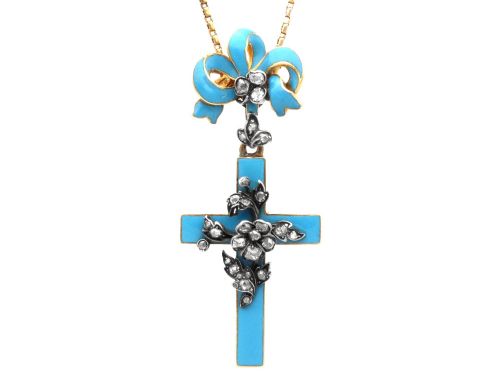
These victorian religious gold pendant pieces are devotional crosses, medals and lockets executed in precious metals with stones and enamel.
Victorian Religious Gold Pendant
A victorian religious gold pendant encompasses devotional crosses, crucifixes and Madonna medals designed to be worn on a chain or pinned to clothing. The pieces meeting this search phrase are predominantly cross pendants and religious medals originating from the nineteenth and early twentieth centuries.
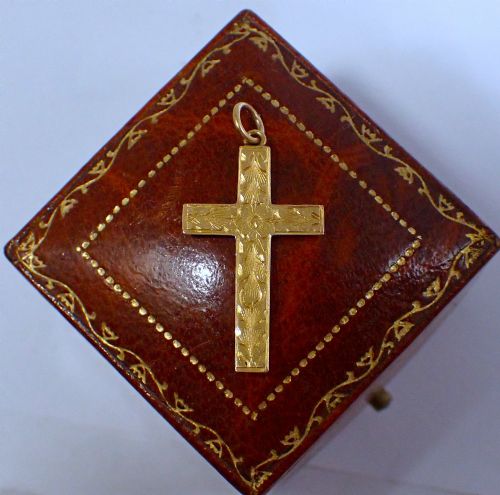
The forms span simple engraved gold crosses, convertible brooch pendants, and intricate mementoes set with pearls, diamonds and coloured stones. Many items reflect European devotional traditions, including French and Spanish devotional pieces alongside grand tour souvenirs.
How they were made
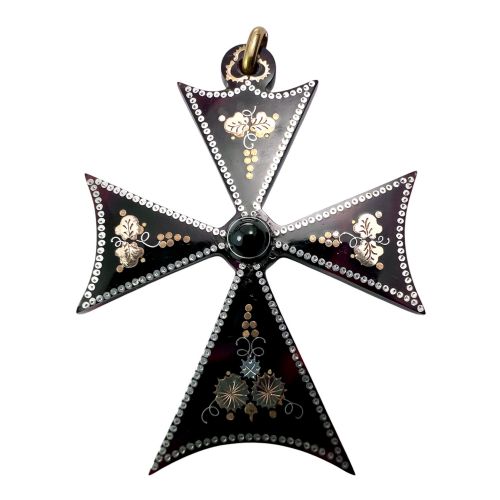
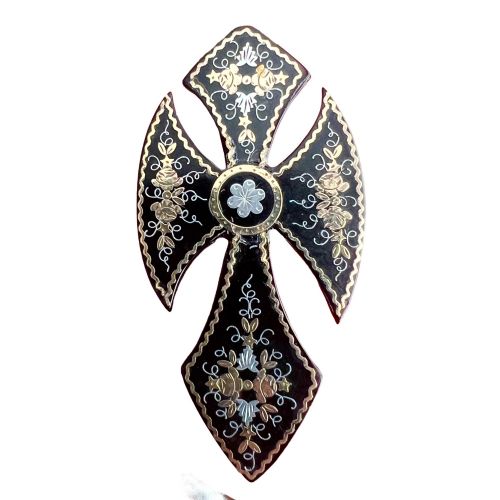
Metals such as nine-carat, fifteen-carat and eighteen-carat gold provide the structural framework for these pendants, often combined with silver settings for gemstone work. Artisans employed techniques like pique inlay, detailed hand engraving and fine wirework to embellish the surfaces.
Gemstones including diamonds, seed pearls, turquoise, sapphires and onyx are flush or claw set into the gold. Enamel work and miniature carvings in mother-of-pearl or shell also appear as central devotional motifs.
Victorian Religious Gold Pendant Retail Price Guide 2026
Typical asking prices for victorian religious gold pendant among the pieces listed under this phrase on Sellingantiques today, from the lower quarter to the upper quarter. They describe what is for sale here now, not the wider market.
Rafael's cherubs gaze out from mother-of-pearl medals, watching over twentieth-century daily wear.
What varies in quality
Quality rests upon the crispness of hand engraving, the depth of metalwork and the integration of secondary materials like tortoiseshell or pique inlay. Superior examples show meticulous attention to the reverse as well as the face.
The choice of embellishment shifts the character of a piece profoundly, from simple rolled gold lockets to substantial fifteen-carat gold mounts set with diamonds and natural pearls.
The Victorian Religious Gold Pendant Glossary
- Pique
- A technique involving inlaid gold or silver pins into a base of tortoiseshell or horn to create geometric or floral patterns.
- Cross
- A devotional symbol shaped with intersecting arms, frequently utilised as a pendant or combined with a brooch fitting in nineteenth-century jewellery.
- Medal
- A flat devotional object, often struck in gold or silver, bearing the image of the Virgin Mary or other religious iconography.
- Enamel
- A vitreous substance fused to metal through firing, providing durable colour and decoration on devotional pendants.
Victorian Religious Gold Pendant: Frequently Asked Questions
Can these pendants be worn daily?
These antique devotional pieces are delicate and benefit from careful handling during regular wear. Removing them before sleeping or physical activity preserves the gold settings and any delicate stones.
Securing a sturdy, matching period chain ensures the suspension ring bears the weight safely without undue strain on the metal.
How do I clean gold religious pendants?
A gentle wipe with a soft, dry microfiber cloth removes everyday dust and skin oils safely. Avoid harsh chemical dips, ultrasonic cleaners, or abrasive brushes that might damage enamel, seed pearls, or antique foil-backed stones.
Professional jewellers can inspect older claw settings and hinges if deeper cleaning is required.
Were these always worn as necklaces?
Many examples on this page served a dual purpose as both brooches and pendants, featuring retractable loops alongside pin stems. This versatility allowed owners to pin the devotional object to clothing or suspend it from a ribbon or chain.
Examining the reverse reveals the specific hardware utilised by the maker.
What periods do these pieces date from?
The selection spans the nineteenth century through the early twentieth century, encompassing Victorian, Edwardian and later vintage eras. Stylistic clues and hallmarks help pinpoint the manufacturing decade.
French and Spanish influences frequently appear alongside British Victorian craftsmanship.