




Victorian Reeded Leg Desk
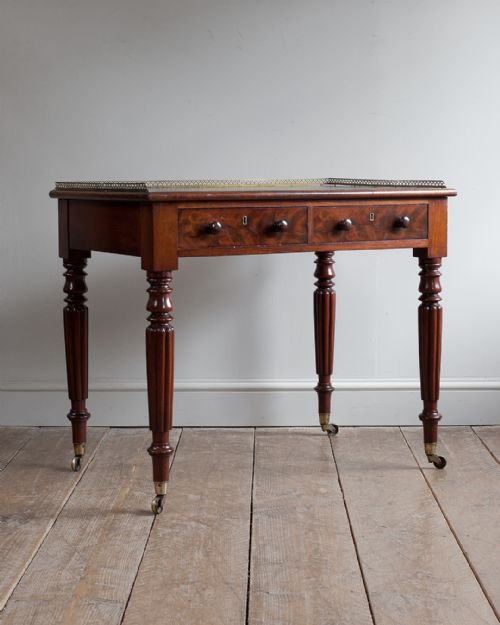
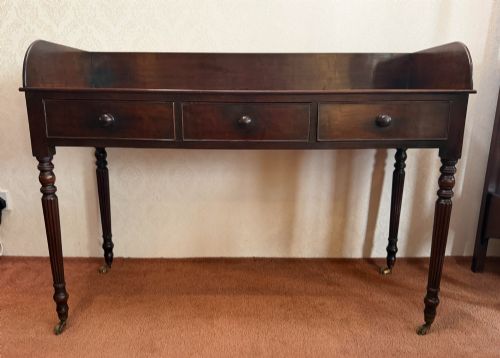
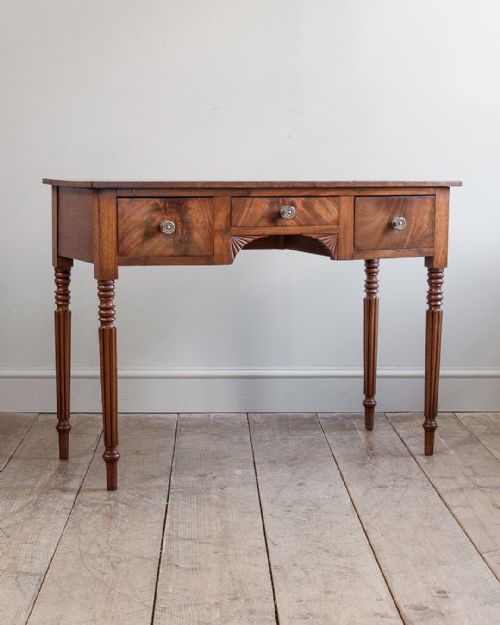
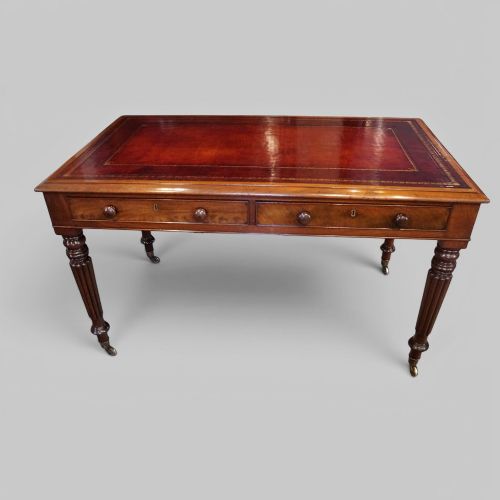
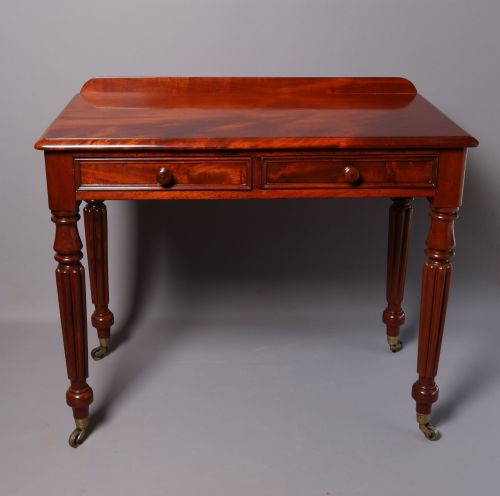
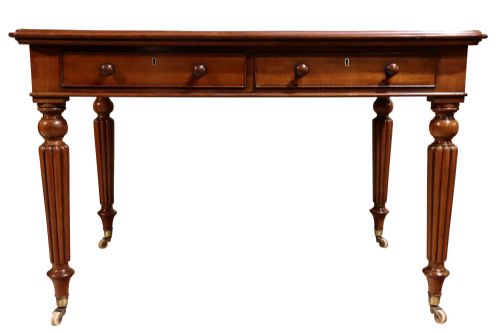
A victorian reeded leg desk brings solid mahogany warmth and traditional craftsmanship to a study.
Victorian Reeded Leg Desk
When you search for a victorian reeded leg desk, you are looking at nineteenth-century writing furniture defined by carved fluted decoration on the supports. These pieces emerge primarily from the Victorian period alongside earlier nineteenth-century examples.
These items served practical domestic and professional purposes in studies and libraries throughout the nineteenth century. The most common format on this page is the mahogany writing table featuring turned and reeded uprights.
How they were made
Cabinetmakers constructed these pieces predominantly using solid and veneered mahogany, often incorporating brass hardware for handles and castors. Many writing surfaces integrate tooled leather inserts.
The characteristic reeding on the legs involves parallel rounded mouldings carved directly into the timber. Joinery relied on traditional methods such as dovetailing for drawer construction.
A chapel table slips quietly into the collection alongside grand partners desks.
What varies in quality
Quality in these desks rests on timber selection and the crispness of the carved reeding on the legs. Finer examples display carefully matched mahogany grain and substantial secondary woods.
Construction details such as solid drawer linings and original brass hardware distinguish superior workshop production from simpler utilitarian pieces.
Holland & Sons
The Victorian Reeded Leg Desk Glossary
- Reeded
- A decorative moulding consisting of parallel convex projections resembling bundled reeds. This technique adds vertical texture to table legs and upright supports.
- Partners desk
- A large double-sided writing table designed for two people to work opposite each other. These usually incorporate drawers on both long sides.
- Mahogany
- A durable tropical hardwood valued for its rich reddish-brown colour and stability. It served as the primary material for high-quality nineteenth-century cabinet work.
- Tooled leather
- Leather decorated with blind or gold-stamped patterns applied with heated metal tools. It provides a traditional writing surface on desk tops.
Victorian Reeded Leg Desk: Frequently Asked Questions
How do I date a writing desk?
Dating relies on materials, construction methods, and stylistic cues recorded in nineteenth-century cabinet making. Mahogany and specific leg turning provide key indicators.
Reference to periods such as early Victorian helps narrow the timeline of manufacture.
What timber was used?
Mahogany is the predominant wood seen across these nineteenth-century writing tables and desks. Walnut also appears in specific maker pieces.
Secondary woods and brass fittings support the primary timber structure.
Were these desks used for writing?
These tables and desks served as functional workspaces for correspondence and administration in Victorian homes and offices. Many incorporate drawers for stationery storage.
Writing surfaces often feature leather inserts designed for daily use.