
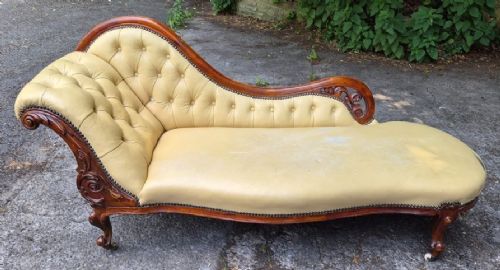
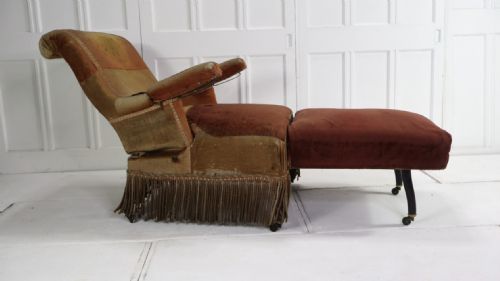
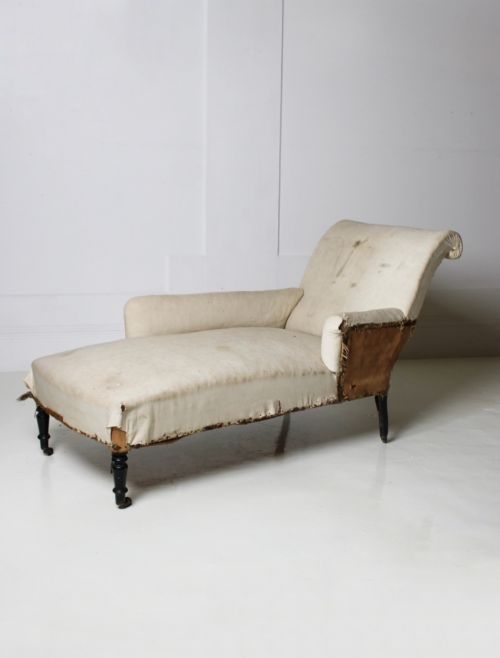
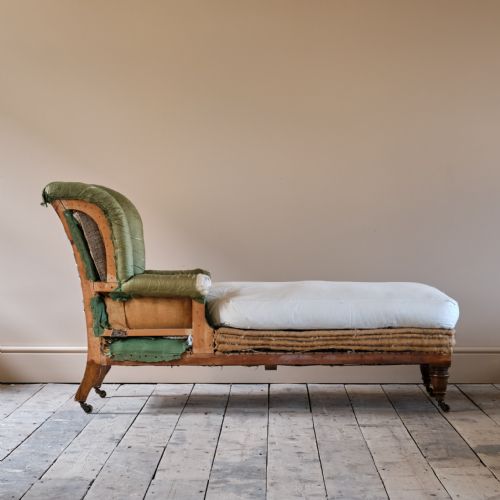


Victorian Reclining Chaise Longue
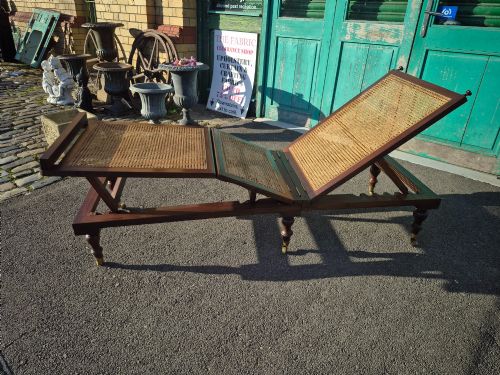
A victorian reclining chaise longue offers deep-seated nineteenth-century comfort, combining padded lounging surfaces with adjustable reclining mechanisms for the nineteenth-century parlour.
Victorian Reclining Chaise Longue
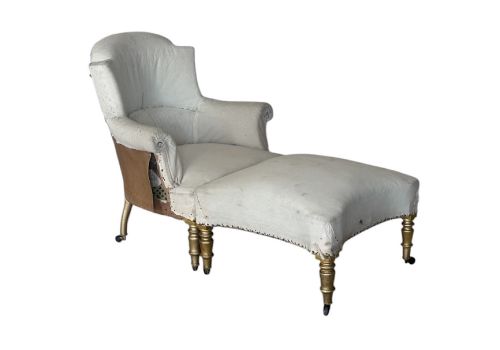
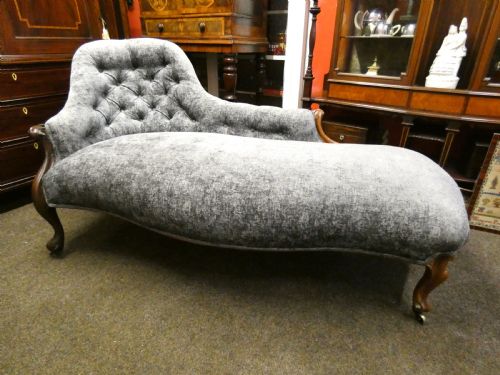
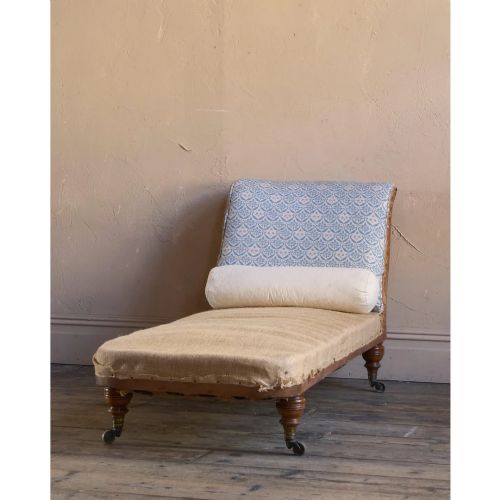
A victorian reclining chaise longue combines the traditional single-ended daybed form with adjustable mechanisms designed for daytime rest and reading. These pieces emerge across nineteenth century periods, frequently displaying carved mahogany, walnut, or rosewood frames.
Buyers encountering this search phrase regularly find English and French nineteenth century daybeds, campaign styles, and spoonback couch designs. The inventory includes variants upholstered in velvet, calico, fabric, and brown leather, often supported on turned wooden legs with castors.
Materials and construction
Makers constructed structural frames primarily from dense timber such as mahogany, walnut, rosewood, and general wood, joining sections with traditional cabinetmaking joints. Brass components frequently appear on castors and mechanical reclining fittings.
Upholstery techniques combined heavy fabric, velvet, calico, and leather coverings over sprung or padded foundations. Turned legs and carved details demonstrate the manual woodworking skills applied during the period.
Listings feature items spanning the nineteenth century, Victorian era, Regency period, and Edwardian times, utilising mahogany, walnut, rosewood, brass, leather, and velvet.
Evaluating craftsmanship and condition
Quality rests in the crispness of the carved timber frame and the structural integrity of the timber joints. Pieces retaining their original castors and functional reclining mechanisms demonstrate superior original manufacture.
Finer examples exhibit sophisticated upholstery foundations and substantial rosewood, walnut, or mahogany framing rather than simpler secondary woods. The integration of concealed storage or maker attribution elevates the standing of an individual piece.
Howard and Sons·H Goodall and Sons of Newcastle
The Victorian Reclining Chaise Longue Glossary
- Daybed
- An upholstered couch or seat used for resting during the day. It provides a horizontal surface for lounging without a full bed frame.
- Castor
- A small wheel mounted on a swivel assembly attached to the legs of furniture. It allows heavy wooden frames to move across floor coverings easily.
- Spoonback
- A chair or couch back carved into an oval depression resembling the bowl of a spoon. This upholstered shape fits the human spine.
- Campaign style
- Portable furniture designed for military officers on active service. Pieces often feature brass corners and collapsible elements for transport.
Victorian Reclining Chaise Longue: Frequently Asked Questions
How do I recline this chair?
Adjustable nineteenth-century daybeds utilise internal ratchets or mechanical hinges operated by lifting or shifting the backrest.
Users secure the mechanism into notched settings to achieve the desired reclining angle for reading or resting.
Were these used in bedrooms?
Nineteenth-century households placed daybeds primarily in libraries, parlours, drawing rooms, and large country house reception spaces.
They served daytime resting needs rather than overnight sleeping quarters.
Are these pieces comfortable?
Upholstered daybeds rely on period padding and sprung foundations designed for extended daytime lounging. Modern comfort depends on the condition of the internal stuffing and webbing.
How do I identify a Victorian piece?
Nineteenth-century pieces display characteristic timber framing such as mahogany, walnut, or rosewood combined with period upholstery fabrics. Turned wooden legs and brass castors provide further chronological indicators.