



Victorian Prism Lustres
Victorian prism lustres are decorative mantel ornaments hung with crystal drops that catch the flickering candlelight of the nineteenth century.
Victorian Prism Lustres
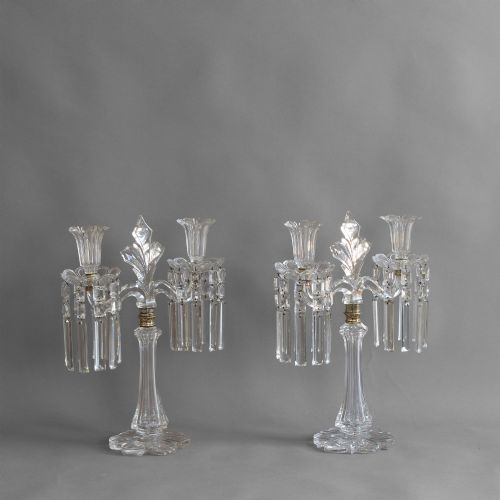
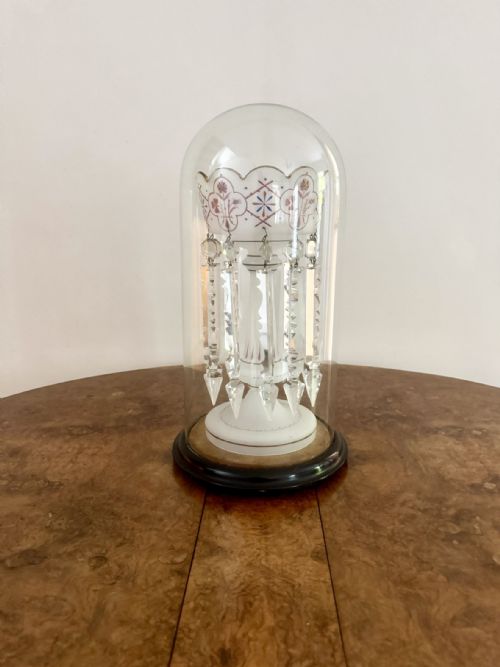
Victorian prism lustres are ornamental glass or metal vessels designed to stand upon mantelpieces and tables, doubling as functional candlesticks. They appear frequently in pairs, shaped as mantel lustres and table lustres that combine column and bowl forms.
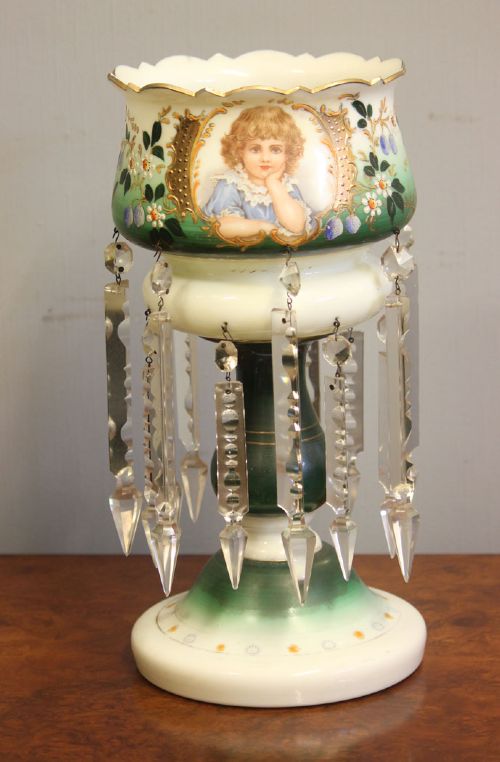
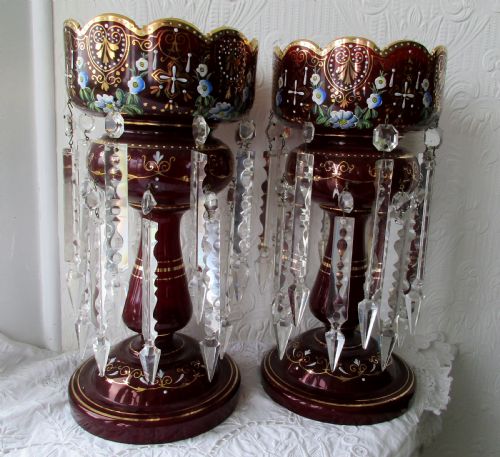
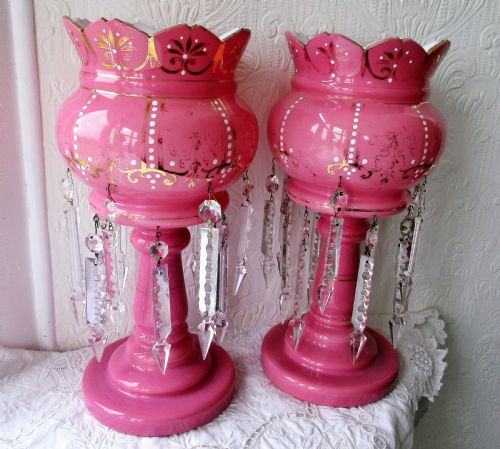
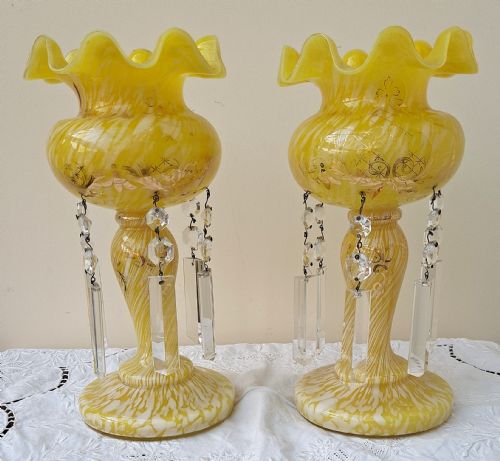
The objects span periods from the nineteenth century into the transitional years around nineteen hundred, carrying styles from Victorian and Regency to French Empire and French chateau. Most examples emerge in coloured glass such as ruby, green, pink, yellow, opal, and cranberry.
Many specimens incorporate hanging crystal prisms or drops that refract light around the room. Variations include single lustre pieces, pairs, sets of three, and complex designs featuring bronze, ormolu, brass, or gilt mounts.
Materials and Techniques
The construction relies on heavy lead crystal, cut glass, and flash or overlay glass blown into specific vase and candlestick profiles. Makers applied intense heat to fuse colours into ruby, cranberry, and green glass bodies before cutting facets into the surface.
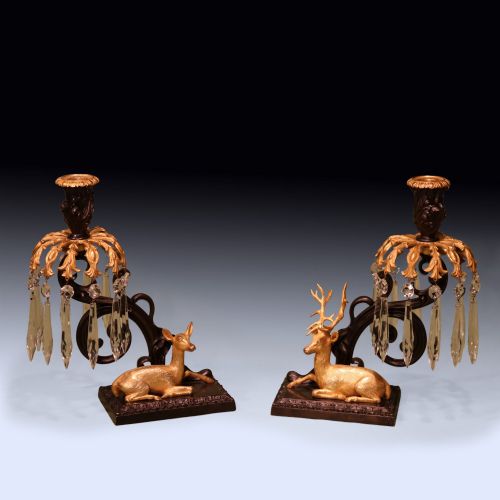
Metal components utilise brass, bronze, and ormolu cast into shapes like stags, does, and ornate stems, enriched with gold leaf and gilt decoration. Cut crystal and glass drops dangle from rims via wire attachments, completing the assembly.
Some nineteenth-century mantel lustres incorporate bronze stags and does peering out from beneath the candle nozzles.
Judging Quality
Quality rests upon the depth of the glass colour and the crispness of the hand-cut facets. Superior pieces display heavy lead crystal with sharp, clean edges on the prisms rather than soft, moulded contours.
The integration of materials dictates the standing of a piece, where solid bronze or ormolu mounts match the weight and finish of the glass body. Complete sets of matching prism drops untouched by replacement elevate the integrity of the object.
The Victorian Prism Lustres Glossary
- Lustre
- A decorative table or mantel vessel fitted with hanging glass pendants designed to reflect light. These items double as candlesticks in period reception rooms.
- Prism drop
- A cut crystal pendant suspended from the rim of a lustre to refract candlelight. These elements hang on wire loops.
- Overlay glass
- A technique where a layer of coloured glass is fused over a clear or contrasting glass body before being cut away. This exposes the underlying colour in patterns.
- Ormolu
- Gilded bronze applied to ornamental mounts and bases during the nineteenth century. This material provides rich metallic detail.
- Cranberry glass
- A transparent pink-red glass produced by adding gold chloride to the molten batch. It appears frequently in nineteenth-century table ornaments.
Victorian Prism Lustres: Frequently Asked Questions
What are victorian prism lustres?
These objects are ornamental glass or metal vessels designed to sit on mantelpieces and tables, functioning as decorative candlesticks.
They are distinguished by hanging crystal drops that catch and refract ambient light around a room.
How were lustres used?
Victorian households placed these items on mantelpieces and parlour tables primarily as decorative showpieces rather than main light sources.
When fitted with candles, the glass drops amplified the glow of the flame during evening gatherings.
How do I clean them?
Careful dusting with a soft, dry cloth preserves the glass surfaces and metal gilding without causing abrasion.
Crystal drops can be washed individually in lukewarm water and mild soap before being dried thoroughly and reattached.
Are they all pairs?
Many examples survive as matching pairs intended for symmetrical display on either side of a fireplace clock or mirror.
Single lustres and larger sets of three also appear in the record for alternative arrangement options.