



Victorian Pottery Tableware
These victorian pottery tableware pieces are nineteenth-century ceramic vessels for dining and tea, prized for their decorative glazes and functional forms.
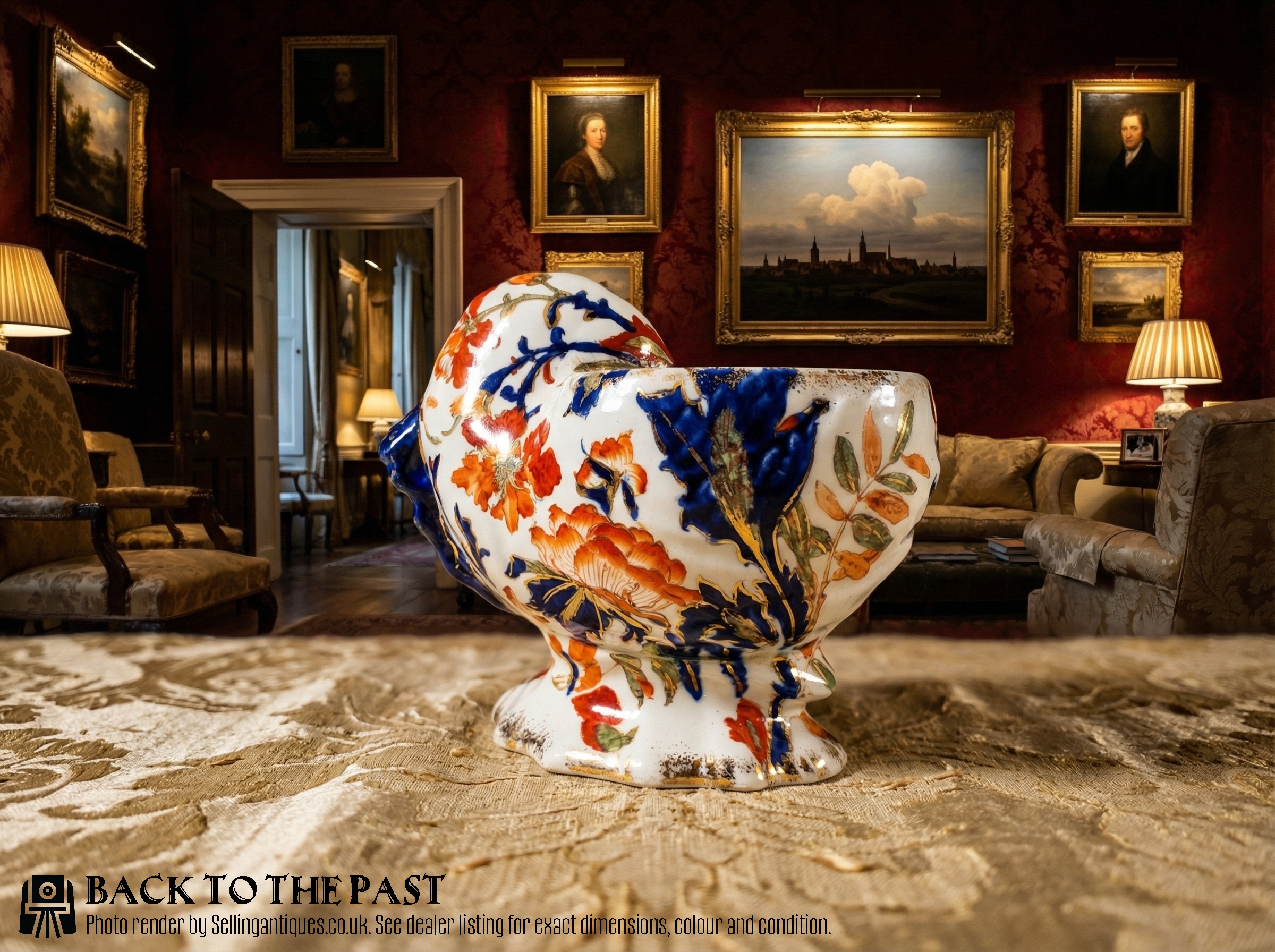
Victorian Pottery Tableware
Victorian pottery tableware comprises nineteenth-century ceramics created for dining, tea service, and food presentation. The pieces on this page span the Victorian period and include items dated from the eighteen-sixties through the eighteen-nineties.
Buyers encounter a variety of functional forms ranging from lidded tureens and cheese dishes to tea sets, cream jugs, and salad bowls. Styles represented across these items include Victorian Neoclassical, Victorian Naturalism, Arts and Crafts, and Art Nouveau.
Materials and Construction
Makers utilised earthenware, stoneware, and ceramic bodies as the structural base for these utilitarian and decorative vessels. Earthenware forms often received colourful glazes, whilst denser stoneware provided durability for heavier service items.
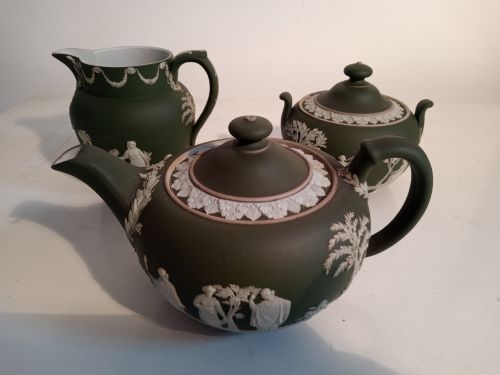
Surface decoration relied heavily on transfer printing, majolica glazing, and applied detailing such as Jasperware reliefs. Metal elements like silver plate and gilt accents occasionally complemented the ceramic bodies.
Victorian Pottery Tableware Retail Price Guide 2026
Typical asking prices for victorian pottery tableware among the pieces listed under this phrase on Sellingantiques today, from the lower quarter to the upper quarter. They describe what is for sale here now, not the wider market.
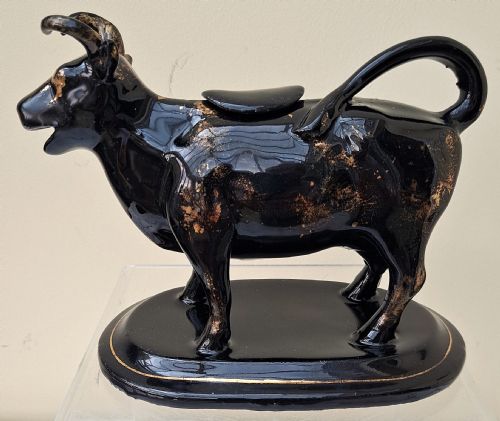
Form types on this page include cheese dishes, cow creamers, tureen sets, and salad bowls.
Distinctions in Quality
Quality in these ceramics rests upon the crispness of moulded relief details and the precise application of coloured glazes. Superior majolica displays vibrant, even colour distribution without pooling or dull patches.
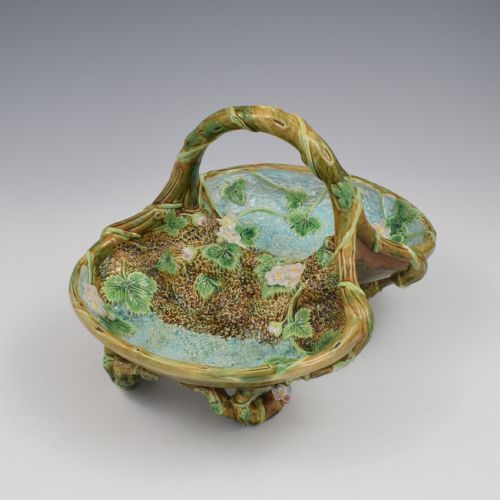
Makers marked distinction is also evident in the complexity of form, such as the sculptural modelling found on animal creamers and botanical baskets. Well-preserved transfer printing exhibits sharp lines and consistent ink depth across the entire surface.
Wedgwood·George Jones·Doulton Lambeth·Ridgways·Masons
The Victorian Pottery Tableware Glossary
- Majolica
- A type of earthenware characterised by colourful lead glazes applied over an opaque white tin glaze. It achieved popularity in the nineteenth century for naturalistic fruit and leaf designs.
- Transfer Print
- A decoration technique where an engraved metal plate transfers a design onto paper, which is then applied to the ceramic before firing. Blue and white patterns are a frequent result of this process.
- Jackfield
- A glossy black-glazed pottery originating from Shropshire. These pieces often feature gilded highlights over a dark earthenware body.
Victorian Pottery Tableware: Frequently Asked Questions
How do I date victorian pottery tableware?
Dating relies on stylistic markers, impressed factory marks, and recorded operational periods of the potteries. Examining the glaze type and decorative style also helps narrow the production window.
Many pieces carry specific registry marks or maker stamps stamped directly into the ceramic base during manufacturing.
Were these items used daily?
Many items served practical functions at nineteenth-century dining and tea tables, from holding butter and cheese to serving soup and custard. Everyday utility shaped their sturdy earthenware and stoneware construction.
Specialist vessels like spoon warmers and decorative majolica baskets also catered to formal dining customs of the era.
What is a cheese dome?
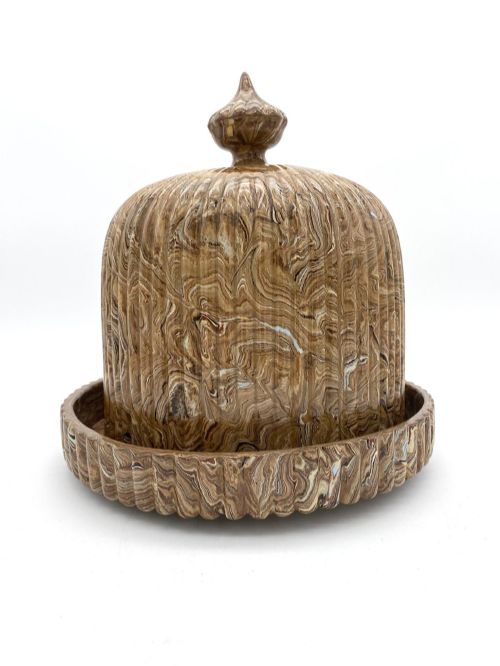
A cheese dome is a fitted cover designed to protect cheese on the dining table, usually paired with an underplate or dish. They kept food fresh and provided an attractive centrepiece for the end of a meal.
Examples from this period often feature majolica decoration or transfer-printed motifs.
How should I clean glazed ceramics?
Gentle washing with warm water and mild soap preserves the historic glazes and delicate gilt or silver-plated accents. Avoid harsh scrubbing or abrasive materials that might damage the surface.
Careful handling prevents chipping on the raised moulded edges of earthenware and majolica pieces.