

Victorian Pottery Statues
These victorian pottery statues bring mantelpieces and side tables alive with the colourful character of the nineteenth century.
Victorian Pottery Statues
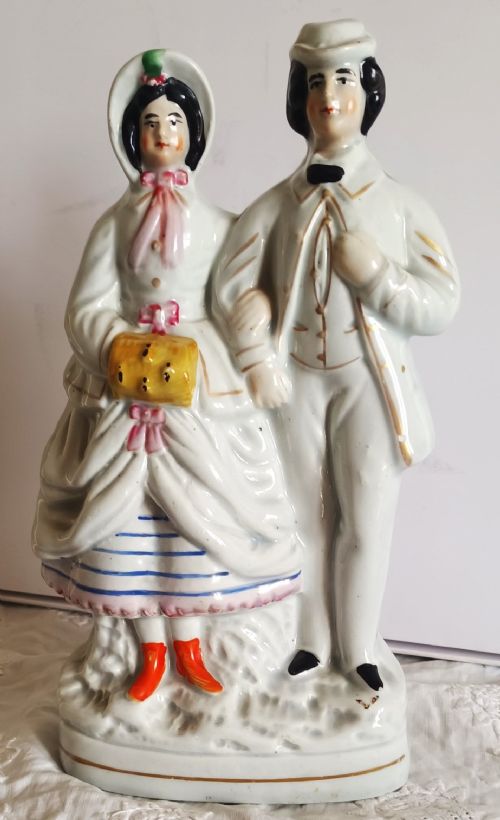
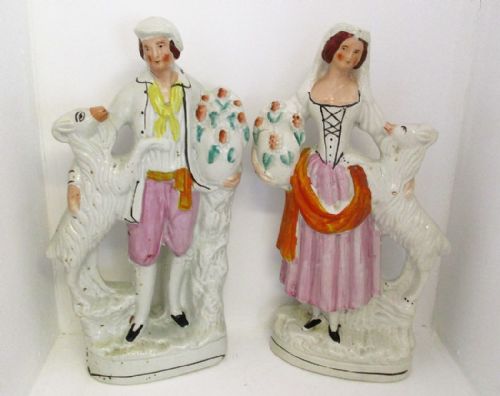
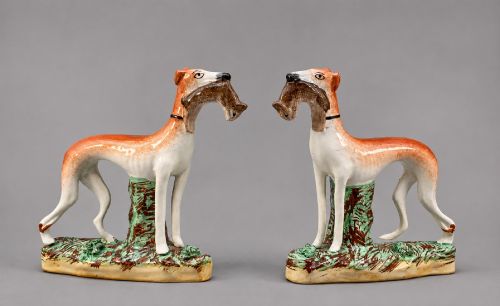
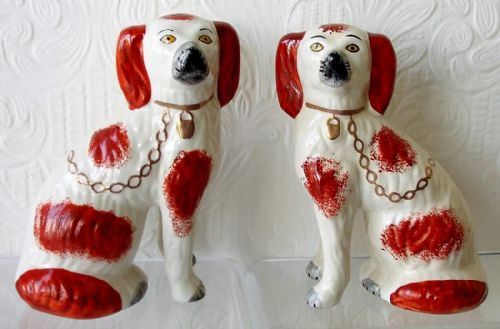
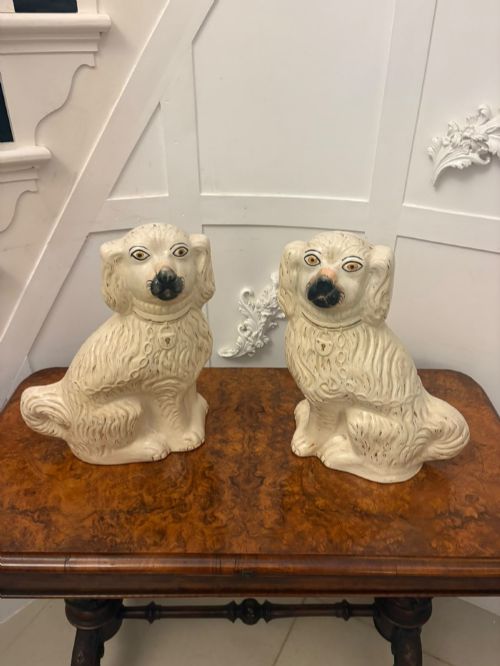
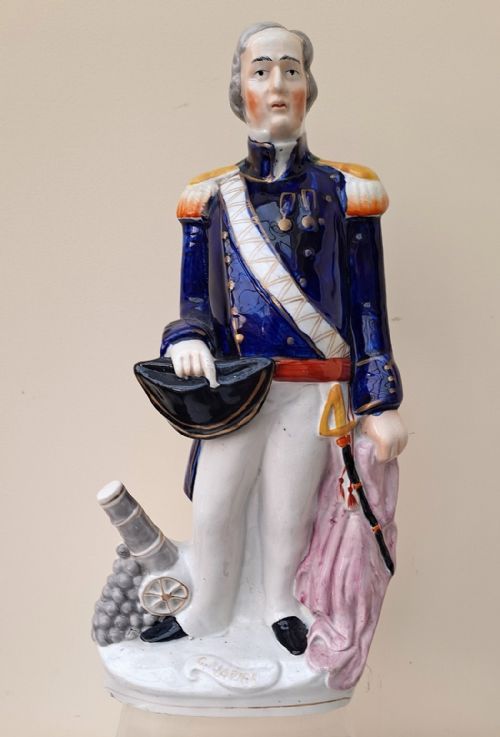
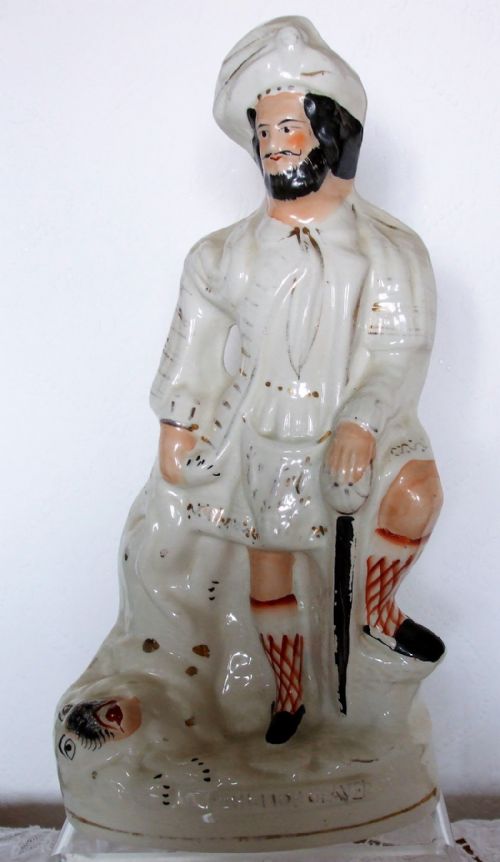
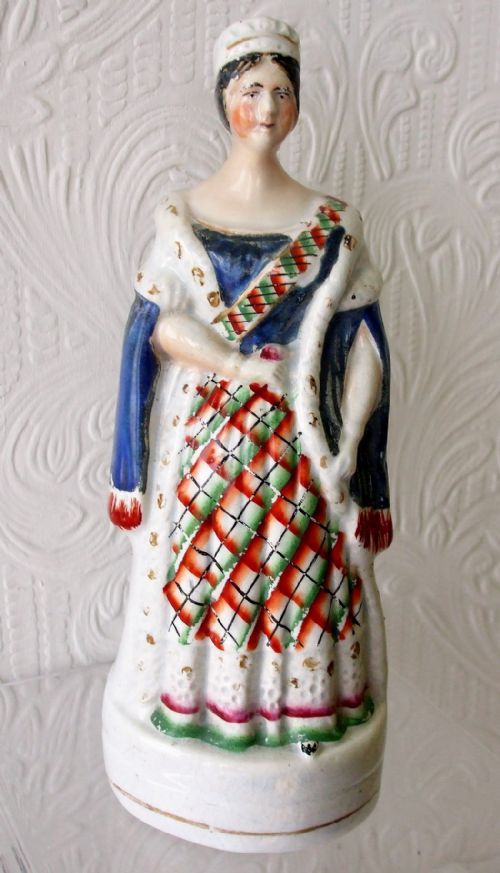
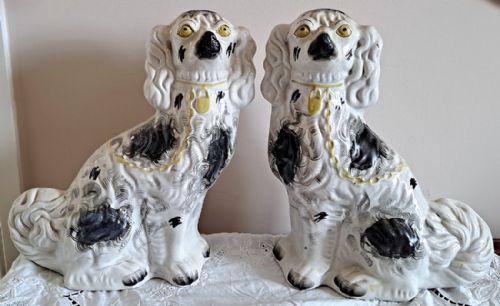
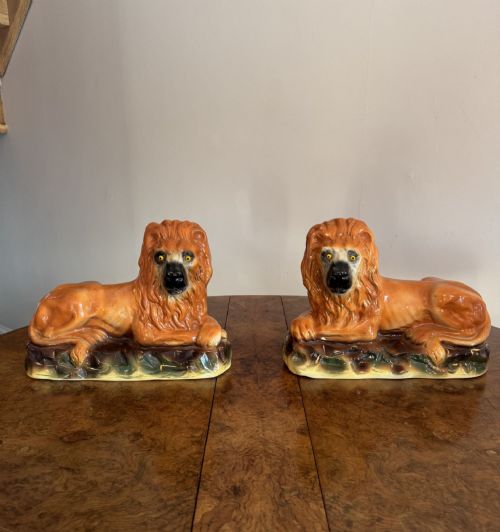
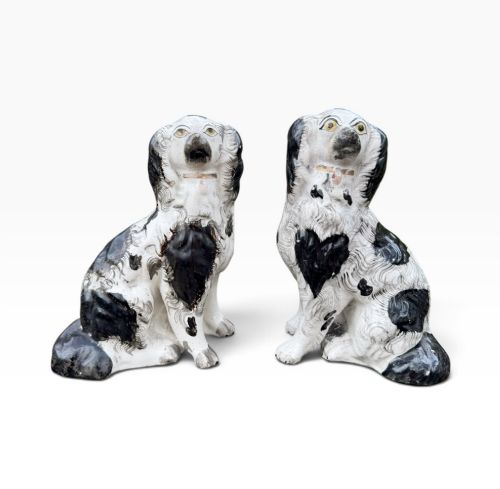
Victorian pottery statues span domestic figures, royal portraits, and theatrical subjects moulded in clay during the nineteenth century. The examples met most often on this page take the form of Staffordshire pottery figures, particularly pairs of spaniels, greyhounds, poodles, and hunting dogs.
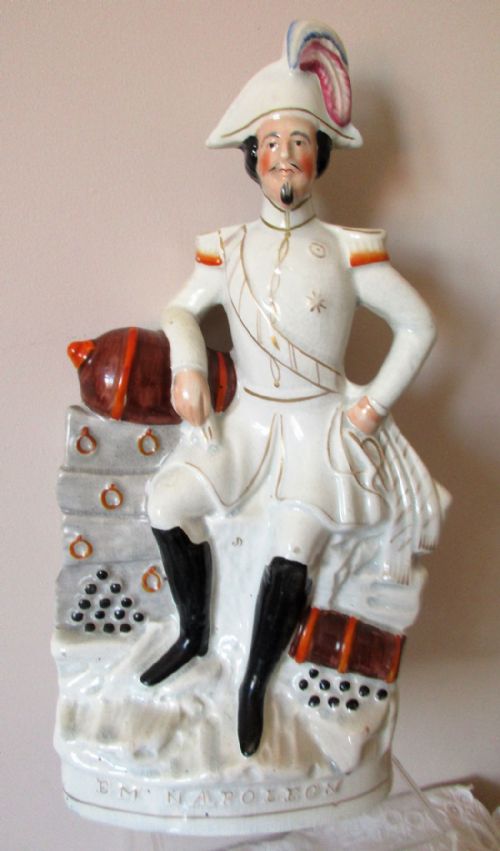
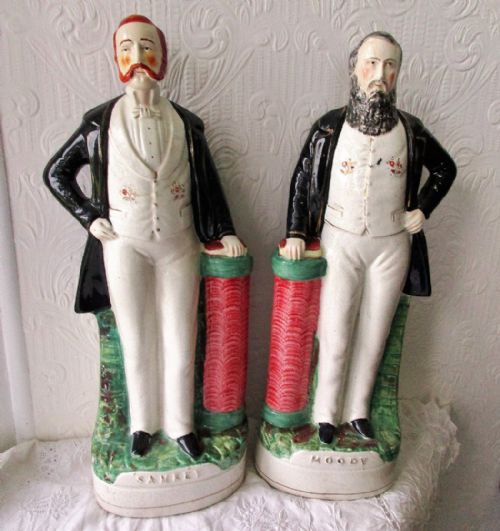
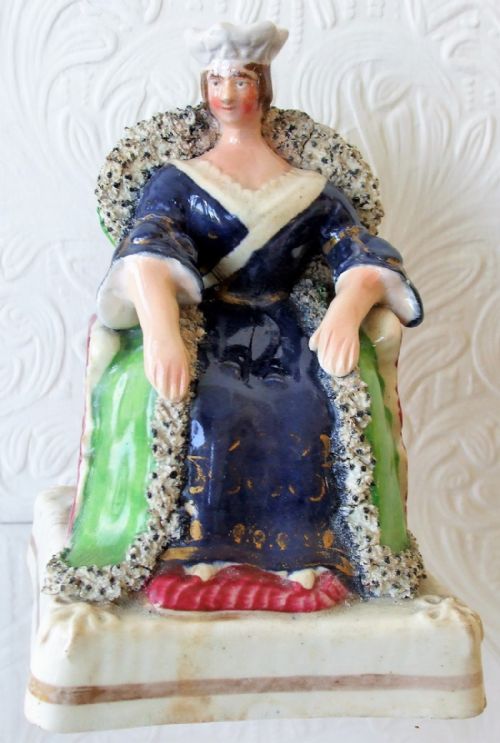
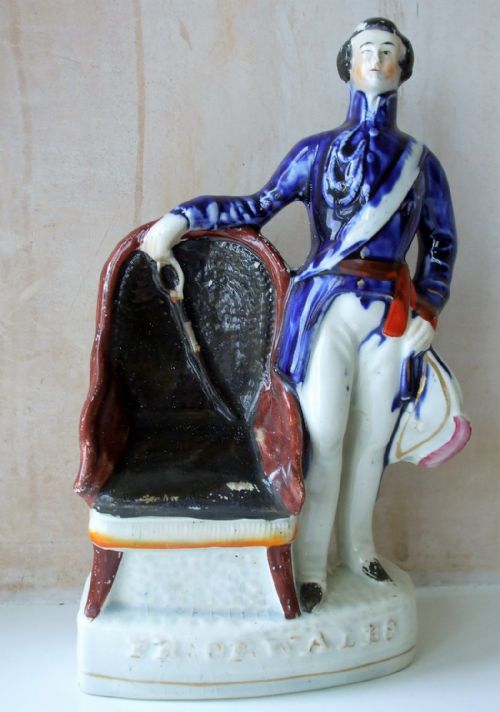
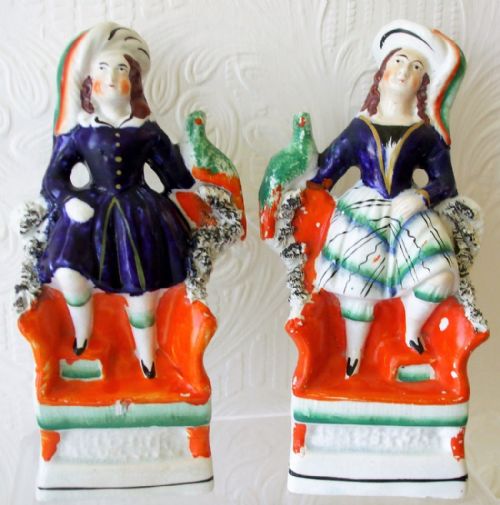
Makers also produced commemorative portraits of royalty, military leaders, and famous preachers such as Moody and Sankey, alongside literary characters like Robin Hood and Joan of Arc. These pieces served as affordable domestic ornaments for middle-class mantelpieces rather than fine art gallery displays.
The regional potteries of Staffordshire generated the vast majority of these ceramic ornaments, though occasional continental figures and majolica works appear alongside the domestic output. Buyers encounter both single figures and symmetrical pairs intended to flank a clock or adorn a fireplace.
How They Were Made
The painting process relied on skilled handwork rather than precise industrial printing, resulting in charming variations in brushstrokes and colour saturation across individual pieces. Earthenware bodies received a smooth glaze layer that provided a glossy finish designed to catch the flickering light of nineteenth-century oil lamps and coal fires.
Victorian Pottery Statues Retail Price Guide 2026
Typical asking prices for victorian pottery statues among the pieces listed under this phrase on Sellingantiques today, from the lower quarter to the upper quarter. They describe what is for sale here now, not the wider market.
The selection includes portrait figures, theatrical subjects, and animal models from the nineteenth century.
What Varies in Quality
Quality rests in the crispness of the mould pressing and the precision of the hand-painted enamels. Finer examples retain sharp facial expressions and clean separation between colours without messy pigment bleeding across the glazed surface.
Sampson Smith·John Bevington·Goldscheider
The Victorian Pottery Statues Glossary
- Earthenware
- A porous pottery body fired at lower temperatures than stoneware or porcelain. It requires a glaze layer to become completely waterproof.
- Lead Glaze
- A glossy coating containing lead oxide applied to ceramic bodies before firing. It produces a smooth, reflective surface characteristic of nineteenth-century pottery.
- Enamel Paint
- Vitreous pigments applied over the fired glaze and fixed with a secondary low-temperature firing. This technique allowed makers to achieve bright, varied surface colours on domestic figures.
- Comforter Spaniels
- Staffordshire pottery dog figures produced in matched pairs to sit on either side of a fireplace. They gained popularity as domestic hearth ornaments throughout the Victorian era.
- Staffordshire Figures
- Ceramic ornaments moulded and painted in the pottery towns of North Staffordshire. They encompass animals, human portraits, and theatrical subjects from the nineteenth century.
Victorian Pottery Statues: Frequently Asked Questions
What are comforter spaniels?
Comforter spaniels are ceramic dog figures produced in pairs during the nineteenth century to sit upon living room mantelpieces. Potters modelled them after popular lap dogs of the era.
Families placed them facing inwards towards each other to guard the hearth. They remain the most recognizable form of Victorian Staffordshire pottery.
How were these figures displayed?
Victorian households arranged these statues on mantelpieces, sideboard tops, and occasional tables as cheerful decorative accents. Symmetrical pairs frequently flanked clocks or centerpieces.
Their bright enamel colours and gold leaf accents caught the light in dimly lit nineteenth-century parlours. They brought stories, loyalty, and public figures directly into the domestic interior.
Are these figures solid ceramic?
Most of these statues are hollow rather than solid clay. Potters used press moulds to form the front and back halves before joining them together before the kiln firing.
This hollow construction prevented the thick clay from exploding under the extreme heat of the kiln. Small vent holes on the underside allowed trapped air to escape during the firing process.
How do I identify royal portrait figures?
Makers inscribed names or titles directly onto the bases or fronts of portrait pieces to identify monarchs and public figures. Common subjects include Queen Victoria, the Prince of Wales, and military leaders.
Their clothing and regalia often reflect specific historical events or coronations of the nineteenth century. These commemorative items allowed ordinary citizens to display their patriotism at home.