



Victorian Pottery Column
These Victorian pottery column pieces bring architectural presence and rich glaze to interior spaces, offering tall pedestals and plant stands that elevate everyday greenery.
Victorian Pottery Column
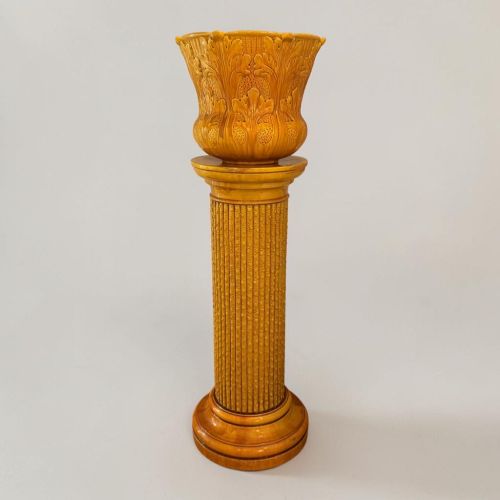
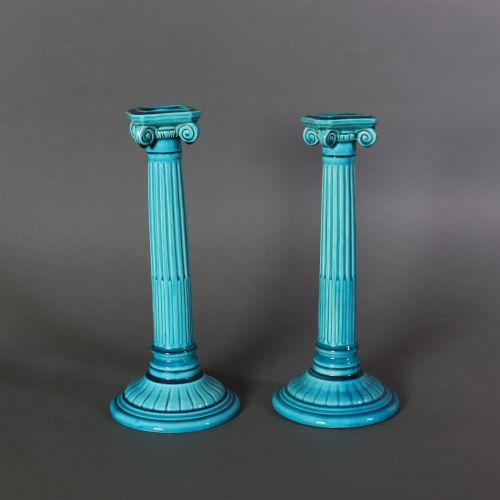
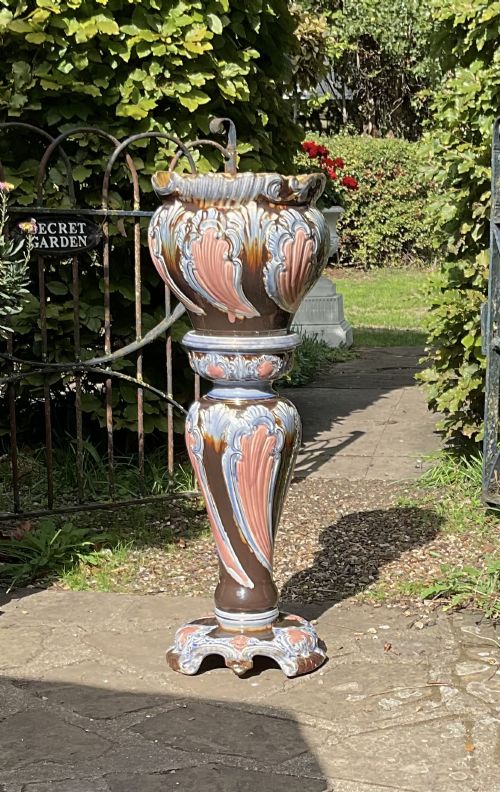
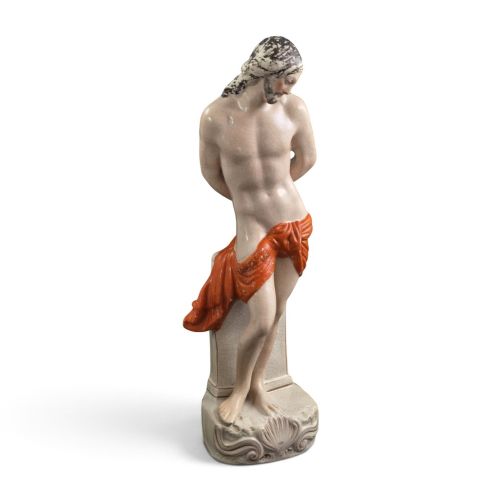
When you search for a victorian pottery column, you find tall architectural supports, plant stands, and matching jardinières designed to display greenery or hold umbrellas. The pieces range from grand pedestals to smaller candlesticks and figurative works like Christ at the column.
You are most likely to meet glazed earthenware and majolica forms from the nineteenth century on this page. These tall columns often separate into a matching top vessel and a supporting base pedestal.
The aesthetic embraces both naturalistic rustic themes and the colourful glaze work of the Arts and Crafts movement. Makers employed techniques that produced rich textures, from high gloss majolica to matte faience.
Materials and construction
Potters built these columns using earthenware and ceramic bodies moulded into structural forms. The clay supported heavy botanical vessels and tall pedestal shafts without sagging during firing.
Glazing transformed the porous earthenware, sealing the surface with colourful majolica or faience coatings. These finishes gave the columns their characteristic sheen, depth of colour, and resistance to water from plant pots.
Victorian Pottery Column Retail Price Guide 2026
Typical asking prices for victorian pottery column among the pieces listed under this phrase on Sellingantiques today, from the lower quarter to the upper quarter. They describe what is for sale here now, not the wider market.
One dramatic nineteenth century pottery column even depicts Christ at the column in Staffordshire earthenware.
Judging quality in column ceramics
Quality rests in the crispness of the moulded architectural detail and the depth of the glaze. Superior columns retain sharp fluting, clean botanical relief, and even coverage without pooling or dry patches in the colour.
The integrity of the structural join between column and base determines the success of a tall stand. Well-executed pairs and matched sets display uniform shrinkage and consistent colour balance across both components.
Burmantofts Faience·Woodlesford Art Pottery
The Victorian Pottery Column Glossary
- Majolica
- A type of earthenware coated with an opaque tin glaze and painted with brightly coloured metallic oxide enamels. This technique creates a brilliant, glossy surface finish.
- Jardiniere
- An ornamental ceramic pot or bowl designed to hold a living plant. These vessels frequently sit atop a matching column pedestal.
- Pedestal
- A tall architectural support structure that elevates a jardiniere, urn, or figure. It forms the vertical column component of a matched display set.
- Earthenware
- Porous pottery fired at lower temperatures than stoneware or porcelain. It serves as the primary body material for these glazed architectural forms.
Victorian Pottery Column: Frequently Asked Questions
What were pottery columns used for?
These tall ceramic columns primarily served as pedestals to elevate potted plants, ferns, and decorative jardinières within Victorian parlours and halls. Some taller versions functioned as umbrella and stick stands near doorways.
Others took decorative forms, such as candlesticks or figural representations, bringing sculptural height and colour to interior display surfaces.
How do I style a column at home?
Place a tall pedestal in an empty corner or framing a doorway to add vertical interest and architectural structure to a room. Topping the column with a trailing plant or a large jardinière highlights its original purpose.
Ensure the floor is level and the weight of any top vessel distributes evenly across the column base to maintain stability.
Are these pieces usually sold as pairs?
Some columns and jardinières survive as matched pairs, particularly those produced for flanking fireplaces, doorways, or formal hall arrangements. Other examples appear as single tall pedestals or individual plant stands.
Matching sets require careful comparison of glaze tone and height to confirm they originated together.