


Victorian Portraiture Canvas
A victorian portraiture canvas captures the presence of people, pets and notable figures in oil paint, offering a direct window into nineteenth-century life.
Victorian Portraiture Canvas
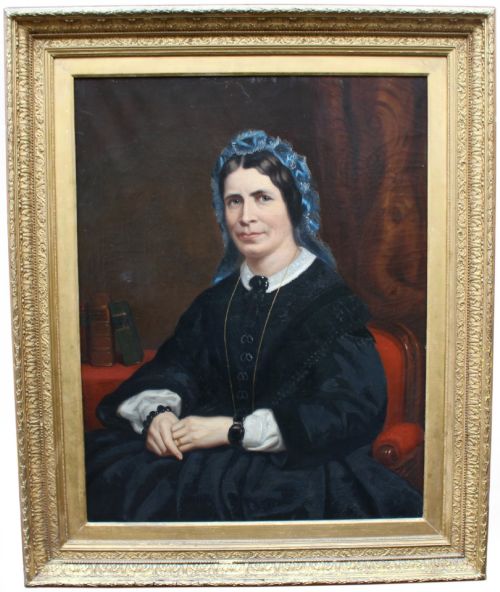
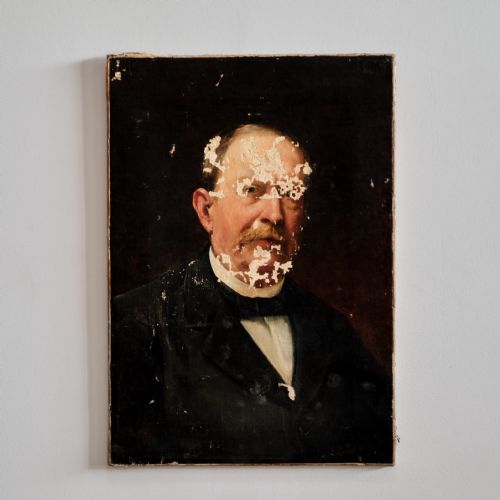
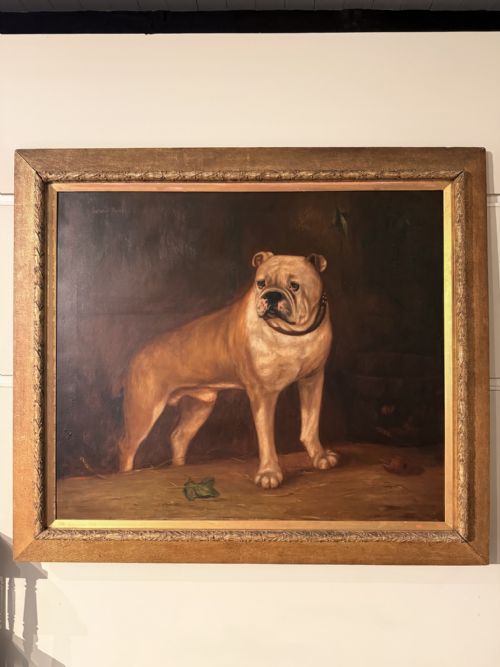
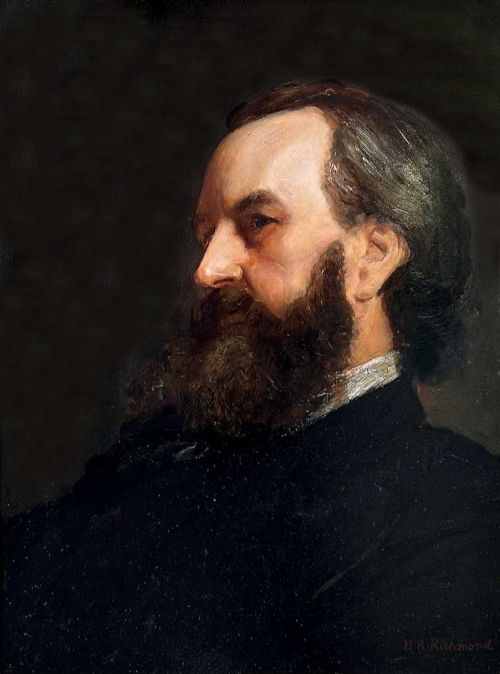
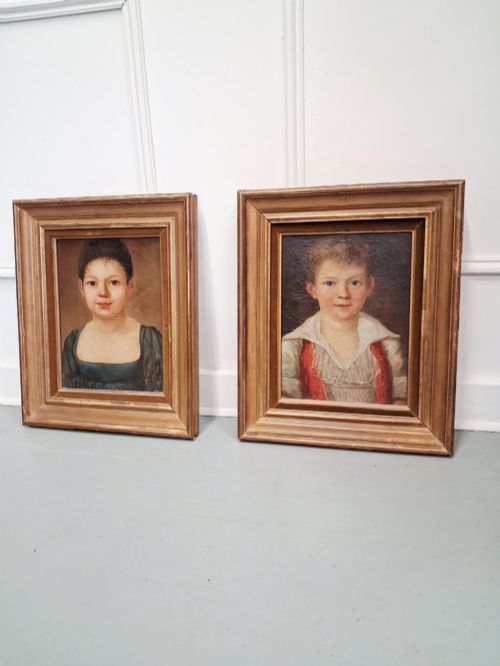
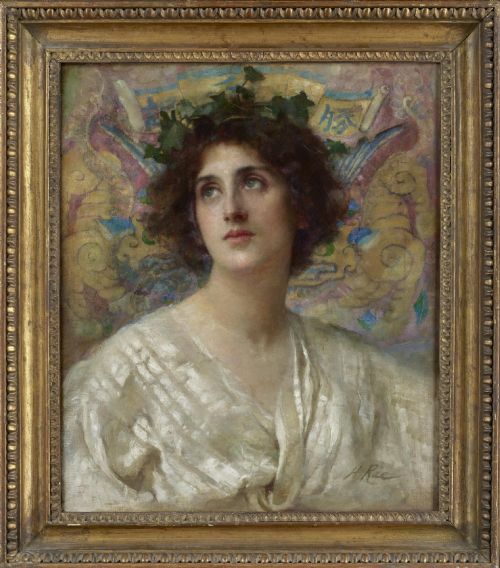
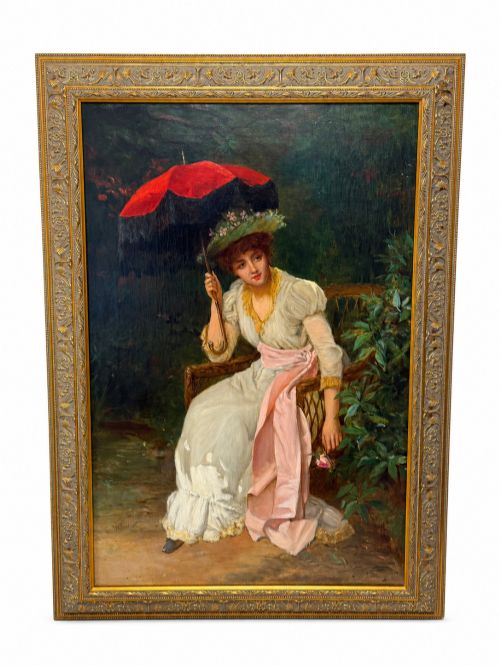
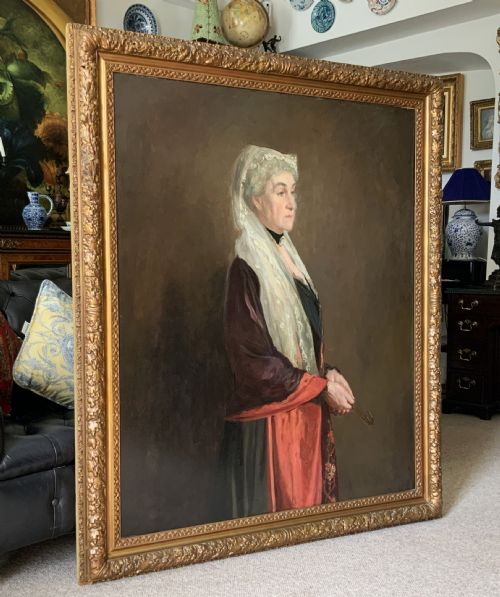
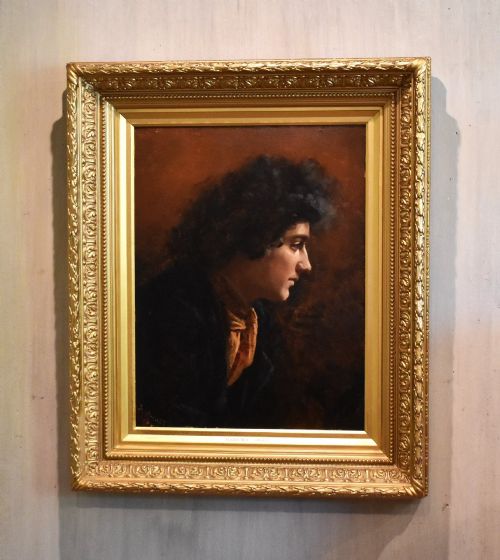
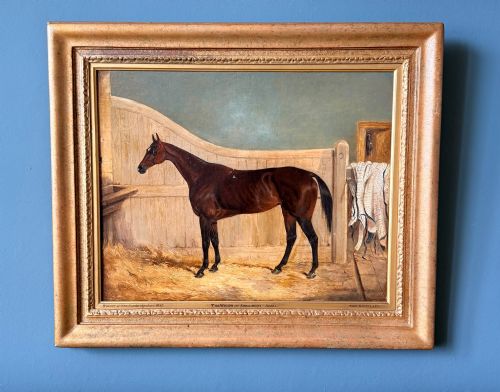
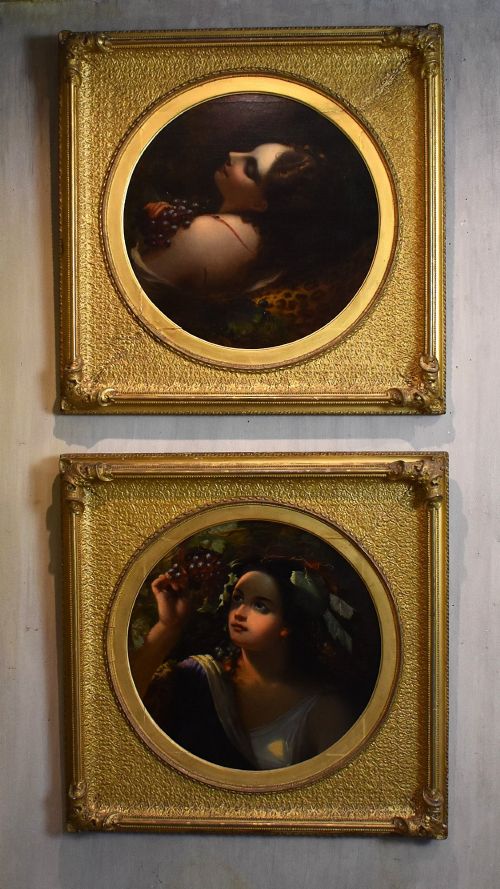
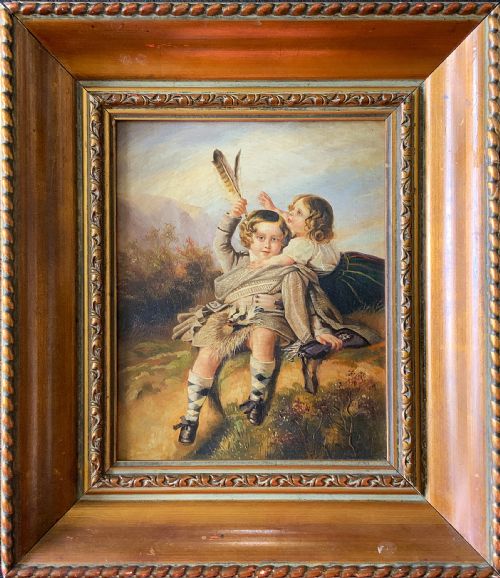
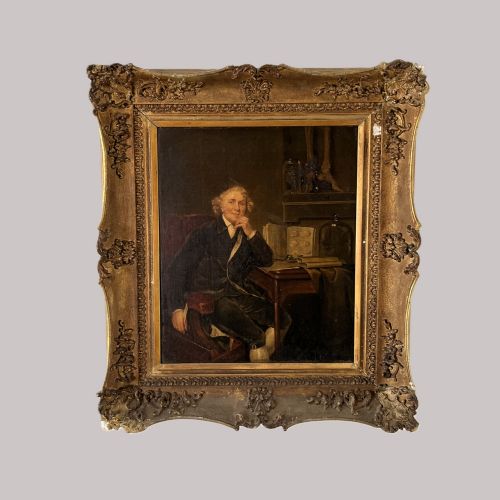
A victorian portraiture canvas comprises oil paintings originating predominantly from the nineteenth century, encompassing the Victorian era alongside adjacent periods spanning from 1800 through to the Edwardian years and 1920. The selection on this page centres on painted likenesses, recording individuals, children, sporting figures, and animals such as dogs and horses.
Buyers encounter works executed on canvas, sometimes unframed or supported by wood stretching frames, with subjects ranging from stately women and naval officers to domestic pets and historical personalities. These pieces derive from British fine art traditions, demonstrating academic, romantic, and classical stylistic influences.
The most common forms on this page are oil paintings of human subjects and animal portraits, often attributed to named artists of the period or presented as nineteenth-century works. They record the likenesses of family members, political figures, and prize animals with varying degrees of scale and finish.
Materials and technique
The works rely upon oil paint applied to woven canvas supports, utilising the slow-drying and blendable properties of the medium to build depth, flesh tones, and textures. Canvases are typically mounted on wooden stretchers to maintain tension for the painted surface.
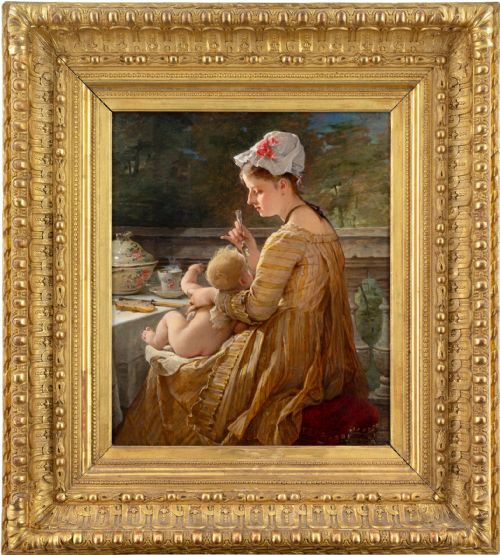
Many surviving pieces retain their original or period frames constructed from wood, enriched with gesso mouldings and giltwood finishes. These gilt frames provide a reflective border that complements the dark, rich palettes of nineteenth-century oil painting.
Listings feature works from the nineteenth century, Victorian era, and Edwardian period, executed in oil paint on canvas.
Distinctions in quality
Quality rests upon the skill of the brushwork and the anatomical or facial precision achieved by the painter, separating standard studio productions from accomplished works by recorded artists. Masterly handling of light, shadow, and fabric texture distinguishes finer canvases from simpler decorative portraits.
The condition of the oil paint and the canvas support influences the visual integrity of the piece, with undisturbed surfaces and stable paint layers representing the upper tier. Furthermore, the presence of an original giltwood and gesso frame enhances the historical completeness of the artwork.
W.R. Waters·Adelaïde Salles-Wagner·William Blake Richmond·Henrietta Rae·William Oliver·Florence Small·Thomas Walker Bretland·Theodore Jensen·Edward Lloyd of Ellesmere·John Robert Dicksee·Valentine Thomas Garland·Charles Sillem Lidderdale·John Emms·Thomas Robson·Edward Armfield·Henry Scott·Rudolph Lehmann·John Partridge
The Victorian Portraiture Canvas Glossary
- Oil on Canvas
- A painting medium where pigments bound in drying oil are applied to a woven fabric support. This technique allows for rich colour blending and impasto effects.
- Giltwood
- Wood carved and coated with a thin layer of gold leaf or metallic powder. It is frequently found on nineteenth-century picture frames.
- Gesso
- A plaster-like mixture applied to wooden frames as a base before gilding or painting. It provides a smooth surface for intricate moulded details.
- Stretchers
- The wooden frames that hold a painting canvas taut. Period frames often show wedge keys in the corners for adjusting tension.
- Academic
- Art created in accordance with the formal standards of European academies. These works emphasise classical draughtsmanship, anatomical accuracy, and historical or portrait subjects.
Victorian Portraiture Canvas: Frequently Asked Questions
What subjects appear on these canvases?
The works depict a wide variety of subjects, including individual gentlemen, stately women, children, naval officers, and political figures. In addition to human subjects, many canvases record prized animals such as terriers, spaniels, and horses.
Artists of the period also painted genre scenes and family portraits, capturing contemporary dress, domestic settings, and sporting pursuits with considerable detail.
How do I date a nineteenth-century portrait?
Dating relies upon stylistic clues, costume details, sitter identification, and sometimes signatures or inscriptions left by the artist on the canvas or stretcher. Hairstyles, bonnets, uniforms, and dress cuts offer reliable chronological markers for the Victorian period.
Written records on the reverse of the canvas or biographical details of the sitter can further narrow the decade of creation.
Are these paintings supplied with frames?
Many listings include period wooden frames, often finished in giltwood and decorated with gesso mouldings that complement the artwork. Some pieces are sold as unframed canvases or mounted on their original wooden stretchers.
Checking the individual description confirms whether a specific frame accompanies the portrait.
How should I care for an oil painting?
Protect the canvas from direct sunlight, extreme temperature fluctuations, and high humidity to prevent the oil paint from cracking or warping. Dust the surface gently with a soft, dry brush without applying pressure to the paint layer.
Avoid using water or chemical cleaners on the canvas or the gilt frame.