




Victorian Porcelain Mantel Ornaments
Victorian porcelain mantel ornaments bring character to a fireplace, offering charming figures and vases shaped in the nineteenth century.
Victorian Porcelain Mantel Ornaments
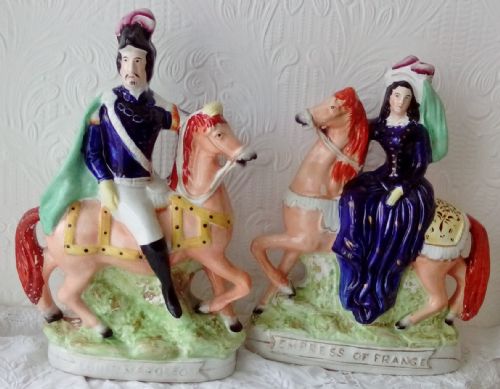
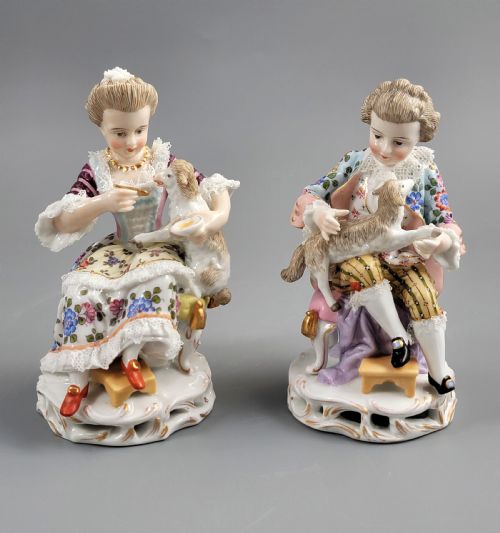
Victorian porcelain mantel ornaments comprise nineteenth-century decorative figurines, pottery figures, and vases designed to sit upon a fireplace ledge. You will frequently encounter pairs of Staffordshire dogs, spaniels, greyhounds, and lions alongside continental pastoral groups and spill vases.
The selections span English traditional potteries and continental workshops, ranging from modest earthenware figures to finer porcelain pieces. Dating stretches across the nineteenth century, including specific decades from the eighteen-forties through to nineteen hundred.
Pairs dominate the selection, often intended to mirror each other at opposite ends of a mantelpiece. Figures depict animals, human musicians, historical personages, and children with pets, reflecting the domestic tastes of the period.
Materials and manufacture
Potters utilised ceramic, earthenware, and porcelain bodies, applying lead glazes and enamel colours to finish the surfaces. Many pieces incorporate gilt highlights or gold leaf applied over the glazed body.
Makers shaped these ornaments using traditional moulding and casting techniques before hand-painting details onto the figures and vases. Bisque porcelain appears alongside glazed ceramics, while certain continental figures retain their original glass domes.
Judging quality and craftsmanship
The distinction between standard pottery figures and finer porcelain or parian pieces lies in the refinement of the material and the sophistication of the modelling. Pairs matching closely in size and painted detail command greater regard than mismatched or heavily worn survivors.
Thomas Parr·Sitzendorf·Volkstedt Triebner Ens And Eckert·Beswick·Copeland
The Victorian Porcelain Mantel Ornaments Glossary
- Staffordshire
- A term denoting pottery and earthenware produced in the Staffordshire region of England, famously including spaniels and figures.
- Bisque
- Unglazed white porcelain that has been fired once, offering a matte, marble-like texture found on nineteenth-century figures.
- Spill vase
- A hollow vase designed to hold wooden spills used for lighting fires or pipes, frequently modelled alongside animals or figures.
- Parian
- A fine white unglazed porcelain resembling marble, introduced in the nineteenth century and utilised for sculptural figures.
- Gilt
- A thin layer of gold or gold-like material applied to the surface of ceramics to highlight details and borders.
Victorian Porcelain Mantel Ornaments: Frequently Asked Questions
What are Victorian porcelain mantel ornaments?
These pieces are nineteenth-century ceramic and porcelain figures, animals, and vases created to decorate fireplace mantelpieces.
They encompass English pottery dogs and figures alongside continental porcelain pastoral scenes and decorative vessels.
How were these mantel ornaments used?
Households placed them symmetrically upon mantelpieces above fireplaces to add colour and decoration to Victorian parlours.
Some hollow forms, such as spill vases, also served a practical purpose by holding tapers used for lighting fires.
How do I care for antique porcelain?
Keep porcelain ornaments away from direct sunlight and dust them gently with a dry, soft brush to protect the enamel and gilding.
Avoid using liquid cleaners or submersing antique pieces in water, particularly those with delicate painted details or lead glazes.
How can I tell the period?
Dating relies on stylistic conventions, glaze characteristics, and recorded maker signatures typical of nineteenth-century production methods.
Changes in ceramic bodies from heavier earthenware to finer porcelain and parian across the decades also help establish approximate dates.