



Victorian Porcelain Jewellery
Victorian porcelain jewellery pieces combine delicate painted ceramic plaques with precious metal mounts, offering an enduring elegance that collectors prize.
Victorian Porcelain Jewellery
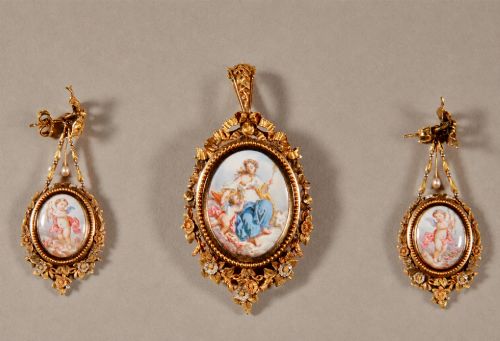
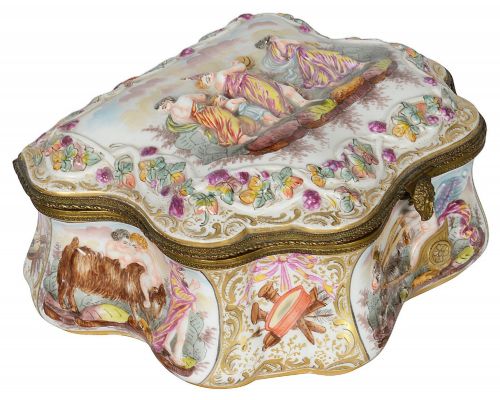
Victorian porcelain jewellery encompasses delicate hand-painted miniatures, ornate table caskets, and decorative brooches created during the nineteenth century. These items merge ceramic art with wearable or tabletop ornaments, often featuring classical or romantic motifs painted onto the porcelain surface. You will frequently encounter French and Italian examples, alongside British pieces by makers such as Wedgwood.
The form stretches from small personal adornments like brooches and parures to larger storage pieces including jewellery caskets, trinket boxes, and miniature writing cabinets. Ormolu, brass, and gold mounts frequently frame the porcelain panels, securing the fragile ceramic components within structured metal housings. Pieces span several decades of the nineteenth century, reflecting evolving aesthetic movements from Rococo Revival to Neoclassical styles.
How they were made
Artisans created these objects by combining fired ceramic bodies with metal mounts, often employing ormolu, gilt brass, or solid gold to house the porcelain. Hand-painted miniature artwork was applied directly to the porcelain surface, sometimes accented with gold leaf and enamel detailing before a final firing fixed the pigments.
Metalwork involved casting and chasing brass or ormolu frames to securely clasp the porcelain plaques, trinket boxes, and caskets. Hinges, clasps, and internal linings were meticulously fitted by hand to ensure the structural integrity of these decorative items.
Victorian Porcelain Jewellery Retail Price Guide 2026
Typical asking prices for victorian porcelain jewellery among the pieces listed under this phrase on Sellingantiques today, from the lower quarter to the upper quarter. They describe what is for sale here now, not the wider market.
Listings feature items spanning the nineteenth century, including specific dates from eighteen-sixty to nineteen-hundred.
What varies in quality
The refinement of the hand-painted miniature work dictates the upper tier of quality, distinguishing master artistry from standard factory output. Finer pieces display crisp brushwork, nuanced facial expressions, and detailed background scenes on the porcelain plaques.
The execution and material quality of the metal mounts similarly divide the standard range from exceptional items. Heavy chased ormolu, solid gold settings, and precise mechanical alignment of hinges and lids elevate the overall calibre of a piece.
Wedgwood·Sevres·Capodimonte
The Victorian Porcelain Jewellery Glossary
- Parure
- A matching set of jewellery, typically comprising a necklace, earrings, and a brooch or bracelet designed to be worn together. In nineteenth-century examples, these suites frequently incorporate painted porcelain panels.
- Ormolu
- A method of applying finely ground, high-carat gold to a cast bronze or brass object. This technique imparts a rich, golden finish to the metal frames surrounding porcelain plaques and caskets.
- Capodimonte
- A renowned Italian porcelain tradition originating from Naples. Pieces from this tradition often feature high-relief sculptural detailing and vibrant hand-painted decoration.
- Sevres
- A famous French porcelain manufactory known for producing luxury wares. Items bearing Sevres characteristics typically showcase fine hand-painted reserves against richly coloured grounds with gilt detailing.
Victorian Porcelain Jewellery: Frequently Asked Questions
How do I clean Victorian porcelain jewellery?
Clean these delicate items gently with a soft, dry cloth to remove surface dust without harming the painted surfaces or metal mounts. Avoid liquid cleaners, as moisture can infiltrate hairline cracks in the porcelain or damage gilt surfaces.
For metal mounts, take care to keep polish away from the ceramic plaques. Professional conservation is recommended for pieces with stubborn grime or loose settings.
Are these pieces suitable for daily wear?
Victorian porcelain jewellery requires careful handling due to the fragile nature of ceramic materials and historical metal mounts. Brooches and parures can be worn occasionally with mindful attention to avoid impacts against hard surfaces.
Table caskets and trinket boxes function best as stationary display pieces rather than frequently handled storage. Protecting them from drops and sharp temperature changes preserves both the porcelain and the enamel work.
How can I tell French pieces apart?
French nineteenth-century items often employ finely chased ormolu mounts and distinctive Sevres-style porcelain painting. Look for classical motifs, rich blue ground colours, and elaborate gilt detailing characteristic of the Second Empire.
Stylistic cues such as Rococo Revival curves and Napoleon III opulence point directly to French workshops. Makers frequently integrated porcelain plaques seamlessly into heavy, decorative brass or ormolu frameworks.
What materials make up these objects?
The primary component is porcelain, frequently decorated with hand-painted miniatures, enamel, and gold leaf. Supporting structures rely on metals such as brass, ormolu, gilt brass, and occasionally gold.
Additional elements like pearls sometimes accent jewellery settings or box clasps. This combination of ceramic and metal defines the physical composition of nineteenth-century decorative boxes and wearable items.