




Victorian Pocket Compass
These Victorian pocket compass pieces are sturdy navigational instruments and charms that travellers and officers carried, offering precision craftsmanship in brass and gold.
Victorian Pocket Compass
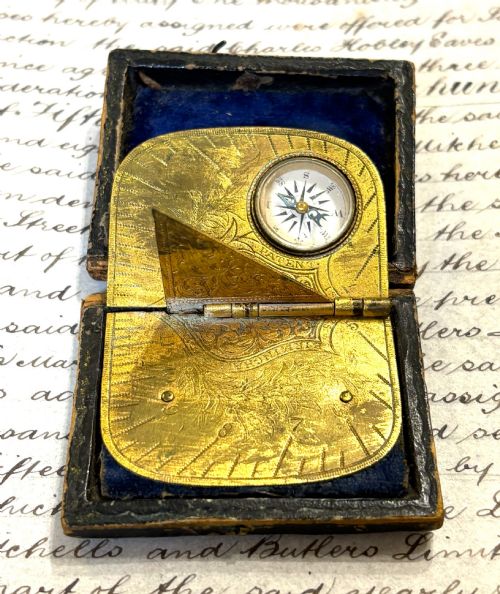
When you search for a Victorian pocket compass, you encounter portable navigational instruments, barometers, and pendants originating from the nineteenth century. These objects include brass field devices, cased circular compasses, and gold charms designed for daily carrying.
Makers such as Baker, Alfred Apps, Stanley, Watkins, and Negretti & Zambra appear across the listings alongside unsigned pieces. These works reflect the utilitarian and decorative output of British workshops during the 1800s and early 1900s.
How they were made
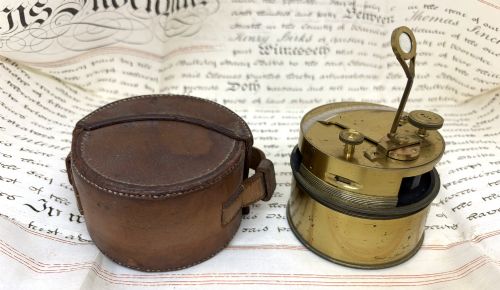
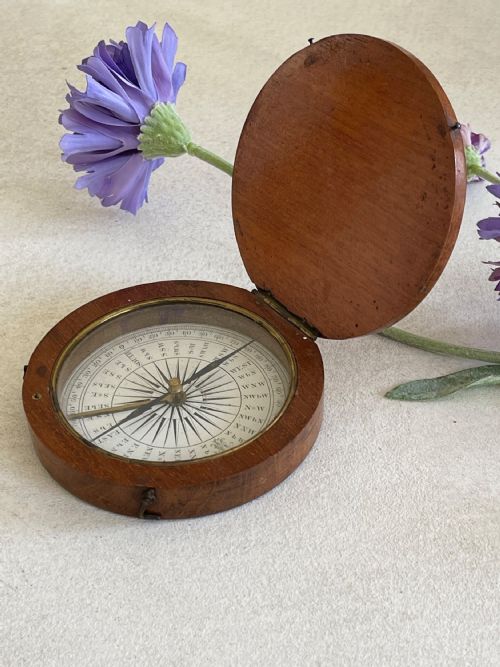
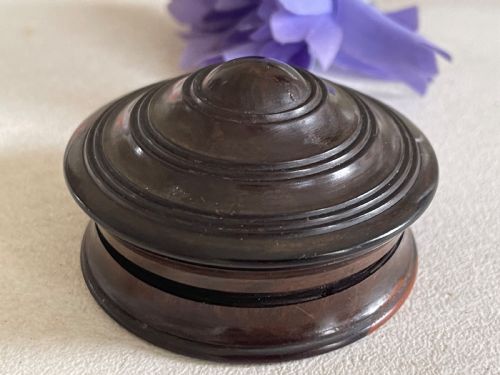
Makers utilised solid brass, 10ct gold, and glass to construct the housing and dials of these instruments, ensuring durability in the field. Timber cases in mahogany and treen provided protective storage for transit.
Interiors often incorporated paper dial faces, velvet linings, and leather or leatherette outer cases. Folding sun dials and gimballed mechanisms required precise mechanical assembly by skilled instrument makers.
Victorian Pocket Compass Retail Price Guide 2026
Typical asking prices for victorian pocket compass among the pieces listed under this phrase on Sellingantiques today, from the lower quarter to the upper quarter. They describe what is for sale here now, not the wider market.
Listings feature 19th Century, Georgian, and early 20th Century periods, utilising brass, glass, mahogany, leather, and 10ct gold.
What varies in quality
The distinction between standard utility items and finer pieces lies in the complexity of the movement and the presence of multi-instrument combinations, such as barometer and thermometer pairings. Signed works by established London makers demonstrate superior finishing and engraving compared to anonymous pieces.
The choice of housing materials also marks a hierarchy, ranging from simple treen and leather cases to 10ct gold pendants and fitted mahogany boxes with paper vernier scales. Preserved casing and legible dial paper elevate the overall character of an instrument.
Baker London·Alfred Apps·Stanley London·Watkins·J Hicks·Negretti and Zambra
The Victorian Pocket Compass Glossary
- Theodolite
- A precision optical instrument for measuring angles in horizontal and vertical planes. Surveyors used these brass devices extensively in the nineteenth century for mapping and construction.
- Galvanometer
- An instrument used for detecting and measuring small electric currents. Victorian examples like those by Alfred Apps featured sensitive needle dials housed in polished cases.
- Gimbal
- A pivoted support that allows the compass housing to remain horizontal regardless of the motion of a ship or carriage. Negretti & Zambra utilised this system in maritime instruments.
- Clinometer
- An instrument for measuring angles of slope, elevation, or depression of an object with respect to gravity. Military surveyors paired these with prismatic compasses.
Victorian Pocket Compass: Frequently Asked Questions
What did people use a pocket compass for?
Travellers, surveyors, and military officers relied on these instruments for navigation, mapping, and fieldwork in the nineteenth century.
Combined versions also allowed users to check atmospheric pressure and temperature while on the move.
How do I know if a compass is Victorian?
Examine the materials, typography on the paper dial, and the construction style of the brass casing. Signatures from London makers operating in the 1800s help confirm the period.
Fitted leather or mahogany cases often reflect nineteenth-century packaging methods.
Are these compasses still accurate?
Many retain their movement, though magnetic interference or age can affect the needle's north-finding capability. They serve primarily as historical instruments and collector pieces today.
Careful handling ensures the delicate glass and internal pivots remain intact.
Why do some compasses have wooden cases?
Mahogany and treen cases protected the delicate glass faces and brass mechanisms during rough travel. Officers and explorers needed robust storage for field conditions.
Lined interiors in velvet or paper kept the instruments secure from knocks.