




Victorian Pitch Pine Seat
These robust victorian pitch pine seat examples bring strong architectural character to a hallway or living space through dense grain and enduring construction.
Victorian Pitch Pine Seat
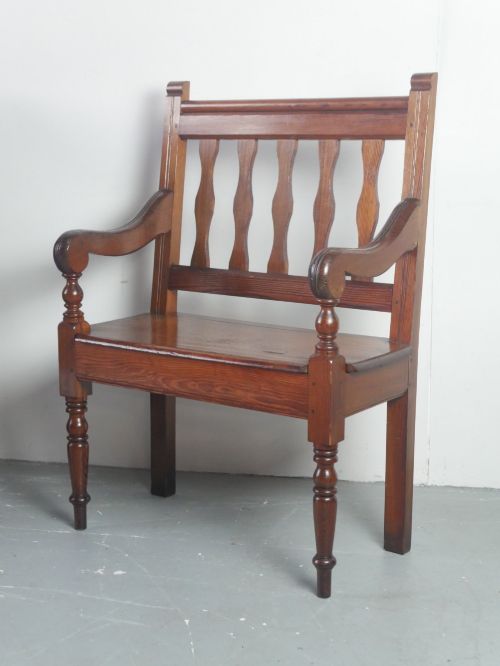
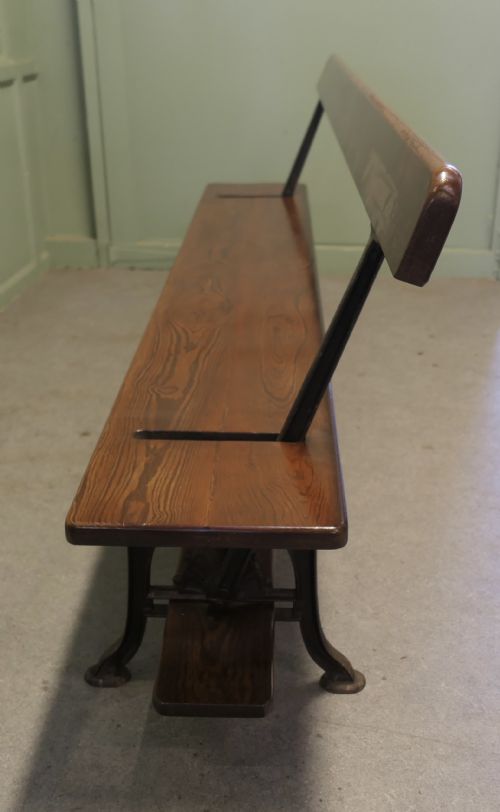
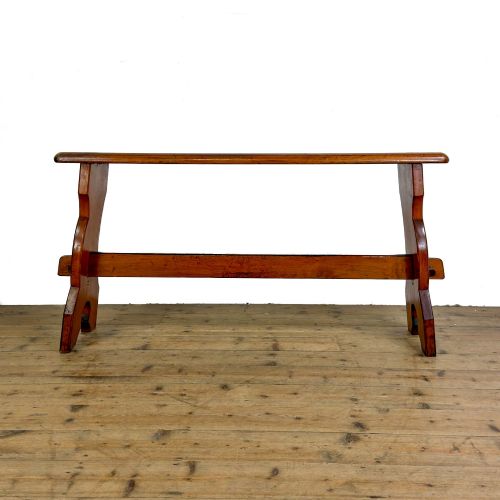
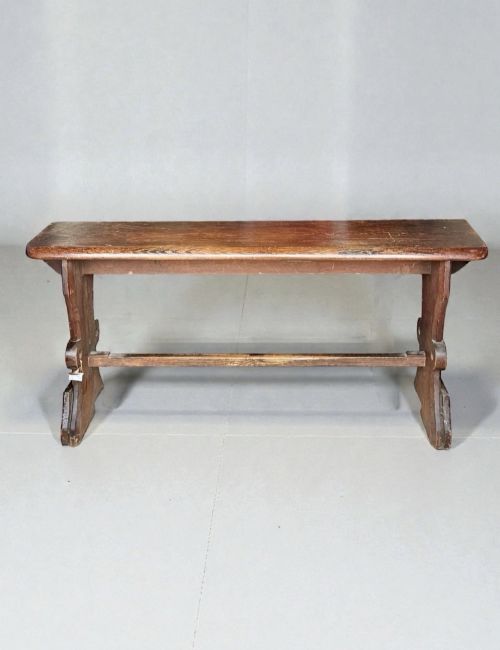
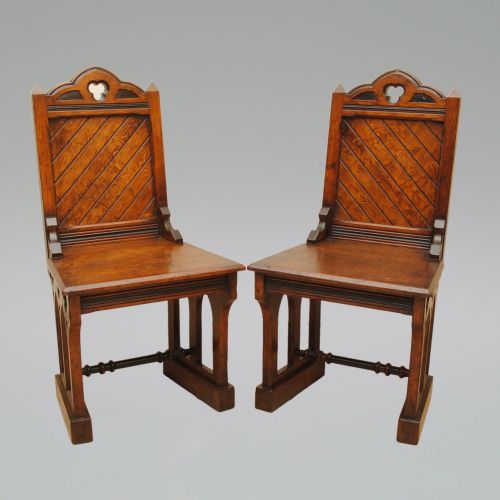
A victorian pitch pine seat encompasses a varied selection of pews, benches, hall chairs, armchairs, and footstools dating from the nineteenth century into the early twentieth century. Buyers seeking a victorian pitch pine seat will encounter robust church pews, ecclesiastical throne chairs, and functional flip-over railway or tram benches designed for heavy public or domestic use.
The surviving pieces demonstrate strong links to Gothic Revival and Arts and Crafts styles, often displaying pointed arches, heavy paneling, and sturdy joinery. Many items originate from ecclesiastical settings or public transport, reflecting the dense timber usage typical of the period.
Materials and construction
Makers utilised dense pitch pine for its characteristic resinous grain and durability, frequently pairing the timber with cast iron, brass, or metal studs. Structural elements rely on solid construction methods, accommodating heavy use in both ecclesiastical and domestic environments.
Surface treatments range from simple waxed finishes that highlight the natural reddish-brown grain to occasional painted sections on larger tables and seating.
Materials documented across the inventory include pitch pine, cast iron, brass, and occasional upholstery fabric with metal studs.
Craftsmanship and proportion
Superior examples of a victorian pitch pine seat display refined Gothic detailing, such as crisp linenfold carving, balanced proportions, and well-executed joinery rather than purely utilitarian assembly. The visual impact depends heavily on the intensity of the resin streaks within the timber grain.
Condition varies according to original function, with pieces removed from churches or transport retaining distinct wear marks that evidence their extensive history of daily service.
The Victorian Pitch Pine Seat Glossary
- Pitch pine
- A durable softwood timber known for its high resin content and pronounced, contrasting grain patterns. It provided exceptional strength for nineteenth-century institutional furniture.
- Gothic Revival
- An architectural and decorative style popular during the Victorian era that drew inspiration from medieval forms. Pieces often feature pointed arches, tracery, and solemn vertical lines.
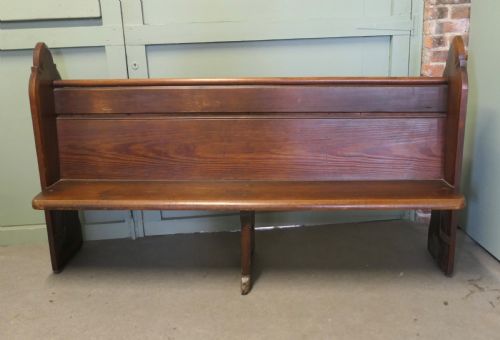
- Pew
- A long wooden bench traditionally fixed within churches or public buildings for congregation seating. These items frequently feature panelled backs and open storage underneath.
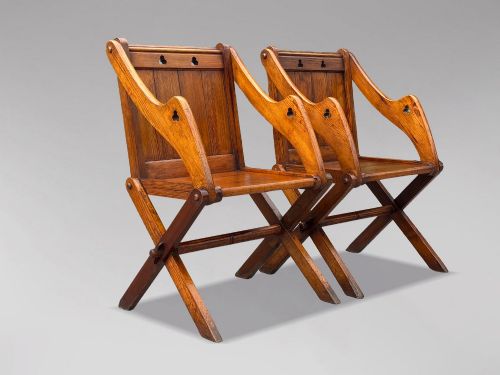
- Glastonbury chair
- A specific type of folding armchair with X-shaped underframes and sloping armrests. This medieval-inspired form gained renewed popularity during the Gothic Revival movement.
Victorian Pitch Pine Seat: Frequently Asked Questions
Where do pitch pine pews originate?
Many of these benches come from nineteenth-century churches, chapels, and ecclesiastical buildings where durable seating was required.
Others originate from public transport systems like trams or railway carriages, explaining the reversible flip-over mechanisms found on certain examples.
How do I care for pitch pine furniture?
Maintain the timber by applying a traditional beeswax polish to nourish the dry wood and protect the resinous grain.
Keep the seating away from direct heat sources and strong sunlight to prevent the timber from drying out or splitting over time.
Can church pews fit in a home?
Shorter pew benches and hall chairs adapt easily to domestic hallways, boot rooms, or dining tables as alternative seating.
Longer ten-foot pews require substantial open floor space and careful measurement of access routes before placement in a property.
What defines Gothic Victorian design?
This aesthetic draws heavily on medieval architecture, incorporating pointed arches, heavy chamfered edges, and structural sincerity.
Makers translated these grand architectural motifs into domestic items like throne armchairs and hall seating.