


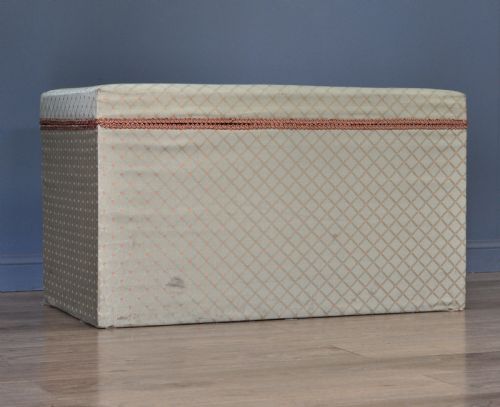
Victorian Pine Toy Box
These robust victorian pine toy box pieces offer honest domestic storage shaped by nineteenth-century utility.
Victorian Pine Toy Box
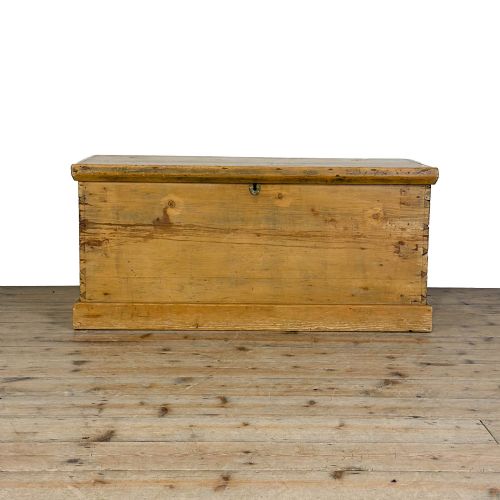
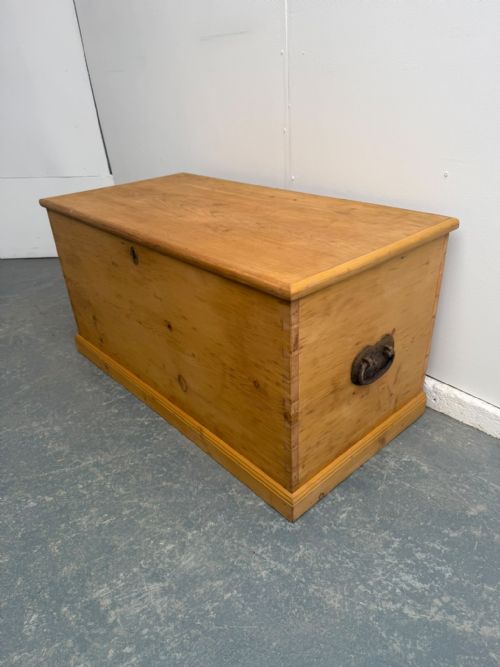
A victorian pine toy box is a functional wooden chest originating from the nineteenth century, designed to hold children's playthings, blankets, or household linens. These items appear across this page primarily as plain or waxed storage trunks, blanket boxes, and mule chests spanning the Victorian and rustic country styles.
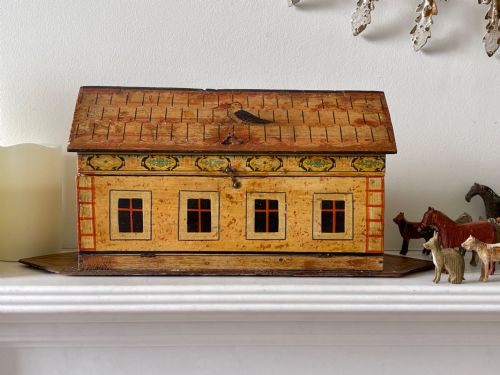
Most examples date between the mid nineteenth century and nineteen hundred, reflecting straightforward domestic manufacture. Alongside large storage chests, buyers encounter occasional educational toy boxes containing painted alphabet blocks.
The forms range from simple boarded pine trunks to substantial kist chests fitted with internal compartments. They serve modern homes as practical storage or low coffee tables while retaining their nineteenth-century character.
How they were made
Makers constructed these boxes using solid pine boards joined with straightforward carpentry methods suited to everyday household furniture. Surfaces received either a clear wax finish to highlight the natural grain, or layers of decorative paint.
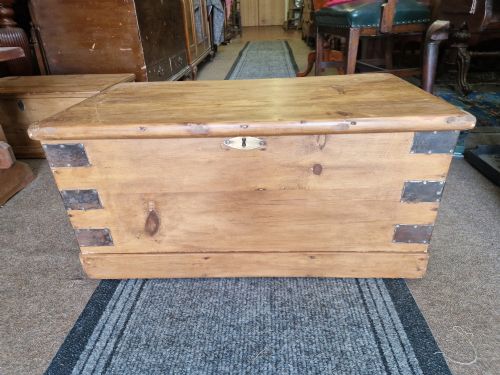
Functional metalwork defined the construction, utilising iron hinges, latches, and occasional brass fittings to endure daily lifting. Educational variants paired wooden joinery with hand-painted details on small alphabet tiles and blocks.
Listings feature pine and iron materials across Victorian, rustic country, and folk art styles dating from eighteen sixty to nineteen hundred.
What varies in quality
Quality rests upon the integrity of the timber and the honesty of the surfaces, distinguishing honest domestic items from later assembled versions. Untouched boards retaining their original wax or early paint hold greater merit than heavily restored surfaces.
Proportion and construction strength also separate standard utility trunks from superior mule chests featuring internal till compartments. Well-chosen iron or brass hardware contributes to a more complete historical survival.
The Victorian Pine Toy Box Glossary
- Mule chest
- A storage chest featuring one or more drawers beneath the main lift-top compartment, combining the functions of a trunk and a chest of drawers.
- Kist
- A traditional regional term for a heavy wooden storage chest or trunk used domestically for linens and personal possessions.
- Blanket box
- A deep rectangular chest built primarily for storing bed linens and heavy blankets close to a domestic hearth.
- Waxed pine
- Timber finished with natural beeswax to nourish the wood and produce a mellow sheen over the visible grain.
- Folk art
- Utilitarian objects adorned with hand-painted decoration or modifications made by local artisans rather than professional workshops.
Victorian Pine Toy Box: Frequently Asked Questions
What were victorian pine toy boxes used for?
These chests originally served nurseries and bedrooms to store children's playthings, games, and spare textiles out of sight. Families relied on them to keep domestic spaces tidy while protecting belongings from dust.
Today, they transition easily into modern living rooms and hallways as practical storage solutions that double as coffee tables or window seats.
How do I date a pine toy box?
Dating relies on observing construction techniques, timber characteristics, and hardware styles typical of the nineteenth century. Machine-sawn boards and specific hinge types help narrow the period of manufacture.
Comparing the object's proportions and surface wear to documented nineteenth-century examples provides a reliable window into its age.
Are these toy boxes sturdy enough for daily use?
Constructed from solid pine with durable iron or brass fixings, these chests were built to withstand generations of heavy household use. Their robust joinery ensures they remain entirely functional for modern storage needs.
Placing felt pads beneath the base protects both the historic timber and modern flooring during everyday movement.
What is the difference between a trunk and a mule chest?
A standard trunk consists of a simple lidded box designed purely for top-loading storage of bulky items like blankets or toys. A mule chest incorporates one or more functional drawers beneath the main compartment for smaller possessions.
Both forms appear frequently in nineteenth-century pine furniture, offering distinct internal organisation options for the home.