
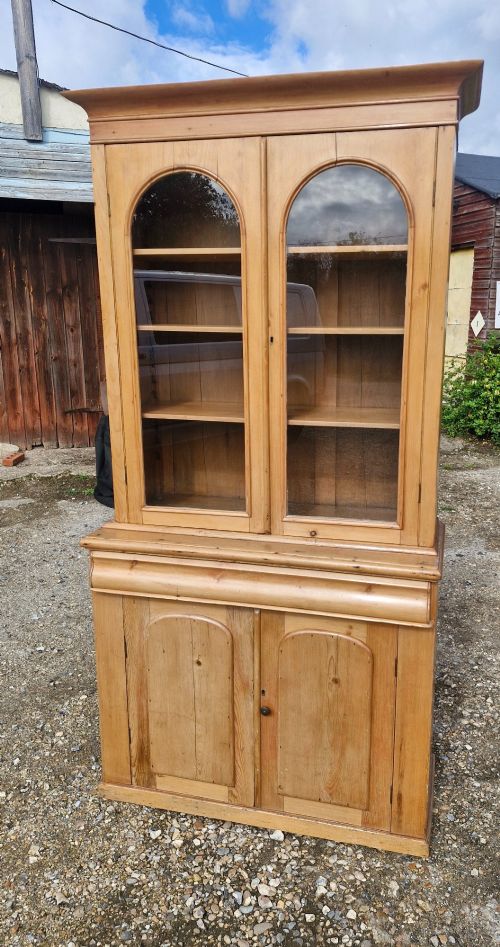
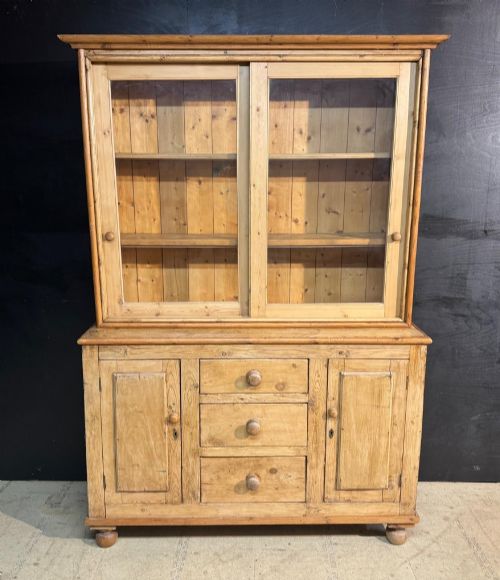
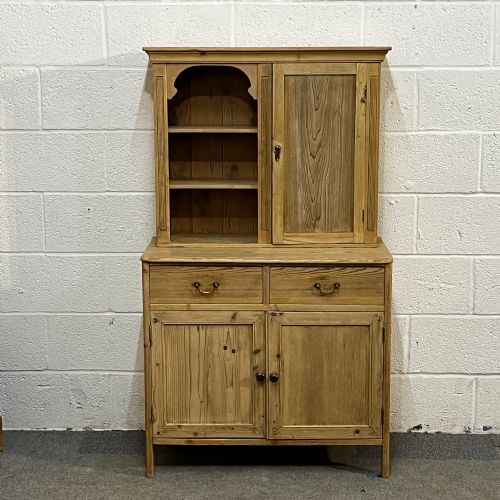
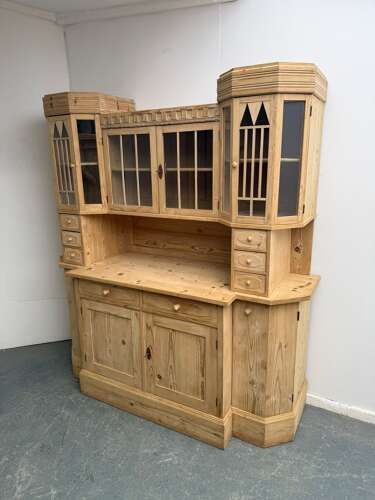
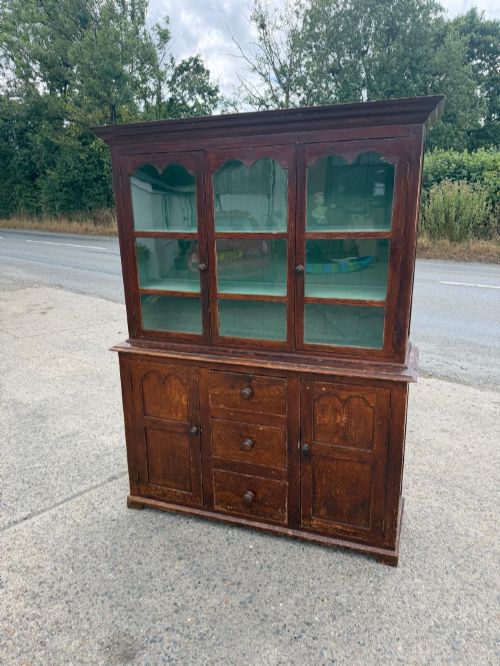
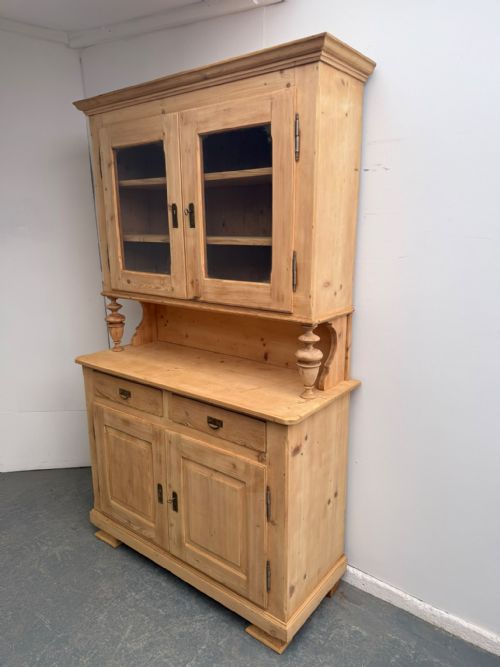
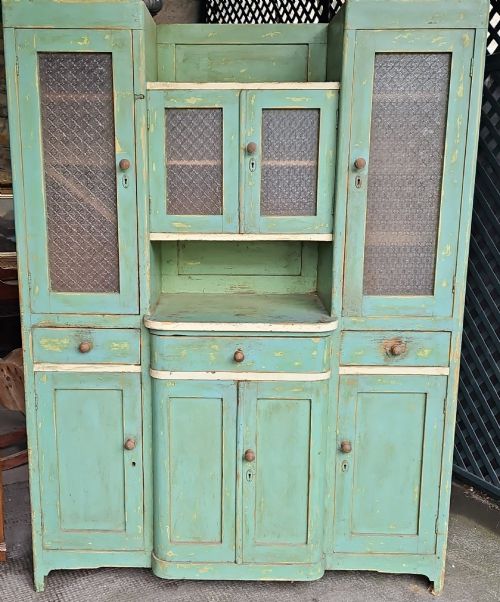


Victorian Pine Kitchen Hutch
A victorian pine kitchen hutch brings honest utility and vernacular warmth to a room, built from sturdy softwood to serve generations of domestic work.
Victorian Pine Kitchen Hutch
A victorian pine kitchen hutch encompasses practical storage furniture designed for domestic spaces, combining open shelving or glazed cabinets with lower cupboards and drawers. These pieces emerge predominantly from nineteenth-century workshops, spanning regional English designs from the West Country and Wales alongside continental examples from Hungary.
The selections available here reflect traditional vernacular forms, ranging from compact farmhouse dressers to massive multi-door cupboards. Regional variations define the character of each piece, whether finished in original paint, scrubbled surfaces, or waxed natural timber.
Materials and construction
Construction relies primarily on solid pine, supplemented occasionally by oak or mahogany details and structured with traditional joinery suited to heavy daily use. Glazed upper sections utilise clear or textured glass panes held in wooden frames, while hardware incorporates brass or iron fixtures.
Surfaces receive various historic treatments, from simple wax polishing to layered coats of original paint or scrumbled finishes that mimic finer grain. Two-piece formats facilitate movement and placement within domestic kitchens and pantries.
The inventory spans compact Edwardian cabinets, regional West Country dressers, and large Hungarian storage hutches.
Distinguishing quality
Quality rests upon the integrity of the timber, the preservation of original surfaces, and the balance of proportions between the upper rack and lower base. Untouched painted finishes or honest historic patination elevate a piece above later adaptations or stripped surfaces.
Proportional harmony and regional distinctiveness separate standard utilitarian cupboards from finer country house examples. Original hardware, intact glazing, and sound structural joints indicate careful historical maintenance.
The Victorian Pine Kitchen Hutch Glossary
- Scrumbled
- A decorative paint technique involving translucent layers dragged or textured over a pale ground to imitate grained hardwood. It creates a rich, mottled surface frequently found on nineteenth-century country furniture.
- Dresser rack
- The upper shelving unit designed to sit atop a base cabinet for displaying crockery and kitchenware. It forms the defining visual element of traditional kitchen storage.
- Breakfront
- A cabinet front where the central section projects forward from the flanking cupboards. This architectural arrangement adds depth and shadow to larger storage pieces.
- Vernacular furniture
- Domestic pieces built by local joiners to serve specific practical needs rather than following high-style academic designs. These items utilise regional materials and traditions.
- Patina
- The surface texture, sheen, and colour developed through decades of handling, cleaning, and exposure to light. It serves as a primary indicator of age and authenticity.
Victorian Pine Kitchen Hutch: Frequently Asked Questions
How do I clean a waxed pine hutch?
Dust regularly with a soft, dry cloth and apply a quality beeswax sparingly when the timber appears dry. Avoid modern liquid polishes containing silicone, which can build up and damage the historic surface.
Buff gently with a clean cloth after waxing to restore a soft, natural sheen without scrubbing the wood. Protect the surface from excess moisture and direct heat sources to prevent warping.
Can I separate the top and bottom sections?
Many nineteenth-century examples are built in two distinct pieces, featuring an upper rack that rests upon the lower counter or sideboard base. This modular construction assists with transport and placement in smaller rooms.
Larger or regional variations may be secured with concealed fixings or dowels that require careful handling during separation. Check the structural meeting points before attempting to move the furniture.
What is the difference between a dresser and a hutch?
A traditional dresser typically pairs a base cabinet with an open plate rack or glazed upper display section designed for utilitarian kitchen use. The terminology often overlaps depending on regional British and continental naming conventions.
Both forms serve the dual purpose of concealed storage and open display for domestic ceramics and provisions. Selection depends primarily on the desired balance of shelving and cupboard space.
How do I identify original paint?
Original paint exhibits natural wear patterns, minor craquelure, and integration with the underlying timber through long exposure to domestic environments. Layers should show consistent ageing without modern synthetic binders underneath.
Examination under magnification often reveals multiple historic decorative schemes and hand-mixed pigments characteristic of nineteenth-century workshops. Professional consultation helps confirm surface integrity.