

Victorian Pine Base
When you search for a victorian pine base, you are looking at sturdy, practical furniture built to anchor a country kitchen or dining room.
Victorian Pine Base
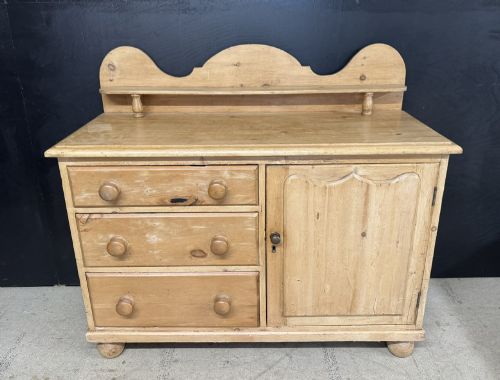
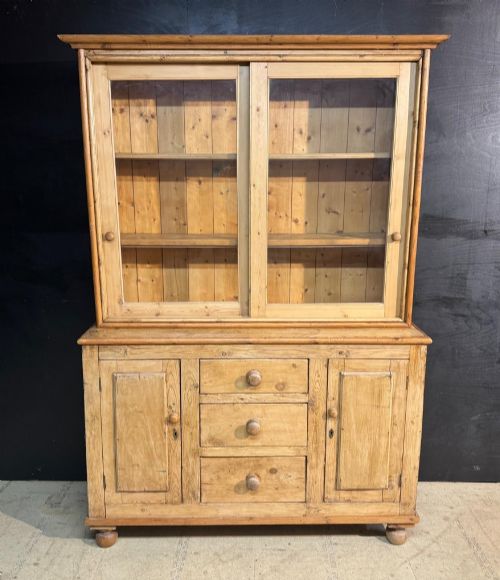
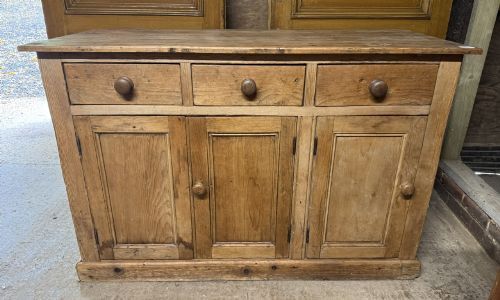
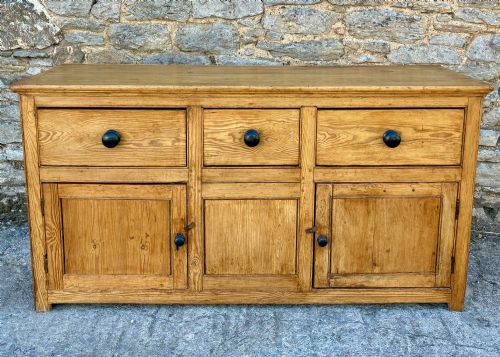
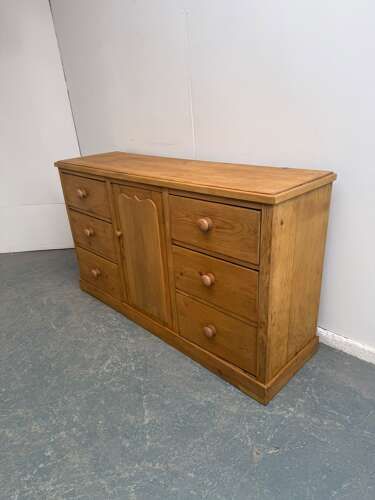
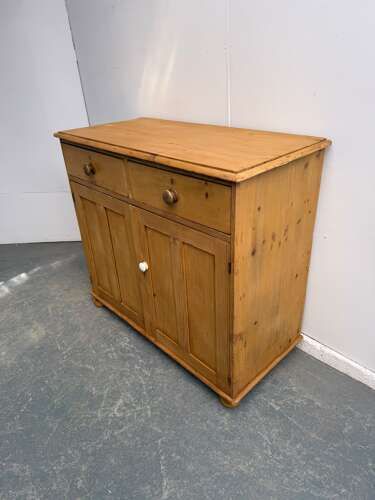
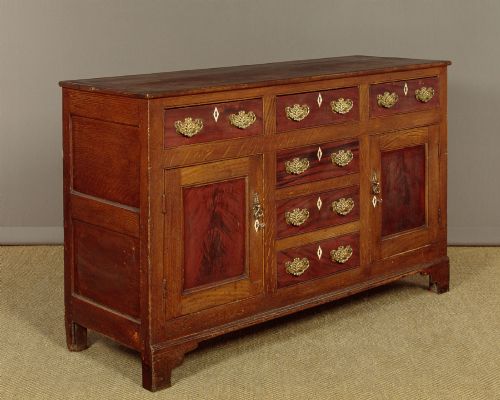
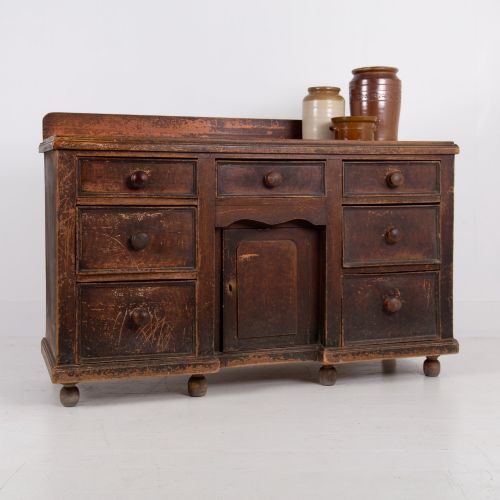
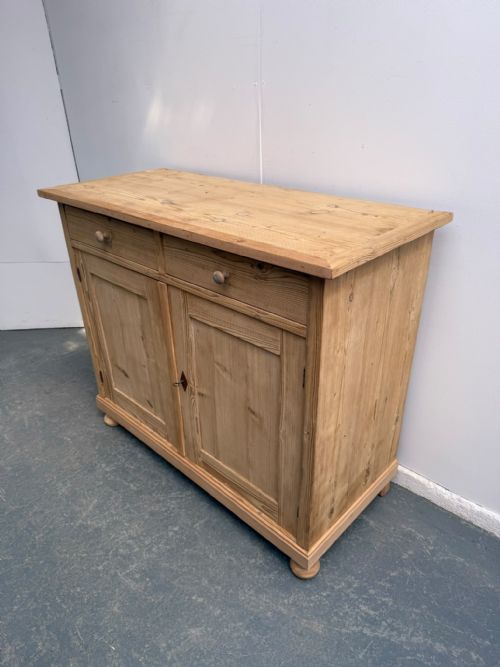
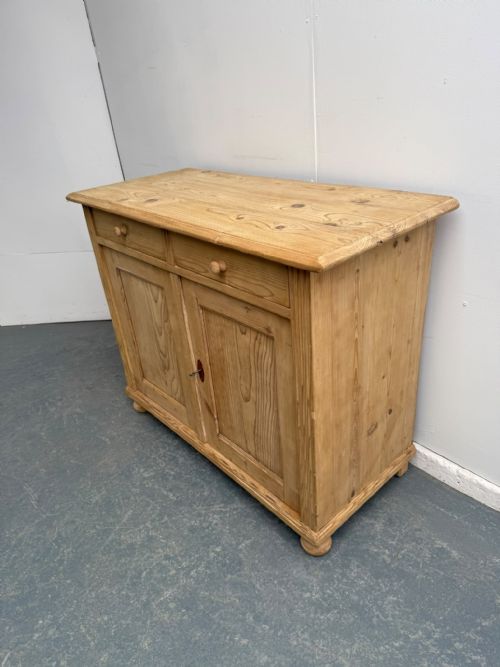
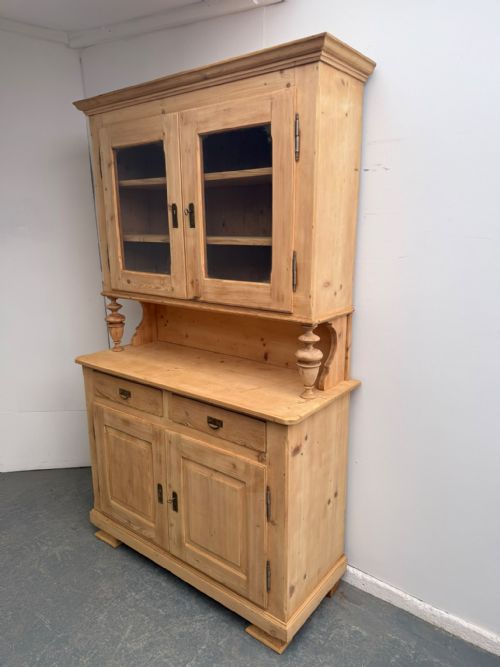
When you search for a victorian pine base, you encounter sturdy utilitarian furniture designed for kitchens, larders, and sculleries. The most common form on this page is the dresser base, often fitted with drawers and cupboards below a solid wooden top.
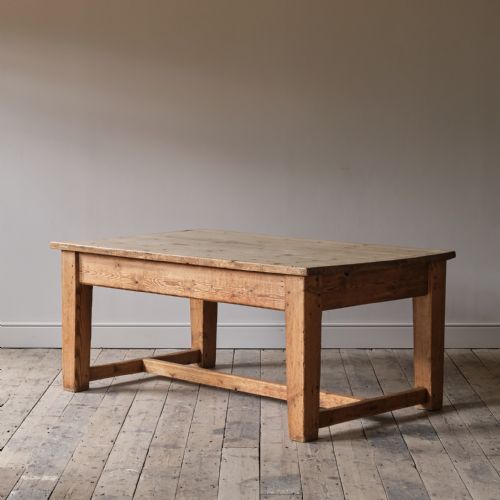
These pieces originated in domestic and farmhouse settings where durability mattered more than fine cabinet-making. Alongside dresser bases, you will find sideboards, storage cupboards, and tables utilising pine construction.
Makers built these items to handle daily domestic labour, resulting in robust forms that survive well today. They suit modern interiors seeking practical surface space and traditional utility.
How they were made
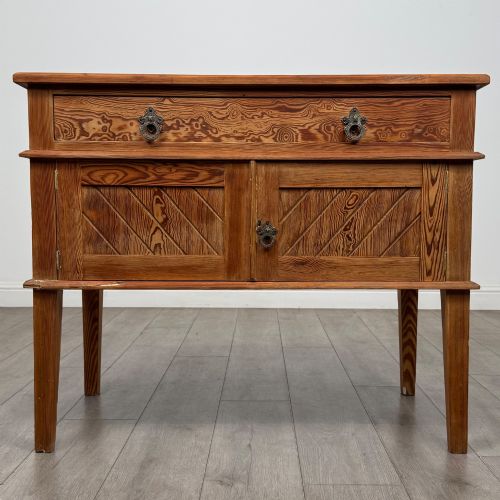
Carpenters constructed these pieces primarily from solid pine, occasionally incorporating denser pitch pine for structural resilience. Tops sometimes feature contrasting timber such as sycamore, chosen for its hard-wearing surface during food preparation.
Surfaces were finished with natural wax, traditional paint, or left plain depending on regional workshop practices. Iron, brass, and ceramic fittings appear on doors and drawers as functional hardware rather than decoration.
Occasional dog kennel dressers provide a curious central arched compartment designed originally to keep working farm dogs warm indoors.
What varies in quality
Quality rests in the proportion of the timber and the integrity of the original construction rather than elaborate ornamentation. Pieces retain more value when they preserve their original hardware, uncompromised timber panels, and early paint or wax surfaces.
Proportion and scale distinguish finer country examples from utilitarian workshop furniture. Solid framing, well-fitted drawers, and minimal replacement timber indicate superior craftsmanship.
The Victorian Pine Base Glossary
- Dresser base
- A low freestanding kitchen unit with drawers and cupboards below a solid top, historically used for food preparation and storage.
- Pitch pine
- A resinous North American pine species utilised for heavy-duty furniture framing and surfaces due to its strength.
- Pot shelf
- An open lower shelf built into a dresser base for storing heavy pots, pans, and kitchen utensils.
- Scrub top
- A bare wooden table or counter surface intended for vigorous cleaning with water and a scrubbing brush.
- Bun feet
- Small rounded wooden feet that elevate the corners of cabinets and sideboards off the floor.
Victorian Pine Base: Frequently Asked Questions
What is a pine dresser base?
A pine dresser base is a low kitchen cabinet featuring drawers and cupboards beneath a sturdy wooden work surface. These pieces provided essential storage and preparation space in nineteenth-century homes.
Today, they function well as kitchen islands, sideboards, or media units in contemporary rooms. Their practical proportions make them versatile additions to diverse interior styles.
How do I care for a waxed pine finish?
Maintain a waxed pine surface by dusting regularly with a soft dry cloth and applying natural beeswax periodically. Avoid placing hot items or liquids directly onto the wood to prevent marking.
Good quality wax nourishes the timber and enhances the grain over time. Consistent upkeep preserves the historic character of the piece.
Were these pieces originally painted?
Many nineteenth-century items received coats of lead paint for protection and cleanliness in busy working environments. Original paint layers often survive beneath later decorative finishes.
Discovering surviving early paint adds historical interest and authenticity to the furniture. Collectors value these untouched surfaces when evaluating regional pieces.
Where were these pieces used?
These items populated country houses, farmhouses, sculleries, and tavern kitchens across Britain and Europe. They served as active work stations for food preparation, baking, and general domestic chores.
Their robust construction allowed them to endure decades of heavy daily usage. This utilitarian background explains their enduring structural strength.