

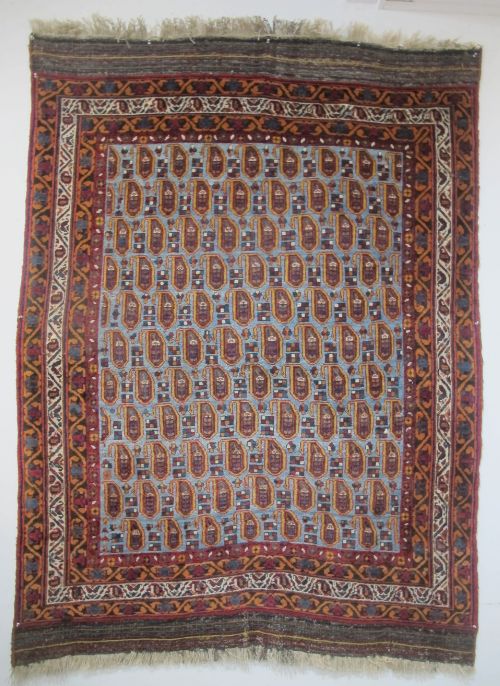
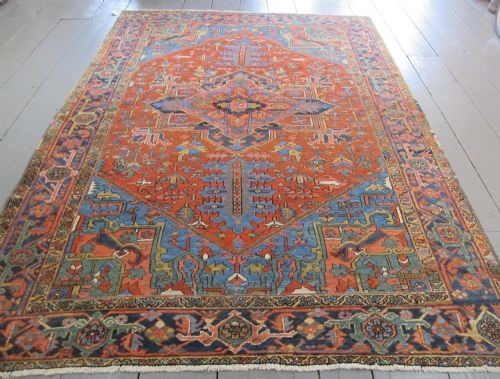


Victorian Persian Rug
When you search for a victorian persian rug, you enter a world of hand-knotted village and tribal floor coverings that bring deep colour and historic character to any room.
Victorian Persian Rug
A victorian persian rug encompasses regional village and tribal floor coverings produced across Persia during the nineteenth century, including specific styles like Heriz, Fereghan, Sultanabad, and Baluch. These pieces range from intimate saddle bags and small chamber rugs to grand carpets measuring over five metres in length.
Many examples date from the decades spanning 1860 to 1900, aligning directly with the Victorian era in Britain when imported Persian floor coverings gained immense popularity in domestic interiors. These textiles bridge the gap between utilitarian tribal crafts and sophisticated urban workshop productions.
Materials and construction
Makers constructed these floor coverings using hand-spun wool for the pile, set upon durable cotton foundations for larger carpets or wool foundations for specific tribal pieces. This natural fibre combination provided the tensile strength required to withstand decades of foot traffic.
The vibrant hues seen across the surface rely entirely upon natural dyes applied to the wool before knotting. Artisans utilised local plants and minerals to achieve deep reds, blues, and ivory tones that mellow gracefully over time.
Victorian Persian Rug Retail Price Guide 2026
Typical asking prices for victorian persian rug among the pieces listed under this phrase on Sellingantiques today, from the lower quarter to the upper quarter. They describe what is for sale here now, not the wider market.
Current listings feature pieces dated across the nineteenth century, specifically spanning the decades from 1860 to 1900.
Judging quality and craftsmanship
Quality in these textiles rests upon the density of the knotting and the precision of the tribal or village design execution, whether displaying a classical Mina Khani variant or a repeating leaf pattern. Finer examples exhibit crisp detailing in motifs such as dragons, phoenixes, or pencil box designs.
The choice and depth of natural dyes dictate visual success, with superior pieces showing subtle tonal variations within the wool known as abrash. The handle and suppleness of the foundation further distinguish master weaver productions from standard utility pieces.
The Victorian Persian Rug Glossary
- Abrash
- Natural colour variation within the wool of a rug caused by changes in dye batches or yarn lots. This subtle striping effect is prized by collectors as a sign of authentic natural dyeing.
- Saddle bag
- A utilitarian woven container produced in pairs by nomadic groups for transport on animals. Surviving examples are often separated into individual decorative mats or retained as complete double-faced items.
- Prayer rug
- A small format textile featuring a mihrab or arch design at one end, traditionally oriented towards Mecca during daily prayers. These pieces often incorporate repeat leaf or floral motifs.
- Runner
- An elongated narrow carpet format designed specifically for corridors, hallways, and staircases. Nineteenth-century examples frequently employ all-over shrub or geometric repeat patterns.
Victorian Persian Rug: Frequently Asked Questions
How do I clean an old wool rug?
Professional specialist cleaning is essential for nineteenth-century textiles to protect delicate natural dyes and wool foundations. Avoid harsh chemical treatments or domestic carpet washing machines.
Regular gentle surface vacuuming without a beater bar removes embedded grit that can damage the fibres over time.
Where were these carpets made?
Production centres span various regions of Persia, including North-West workshops in Heriz and Serapi, central towns like Fereghan and Isfahan, and tribal territories.
Nomadic groups such as the Baluch and Qashqai also produced distinctive smaller rugs and utility items in remote encampments.
Can I place these on the floor?
These textiles were engineered as heavy floor coverings and tolerate standard domestic foot traffic when supported by a quality underlay. The durable wool pile and cotton foundations protect the structural integrity during daily use.
Positioning them away from direct, harsh sunlight preserves the intensity of the natural dyes.
What defines a tribal design?
Tribal designs originate from nomadic or village weavers working from memory rather than formal workshop cartoons. They feature geometric motifs, stylized animals, and symbolic elements like dragons and phoenixes.
These patterns reflect the cultural heritage and immediate environment of the makers rather than court aesthetics.