

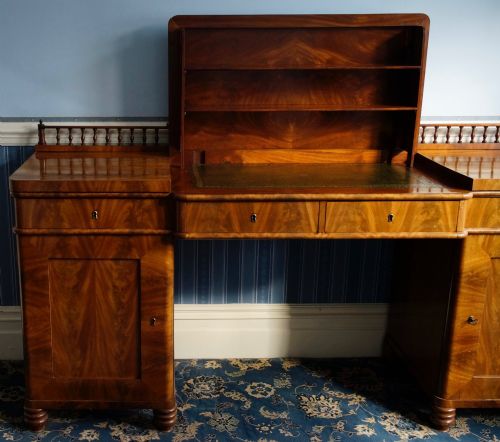
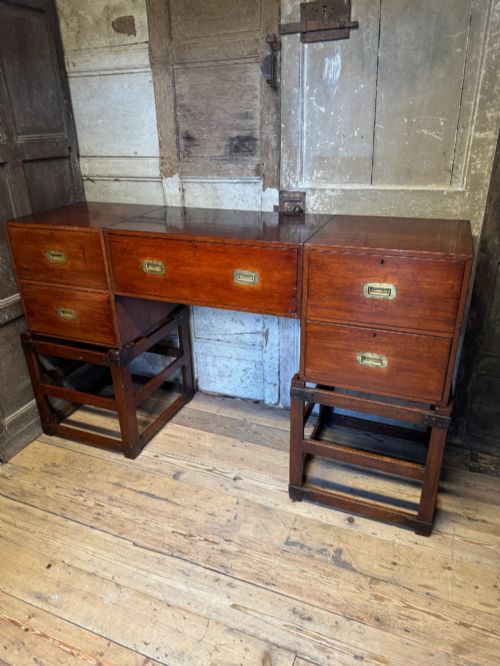
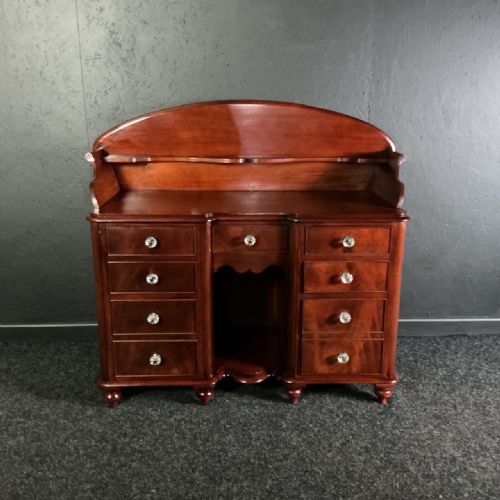


Victorian Pedestal Sideboard Desk
These pieces sold under victorian pedestal sideboard desk bring substantial nineteenth-century timber and functional workspace into a room with genuine presence.
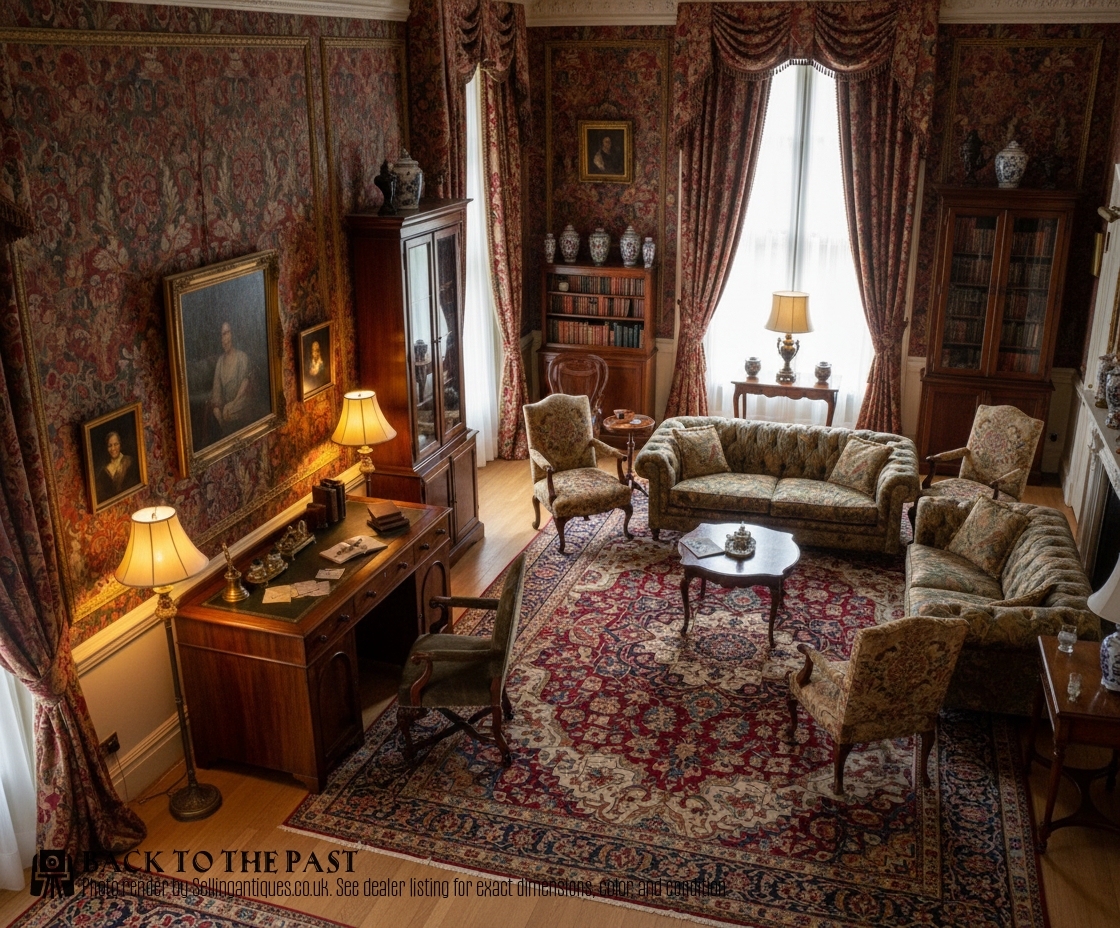
Victorian Pedestal Sideboard Desk
Buyers searching for a victorian pedestal sideboard desk encounter robust nineteenth-century timber furniture designed for workspace and storage. The examples on this page span the Victorian period and the wider nineteenth century, utilising forms that combine heavy pedestals with functional writing surfaces.
The selection includes varied interpretations of the form, from substantial oak and mahogany pieces to hybrid side cabinet desks and writing tables. Dating ranges across the nineteenth century, including specific years such as eighteen fifty, eighteen eighty, and eighteen ninety.
Origin and stylistic variations are visible across the pieces, encompassing English country house pieces alongside Anglo-Indian examples in padouk. Alongside standard pedestal and sideboard forms, the listings include washstands, dressers, and sideboards that reflect the diverse utility of nineteenth-century furniture.
Materials and construction
Makers utilised dense timbers such as mahogany, oak, teak, padouk, satinbirch, and pitch pine to build these robust nineteenth-century pieces. Surfaces were frequently left to display the natural grain of the wood, whilst other items feature painted finishes or inset leather writing surfaces.
Brass hardware and occasional glass components appear as functional and decorative details on drawers, doors, and related fittings. Carved ornamentation is present on heavier oak and mahogany items, marking the transition from classical revival styles to gothic and renaissance influences.
Victorian Pedestal Sideboard Desk Retail Price Guide 2026
Typical asking prices for victorian pedestal sideboard desk among the pieces listed under this phrase on Sellingantiques today, from the lower quarter to the upper quarter. They describe what is for sale here now, not the wider market.
Listings feature items spanning the nineteenth century, with specific dates recorded for eighteen fifty, eighteen eighty, and eighteen ninety.
Assessing quality and execution
Quality in these pieces is dictated by the selection of timber and the precision of the cabinetmaker's joinery. Dense, well-figured mahogany or quarter-sawn oak denotes a higher grade of manufacture than secondary pine carcasses.
The sophistication of the carving and the integration of secondary materials, such as inset leather or brass mounts, separate standard workshop output from exceptional examples. Proportion and structural integrity remain paramount when evaluating the success of the pedestal form.
The Victorian Pedestal Sideboard Desk Glossary
- Pedestal
- A structural support base containing drawers or cupboards, positioned beneath the main writing surface or top of the furniture. It provides substantial weight and internal storage capacity.
- Sideboard
- A large piece of furniture traditionally utilised for storage and serving, sharing heavy timber construction methods with pedestal desks. It frequently incorporates drawers and panelled doors.
- Padouk
- A dense tropical hardwood displaying deep reddish-brown tones, utilised in Anglo-Indian furniture production. It resists warping and takes a fine finish.
- Satinbirch
- A pale, lustrous timber with a characteristic chatoyant grain, employed during the nineteenth century for high-status cabinet work. It offers a lighter alternative to dark mahogany.
- Pitch pine
- A resinous softwood possessing a prominent grain pattern, frequently utilised for nineteenth-century English country furniture and writing desks. It provides durability and strength.
Victorian Pedestal Sideboard Desk: Frequently Asked Questions
What is a pedestal sideboard desk?
It is a nineteenth-century timber furnishing that combines the heavy pedestal storage of a sideboard or desk with a functional writing surface.
These pieces reflect the varied domestic and administrative needs of the Victorian era, using materials like mahogany, oak, and pine.
How do I date a Victorian desk?
Dating relies on identifying timber choices, construction techniques, and stylistic revivals characteristic of the nineteenth century.
Specific years like eighteen fifty or eighteen eighty appear alongside broad Victorian and nineteenth-century designations in the listings.
Where were these pieces made?
The listings show English country and regional workshop origins alongside Anglo-Indian production using exotic timbers like padouk.
Regional differences are visible in the choice of native woods such as oak and pine versus imported hardwoods.
How do I care for nineteenth-century timber?
Maintain the wood by keeping the furniture away from direct heat sources and sudden humidity changes to prevent timber movement.
Apply traditional wax sparingly to nourish the surface without building up excessive residue on carved or polished areas.