
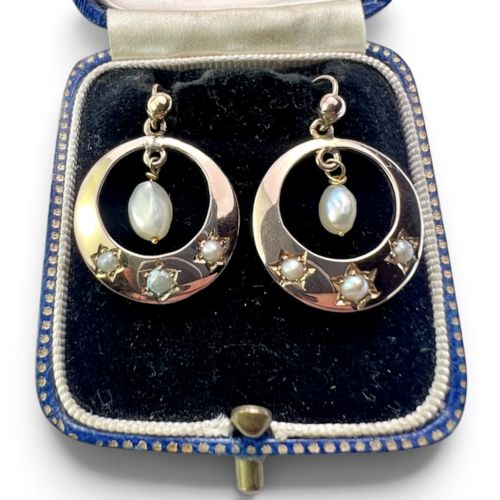
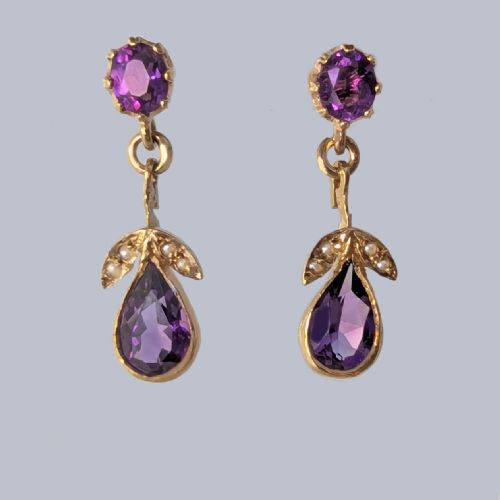


Victorian Pearl Drop Earrings
Victorian pearl drop earrings suspend organic gems from gold and silver hooks, offering buyers timeless nineteenth-century character and sophisticated movement.
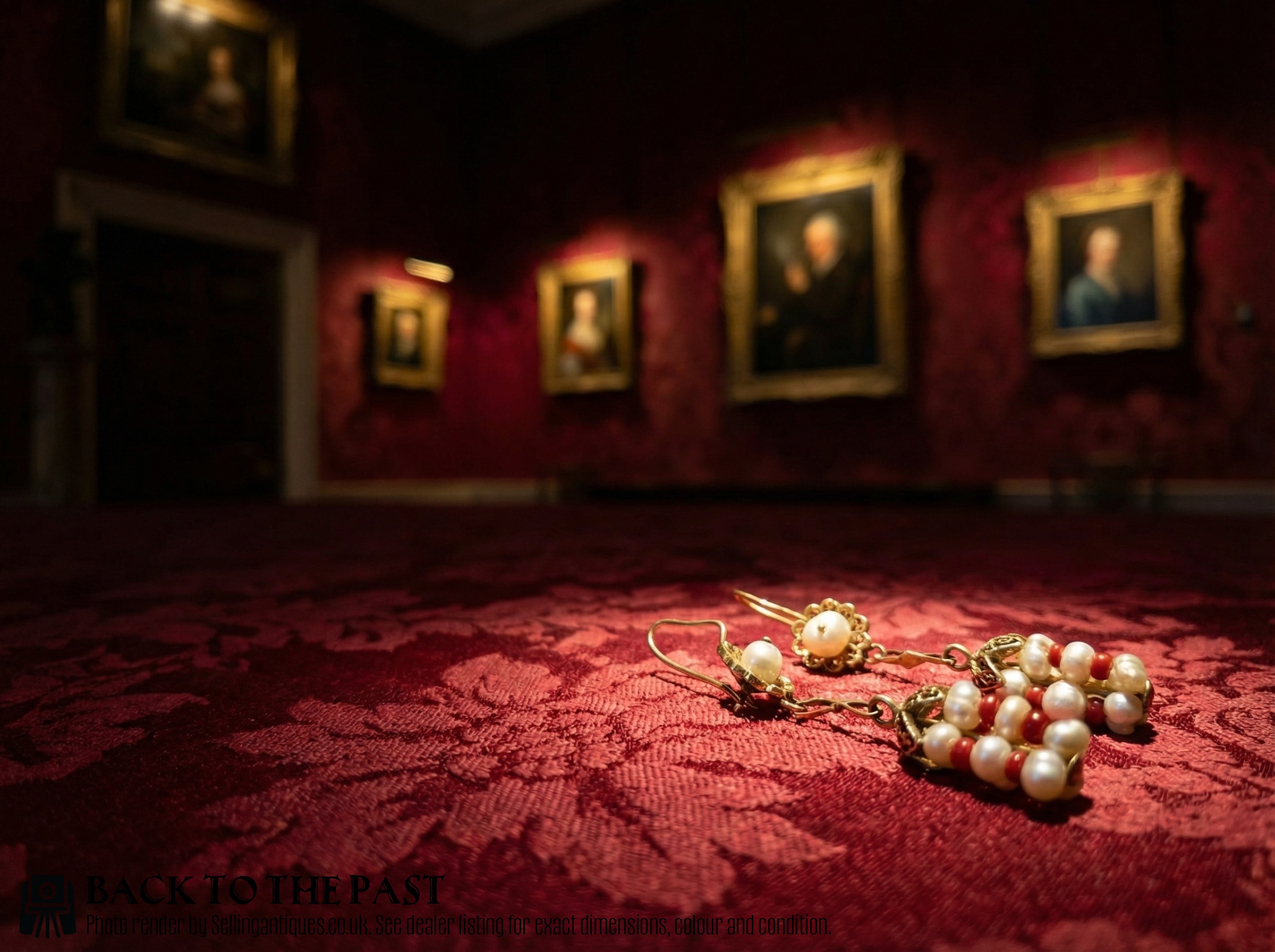
Victorian Pearl Drop Earrings
Victorian pearl drop earrings combine pearls with coloured gems like amethyst, turquoise, garnet, and diamond. Buyers encounter genuine nineteenth-century pieces alongside later revivals stretching from Edwardian workshops into the nineteen-sixties.
The dominant forms span simple gold teardrop mounts and intricate floral clusters to complex fringe and tassel designs. Natural pearls appear alongside seed pearls and cultured varieties set in gold alloys ranging from nine to eighteen carat.
Many pairs display period fastening systems, including screw-back mechanisms, hinged drops, and traditional wire hooks. The stylistic range incorporates floral motifs, crescent shapes, horseshoes, and bows executed in yellow or rose gold.
Materials and construction
Goldsmiths utilised varying carat standards of yellow and rose gold, often combining silver for stone settings to enhance the brilliance of diamonds. Natural pearls and seed pearls were secured using fine wire, pegs, or closed-back foil settings depending on the period.
Mounts frequently integrate precious and semi-precious stones such as turquoise, amethyst, and diamond around central pearl components. Construction methods include delicate filigree work, cast gold components, and hand-cut silver foliate mounts.
Materials recorded across the inventory include silver, natural pearls, turquoise, amethyst, and gold ranging from nine to eighteen carat.
Distinctions in quality
Quality rests upon the natural origin and lustre of the pearls, the carat weight of the gold, and the precision of the stone setting. Fine examples display well-matched natural pearls with strong orient alongside cleanly cut diamonds or deeply coloured amethysts and turquoises.
Superior pairs retain original hooks, secure fastenings, and intricate hand-finished details without later replacement components. The architectural integrity of the drop and the subtlety of the metalwork distinguish high-workshop output from standard commercial production.
The Victorian Pearl Drop Earrings Glossary
- Seed pearl
- Very small, naturally occurring pearls often used in clustered pavé settings to form floral or geometric patterns. They create delicate, textured surfaces across nineteenth-century jewellery.
- Natural pearl
- A pearl formed organically within a mollusc without human intervention, highly prized by collectors for its unique lustre and scarcity. These gems predate modern cultured pearl farming.
- Rose-cut diamond
- An antique gemstone cut featuring a flat base and a domed crown with triangular facets arranged in a star shape. This historic cut produces a softer, broader reflection than modern brilliant cuts.
- Screw-back
- A mechanical earring fastening utilising a threaded post and a small screw nut to secure the piece to an unpierced earlobe. This mechanism provides adjustable pressure for heavier drop earrings.
- Dormeuse
- A type of antique earring originally designed to be comfortable enough to wear while sleeping. They typically feature secure front-facing clasps or lever-back closures.
- Parure
- A matching set of jewellery comprising multiple pieces such as earrings, necklaces, and brooches designed to be worn together. Complete sets share identical gemstone combinations and decorative motifs.
Victorian Pearl Drop Earrings: Frequently Asked Questions
How do I date Victorian pearl drop earrings?
Dating relies upon metal purity marks, gemstone cuts, and fastening types characteristic of the nineteenth century. Hallmarks and stylistic motifs such as naturalistic floral clusters also help narrow the decade of production.
Later Victorian revival pieces often incorporate mid-twentieth-century gold standards or manufacturing marks. Comparing the mount construction against documented period styles clarifies whether a pair is nineteenth-century or a later interpretation.
Are these earrings suitable for daily wear?
Antique earrings require careful handling because pearls are organic gems sensitive to cosmetics, perfumes, and moisture. Regular wear is entirely possible provided the pieces are stored individually and cleaned gently without harsh chemical agents.
Securing the fastenings properly prevents loss, particularly with heavier drop designs. Checking the security of seed pearls and claw settings periodically ensures the longevity of delicate antique mounts.
What is the difference between natural and seed pearls?
Natural pearls form entirely by chance within wild molluscs, possessing unique organic layers and subtle variations in shape and lustre. Seed pearls are simply very small natural pearls grouped tightly together in pavé formations.
While seed pearls create intricate decorative textures in floral or star motifs, larger single natural pearls serve as focal drop elements. Both types require gentle care to preserve their original surface nacre.
How are screw-back earrings used?
Screw-back fasteners feature a threaded post that passes through an unpierced earlobe, secured by a small threaded disc turned gently until snug. This design allowed heavier Victorian drop earrings to be worn securely without pulling on the ear.
Adjusting the tension requires care to avoid over-tightening against the skin. Many nineteenth-century pairs retain these original mechanisms in working order.