


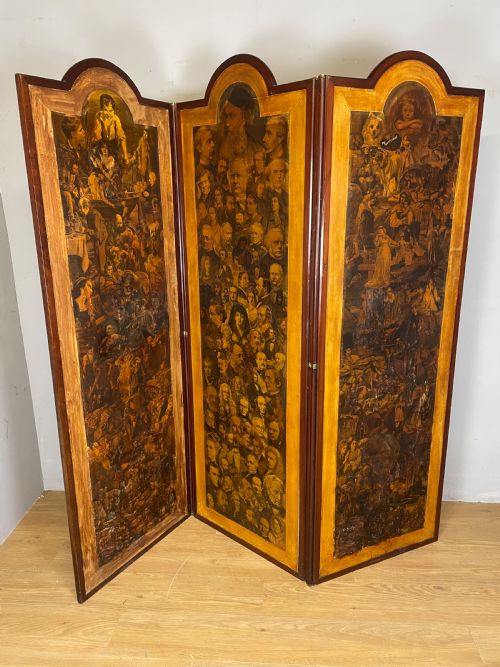


Victorian Partition Screen
These victorian partition screen examples are substantial folding dividers designed to shape interior space, offering both visual richness and practical privacy.
Victorian Partition Screen
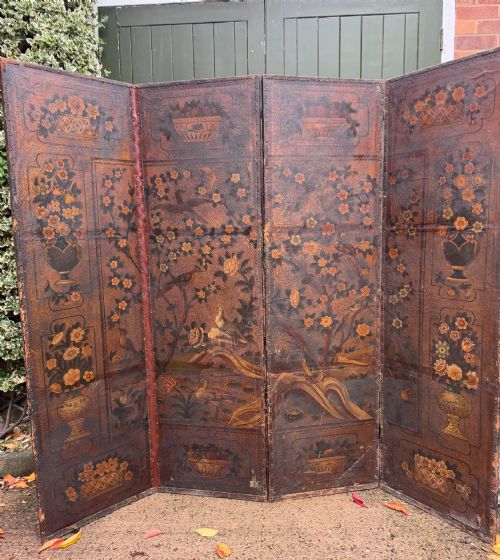
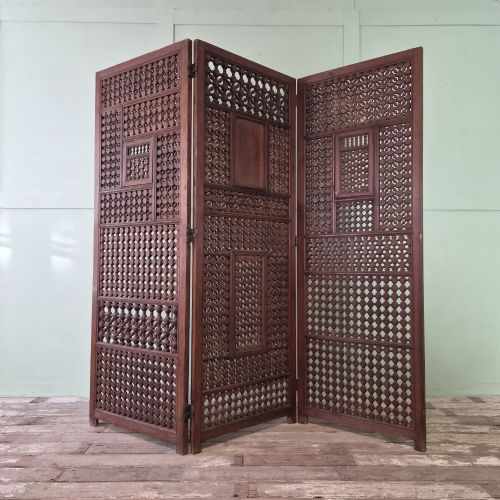
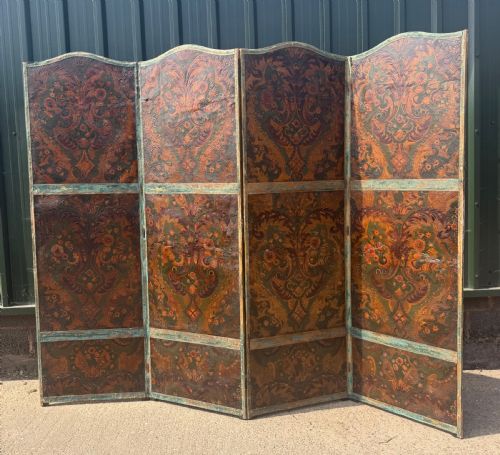
A victorian partition screen is typically a multi-panel folding structure utilised to divide large rooms or create private corners within a domestic interior. These pieces range from substantial four-fold and five-fold architectural dividers to grand entrance vestibules and delicate photographic backdrops.
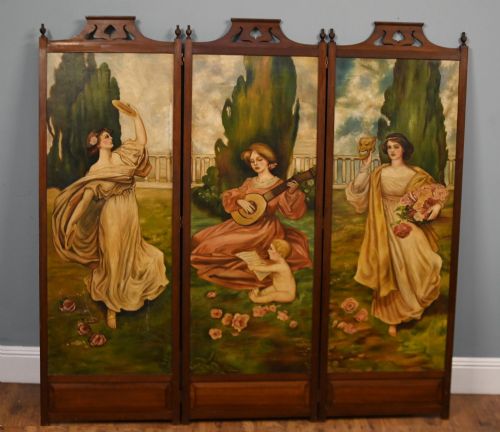
The materials and decorative schemes found on this page reflect diverse influences, spanning from Pre-Raphaelite and Art Nouveau aesthetics to Louis XVI style and Regency elements. Examples utilise canvas, wood, glass, brass, and paper surfaces, often presenting hand-painted leather, needlepoint, scrap work, or decoupage.
Most items on this page date from the nineteenth century, including specific pieces from the eighteen-eighties and eighteen-nineties, alongside variations influenced by eighteenth-century styles. Forms encompass standard room dividers, privacy screens, and glazed architectural salvage.
How they were made
Construction relies primarily on sturdy timber frames, utilising woods such as mahogany, walnut, and general hardwood to support multiple hinged panels. These frames are engineered to be fully reversible or articulated for stability when standing in an open room.
Surfaces are finished with intricate decorative techniques including oil paint, varnished paper, silk cotton, and tooled leather treatments. Glazed panels and brass hardware frequently integrate into the woodwork to provide structural support and visual contrast.
Victorian Partition Screen Retail Price Guide 2026
Typical asking prices for victorian partition screen among the pieces listed under this phrase on Sellingantiques today, from the lower quarter to the upper quarter. They describe what is for sale here now, not the wider market.
Listings feature eighteenth-century, nineteenth-century, and Regency periods, utilising materials such as mahogany, walnut, brass, canvas, and glass.
What varies in quality
The caliber of a victorian partition screen rests heavily on the execution of its decorative surface, whether through hand-painted artistry, needlepoint, or scrap work composition. Superior examples display refined detail and cohesive design across all connected panels.
Structural integrity and the quality of the timber frame, such as solid mahogany or walnut construction, determine the durability of the divider. Fully reversible hinges and well-preserved glass or brass elements elevate the standard of the piece.
The Victorian Partition Screen Glossary
- Folding Screen
- A type of room divider composed of two or more panels that are joined by hinges. These panels can be folded and adjusted to alter their configuration in a space.
- Scrap Work
- A decorative technique popular in the nineteenth century involving the application of paper cutouts and printed scraps onto a surface. This work is usually finished with a protective varnish.
- Decoupage
- The art of decorating an object by gluing paper cutouts onto it and then coating them with layers of varnish. It creates a smooth, painted-like appearance on screens and furniture.
- Needlepoint
- A type of canvas work embroidery executed with yarn using various stitches. It provides durable and highly textured panels for privacy screens.
- Architectural Salvage
- Building components and fixtures rescued from demolition or remodeling. This includes items like entrance vestibules and interior doors.
Victorian Partition Screen: Frequently Asked Questions
How were partition screens used in period homes?
These screens divided large Victorian rooms into smaller, more intimate spaces and blocked drafts from doors and windows. They also created temporary privacy for dressing or reading in shared parlours.
Homeowners positioned them strategically around fireplaces or entryways to control light and airflow. Their mobility allowed rooms to change function throughout the day.
Are these screens suitable for modern apartments?
Multi-panel folding dividers work effectively in open-plan contemporary living spaces to zone distinct areas like home offices or sleeping corners. They introduce texture and historical character without requiring permanent structural changes.
Larger four-fold or five-fold versions require adequate floor space to stand securely without blocking primary walkways. Assessing the height and panel width ensures the screen complements the scale of the room.
How do I care for delicate screen surfaces?
Painted, papered, and scrap work surfaces require gentle dusting with a dry, soft cloth to prevent particulate buildup. Avoiding direct sunlight preserves the original oil paint, paper, and textile colours over time.
Kept away from excessive moisture and extreme temperature shifts, the wooden frames and hinges maintain their stability. Regular light maintenance protects the applied decorative finishes from premature wear.
What distinguishes Regency styles from Victorian pieces?
Regency design elements lean toward classical restraint, featuring cleaner architectural lines and restrained ornamentation. Victorian pieces often embrace heavier ornamentation, eclectic revivals, and dense decorative treatments like scrap work or needlepoint.
Examining the woodwork, hinges, and surface materials helps clarify the stylistic period of each folding screen. Many nineteenth-century pieces incorporate multiple design influences across their panels.