



Victorian Parquetry Chest
A victorian parquetry chest brings intricate geometric woodwork into a room, offering both practical storage and exceptional decorative detail.
Victorian Parquetry Chest
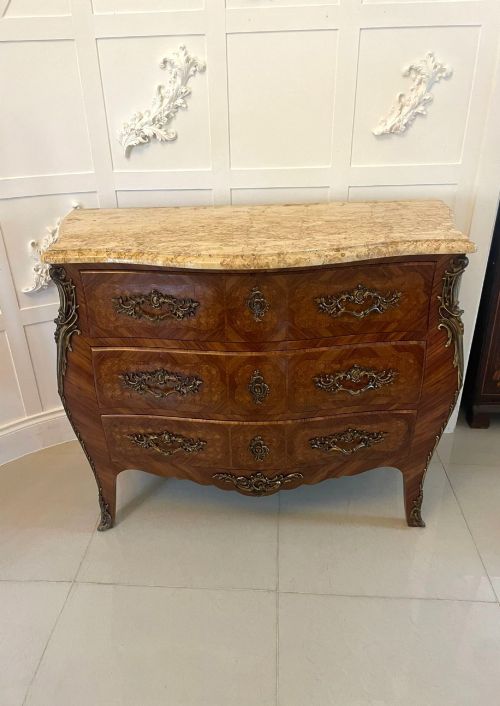
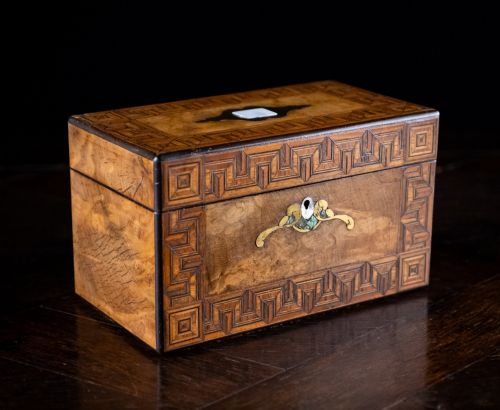
A victorian parquetry chest encompasses small-scale pieces like miniature chests of drawers, tea caddies, correspondence chests, and larger items such as commodes and washstands. These works display meticulous geometric wood patterns constructed from contrasting timber veneers.
The selections encountered here span the nineteenth century, including pieces associated with Tunbridge Ware and continental workshops. Makers frequently utilised rich primary timbers like walnut, rosewood, and kingwood to frame intricate parquetry motifs.
Buyers frequently discover lidded boxes, caskets, and miniature drawer units alongside larger marble-topped commodes. Each variation showcases the nineteenth-century preference for elaborate surface decoration and compartmented interiors.
Materials and construction techniques
Craftsmen built these pieces by applying thin wood veneers onto solid carcases, forming complex geometric patterns with precision-cut wooden tiles. Timbers such as walnut, rosewood, and holly provided the tonal contrast necessary for effective parquetry designs.
Many examples incorporate supplementary decorative elements including brass stringing, mother-of-pearl inlay, and bronze mounts. Tunbridge Ware pieces further demonstrate specialised mosaic techniques, assembling thousands of tiny wood blocks to create pictorial and geometric scenes.
Victorian Parquetry Chest Retail Price Guide 2026
Typical asking prices for victorian parquetry chest among the pieces listed under this phrase on Sellingantiques today, from the lower quarter to the upper quarter. They describe what is for sale here now, not the wider market.
Listings feature nineteenth-century items incorporating walnut, rosewood, kingwood, brass, mother-of-pearl, and marble.
Distinctions in quality
The standard of a piece rests upon the precision of the veneer work and the complexity of the geometric layout. Tighter joints between individual wood tiles and a sharper contrast in timber selection distinguish finer items from simpler production.
The integrity of the underlying timber carcase and the retention of original surface polishes heavily influence overall execution. Finer examples maintain crisp edges to the inlay work and retain functional interior fittings such as original compartments or brass locks.
Henry Hollamby
The Victorian Parquetry Chest Glossary
- Parquetry
- A woodworking technique where small pieces of coloured wood are arranged in geometric mosaics to cover a surface. This method creates decorative patterns on boxes, chests, and larger furniture.
- Tunbridge Ware
- A specific type of nineteenth-century decorative woodwork originating from Tunbridge Wells, characterised by mosaic tesserae made from various natural woods. Makers used this technique to depict landscapes and geometric borders on tea caddies and boxes.
- Veneer
- A thin slice of figured wood applied to a secondary timber base to provide a decorative exterior surface. This practice allowed cabinetmakers to display striking grain patterns economically.
- Commode
- A low piece of furniture featuring drawers or doors, often fitted with a marble top in nineteenth-century French and continental examples. These served as decorative storage units in principal rooms.
- Tea Caddy
- A small box or chest designed to store loose tea leaves, frequently featuring internal compartments and a locking lid. These containers were often highly decorated with parquetry and inlay.
Victorian Parquetry Chest: Frequently Asked Questions
What is a parquetry chest?
A parquetry chest is a wooden container or drawer unit decorated with geometric wood veneer patterns.
These pieces range from small table boxes to large commodes, all united by patterned wood surfaces.
How were tea caddies used?
Tea caddies served as secure storage containers for expensive loose tea leaves in the nineteenth century.
They typically featured lidded compartments inside and often included a small working lock and key.
What is Tunbridge Ware?
Tunbridge Ware is a form of detailed mosaic woodwork produced in Kent using thousands of tiny coloured wood blocks.
Craftsmen arranged these blocks to form geometric patterns or pictorial scenes on boxes and caddies.
How do I care for inlaid wood?
Inlaid wooden items require stable indoor humidity levels and protection from direct sunlight to prevent veneer lifting.
Regular gentle dusting with a dry cloth helps preserve the polished finish without harming the intricate details.