

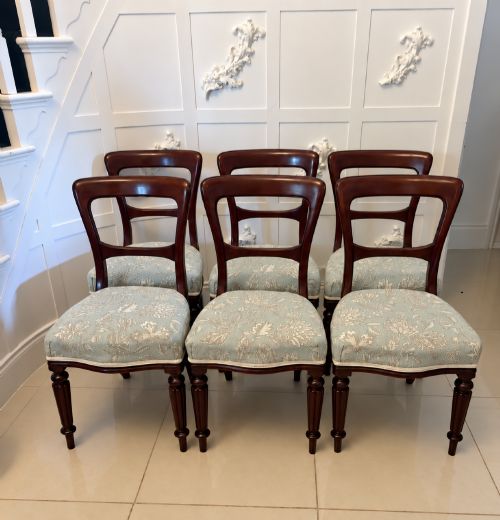
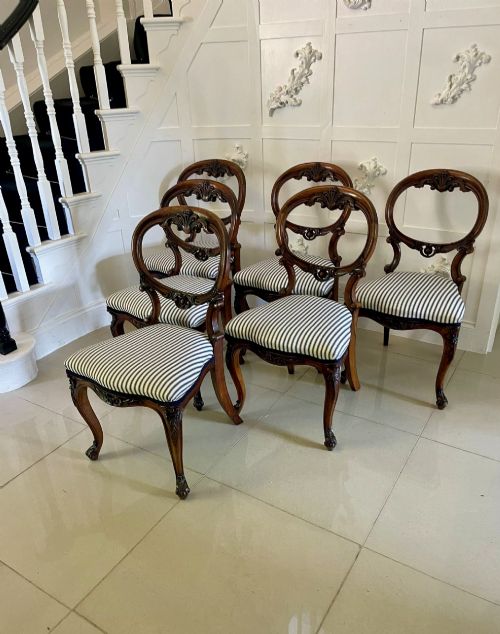
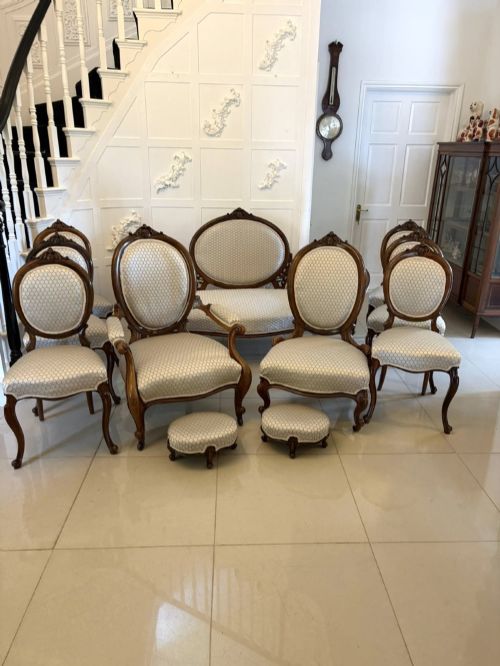
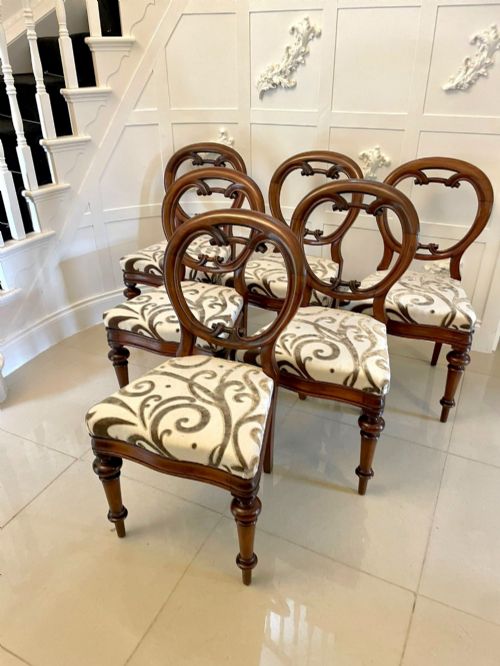
Victorian Parlour Set
A victorian parlour set brings together matching seating or entertainment pieces designed to furnish period reception rooms with style and social purpose.
Victorian Parlour Set
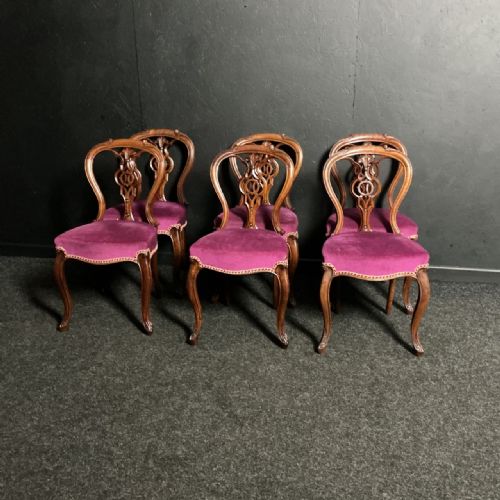
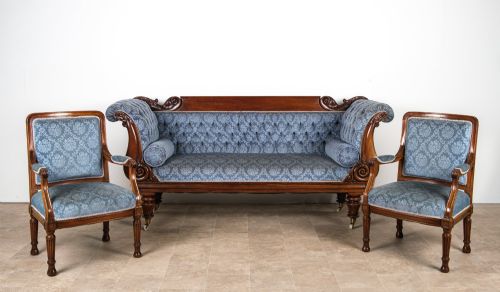
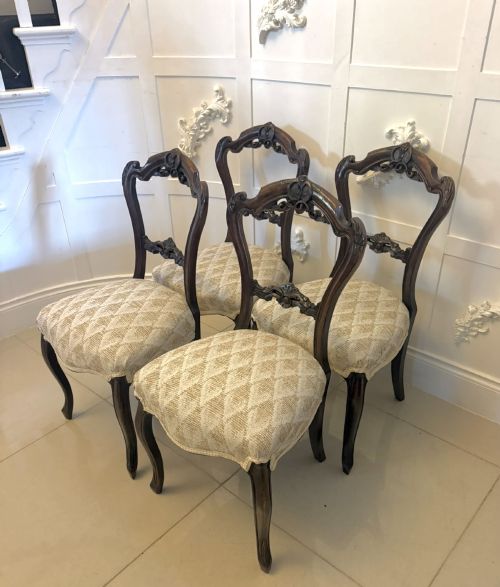
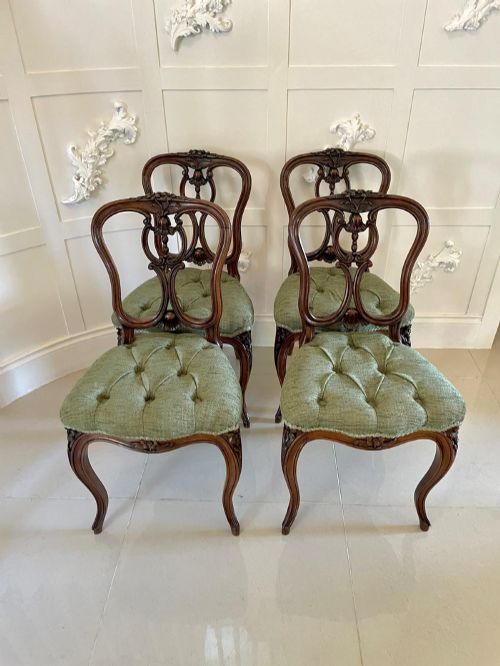
A victorian parlour set comprises matched groupings of seating or structured pastimes intended for formal reception rooms. Buyers encounter multi-piece salon suites containing sofas, armchairs, and side chairs, alongside sets of dining chairs and boxed table games.
The evidence shows groupings fashioned in walnut, mahogany, and rosewood, spanning periods from the mid-nineteenth century into the early twentieth century. These configurations reflect the social architecture of period homes, where entertaining guests demanded unified interior design.
Materials and Construction
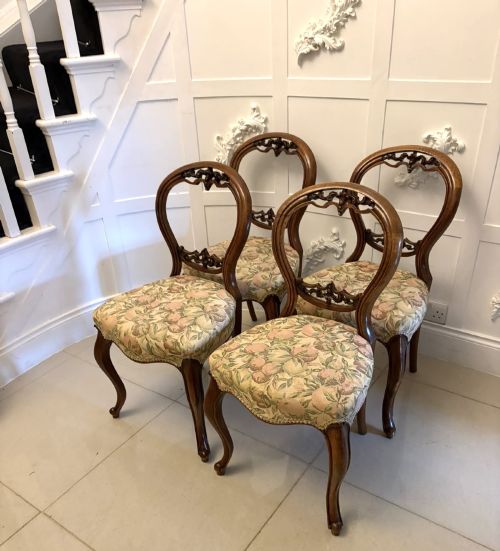
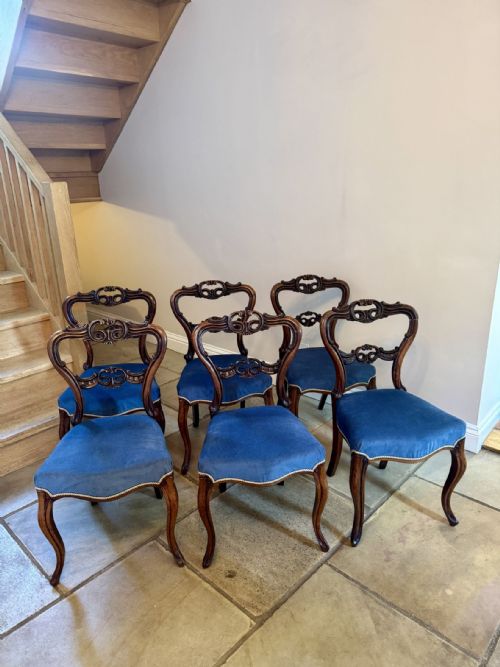
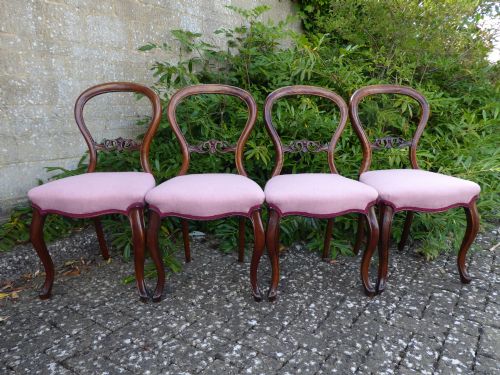
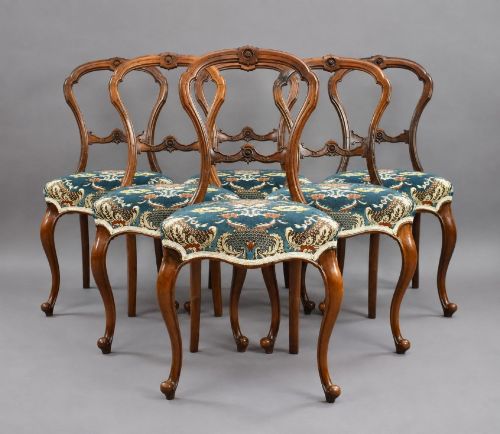
Cabinet makers utilised dense hardwoods such as mahogany, walnut, and rosewood to construct frames capable of supporting intricate hand-carved details and curved balloon-backs. These timbers were often shaped using steam and solid joinery techniques.
Upholstered components relied on traditional textile coverings including velvet, needlepoint, and patterned fabrics stretched over supportive foundations and secured with brass detailing.
Victorian Parlour Set Retail Price Guide 2026
Typical asking prices for victorian parlour set among the pieces listed under this phrase on Sellingantiques today, from the lower quarter to the upper quarter. They describe what is for sale here now, not the wider market.
Listings demonstrate diverse furniture styles, encompassing Rococo Revival, Neoclassical, and Alpine Folk Art across walnut, mahogany, and rosewood.
Judging Quality and Execution
The distinction between tiers rests upon the depth and crispness of the hand-carved ornamentation on wooden frames and the structural integrity of the joinery. Superior examples display refined proportions and cohesive grain matching across multiple chairs or complete salon suites.
Material selection and upholstery execution also drive differentiation, with high-end pieces incorporating superior timbers like figured rosewood and specialised needlepoint or velvet textiles that complement the overarching style.
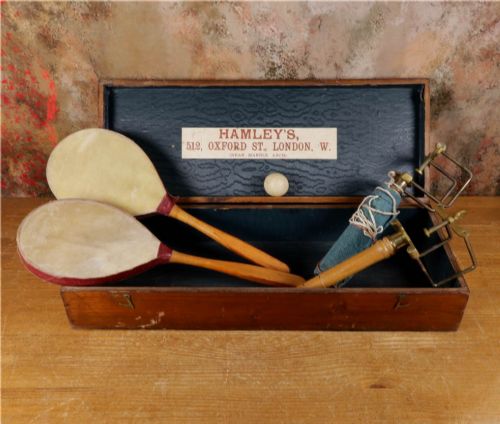
Jaques and Hamleys
The Victorian Parlour Set Glossary
- Balloon-back
- A chair design featuring an oval or curved backrest resembling the shape of a balloon, prevalent in nineteenth-century seating.
- Salon suite
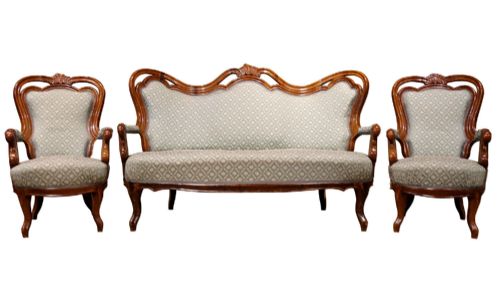
- A coordinated grouping of reception room furniture typically comprising a settee and matching arm or side chairs.
- Marquetry
- Decorative inlay work using various tinted woods fitted into a solid wood ground to create geometric or floral patterns.
- Rococo revival
- A nineteenth-century design style drawing on mid-eighteenth-century French motifs with flowing curves and naturalistic carvings.
- Needlepoint
- Hand-stitched canvas work utilised for durable and decorative seat covers on period chairs.
Victorian Parlour Set: Frequently Asked Questions
What pieces comprise a salon suite?
A salon suite generally includes a settee or sofa accompanied by matching armchairs and side chairs designed en suite. Some larger suites also incorporate footstools or specific his and her seating.
These groupings provided uniform seating arrangements for formal gatherings and reception rooms during the Victorian era.
How do walnut and mahogany pieces differ?
Walnut frames often display softer, more sinuous carved details associated with revival styles, while mahogany tends to exhibit a denser grain with a deep reddish-brown tone.
Both timbers were standard choices for high-end Victorian seating, selected for their strength and responsiveness to hand-carving.
Were dining chairs used in parlours?
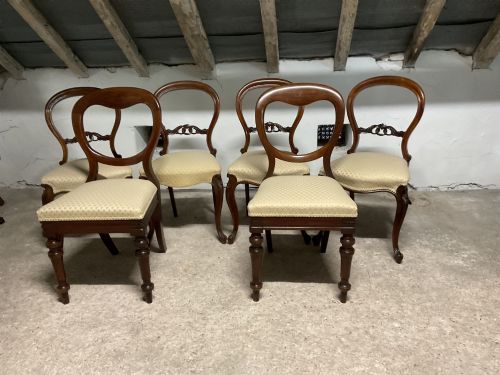
Larger sets of matched dining chairs in walnut or mahogany frequently served dual purposes in period homes depending on entertaining requirements.
Their sturdy construction and decorative balloon-backs suited both formal dining spaces and auxiliary parlour seating.
What games belong in a parlour set?
Parlour sets encompass traditional boxed pastimes such as roulette wheels, dominoes, ping pong, and table games designed for social amusement.
These items reflect the indoor entertainment culture of nineteenth-century households and guests.