

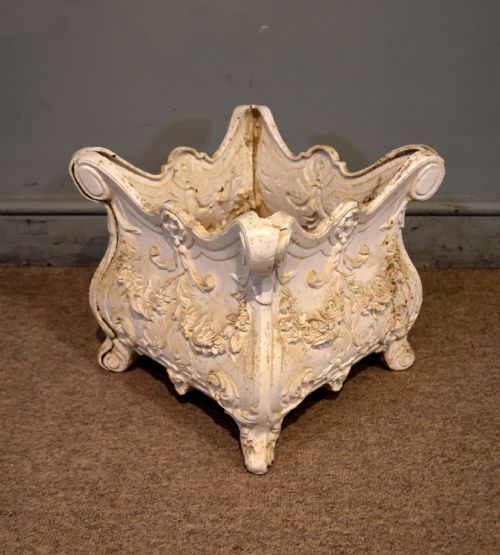


Victorian Painted Metal Box
These victorian painted metal box pieces range from household toleware to heavy iron trunks, bringing durable colour and utility to any interior.
Victorian Painted Metal Box
A victorian painted metal box encompasses a broad functional array of containers, ranging from household coal scuttles and kitchen buckets to travelling trunks and toleware caddies. These objects were produced for daily utility in domestic, maritime, and commercial settings.
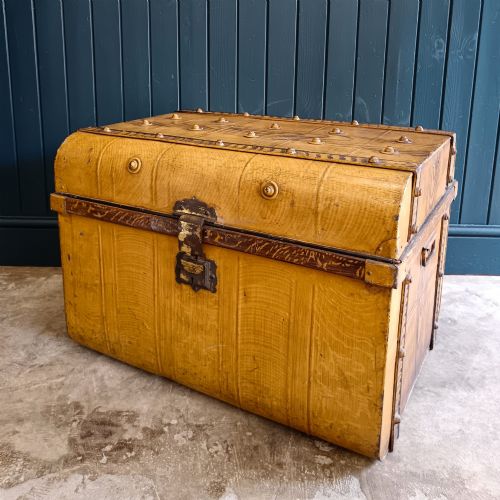
The most frequent examples encountered on this page date from the nineteenth century, including painted iron safes, dome-top caskets, and folk art barge wear log boxes. Their construction varies from sheet iron and toleware to heavy cast and wrought iron.
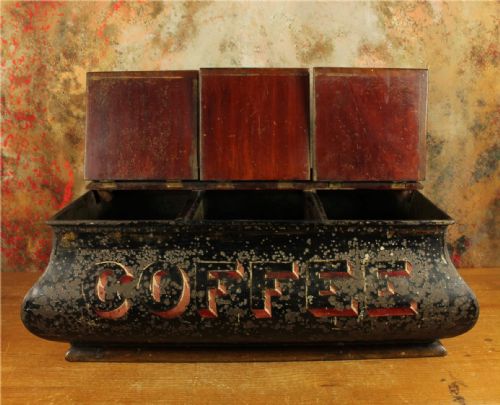
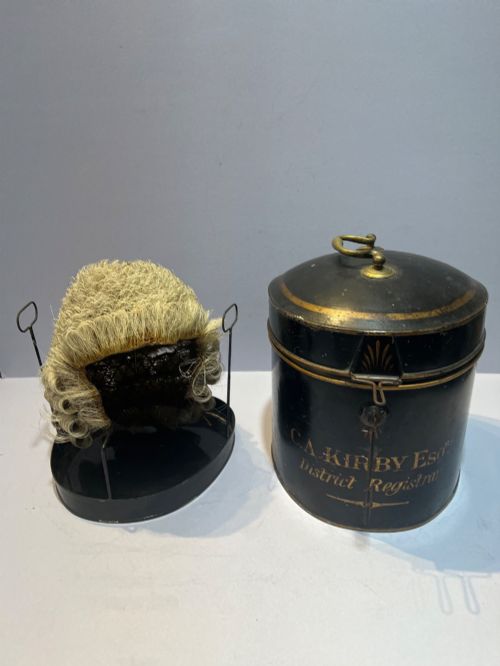
Specialised items also appear, such as legal wig cases, grocery hoppers, and tea canisters, demonstrating the diverse commercial and domestic applications of painted metal during the period.
How they were made
Makers utilised sheet iron, cast iron, wrought iron, and toleware as the primary metallic substrates for these containers. Brass mountings, rims, and wooden elements occasionally complement the main metal bodies.
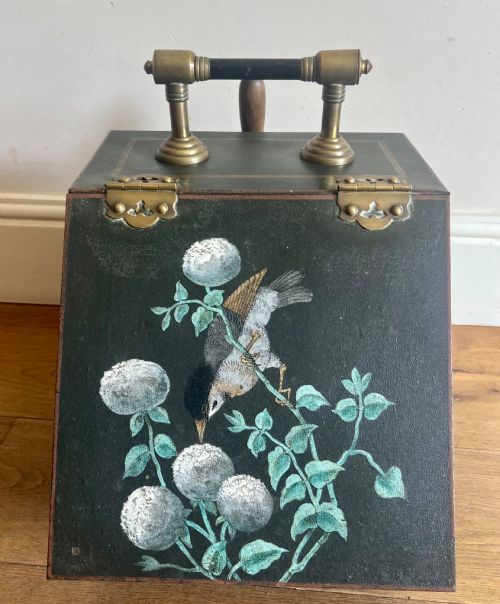
Surfaces were coated with paint, frequently incorporating faux-wood effects, decorative barge art, or plain colour schemes. Metal-bound construction, riveted strapwork, and cast iron mouldings provided structural integrity to trunks, safes, and planters.
Victorian Painted Metal Box Retail Price Guide 2026
Typical asking prices for victorian painted metal box among the pieces listed under this phrase on Sellingantiques today, from the lower quarter to the upper quarter. They describe what is for sale here now, not the wider market.
A nineteenth-century legal wig and wig case ensures your barrister headwear rests in proper painted style.
What varies in quality
The sophistication of the painted surface decoration separates standard utilitarian containers from finer examples, such as folk art barge wear or art nouveau caskets. Intricate brushwork, preserved original colour schemes, and specialised forms elevate certain pieces.
Hardware complexity and mechanical utility also define the range, distinguishing simple sheet iron boxes from fully restored safes with intricate locking mechanisms and fitted stands.
Eade & Son·Coalbrookdale·CUNARD Line·CHUBB·Waring & Sons·George Price
The Victorian Painted Metal Box Glossary
- Toleware
- Lacquered or enamelled metalware, typically tinplate, decorated with painted designs. This technique was widely utilised for domestic canisters, coal scuttles, and caddies.
- Purdonium
- A specialised domestic box or scuttle designed for storing and dispensing coal near a fireplace. These often include a matching shovel and a hinged lid.
- Strapwork
- Ornamental metal bands riveted across the exterior of a trunk or chest to reinforce the structure. It adds both physical durability and linear visual detail.
- Kist
- A traditional regional term for a heavy storage chest or box. In this context, it refers to robust metal-bound or wooden storage units.
Victorian Painted Metal Box: Frequently Asked Questions
How do I clean a painted metal box?
Dust the surface gently with a dry, soft cloth to remove loose particles without disturbing the painted finish.
Avoid using abrasive cleaning agents or harsh chemical solvents that could strip or damage historical paint layers.
Can I use an iron planter outdoors?
Cast and wrought iron planters were built for robust utility, but exposure to persistent moisture can encourage active rusting.
Check the condition of the metal and place the planter in a sheltered garden spot if you wish to preserve its existing surface.
What was a toleware box used for?
Toleware containers served various practical domestic functions, including storing tea, coffee, groceries, and coal.
Their decorated metal construction kept contents dry and secure while adding colour to nineteenth-century rooms.
How are nineteenth-century safes constructed?
These heavy storage units utilise thick iron plates, reinforced with metal binding and secured with complex mechanical locking mechanisms.
Many incorporate internal compartments and sit upon dedicated wooden stands or sturdy cast bases.