

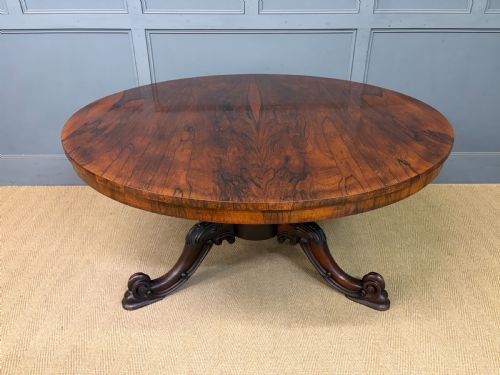
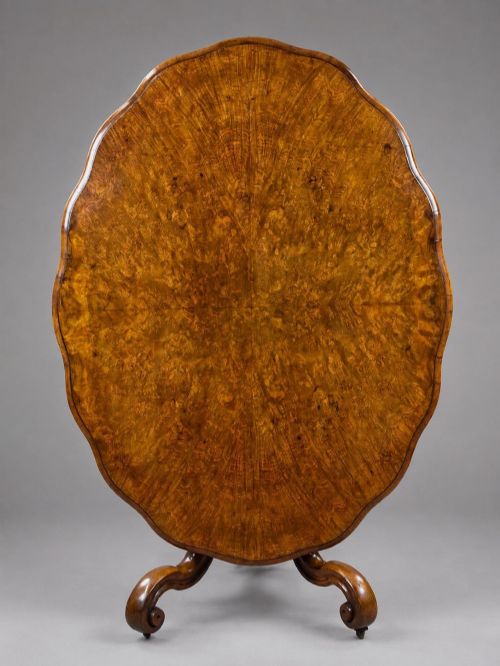

Victorian Oval Loo Table
A victorian oval loo table brings the rich grain of burr walnut and the clever mechanics of a tilt top into the centre of a room.
Victorian Oval Loo Table
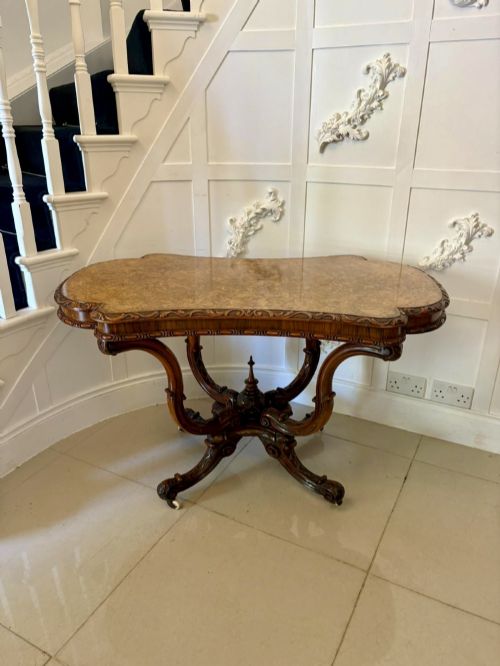
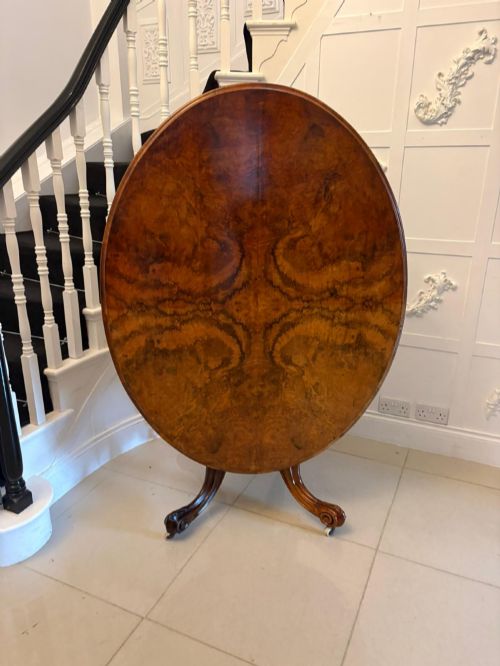
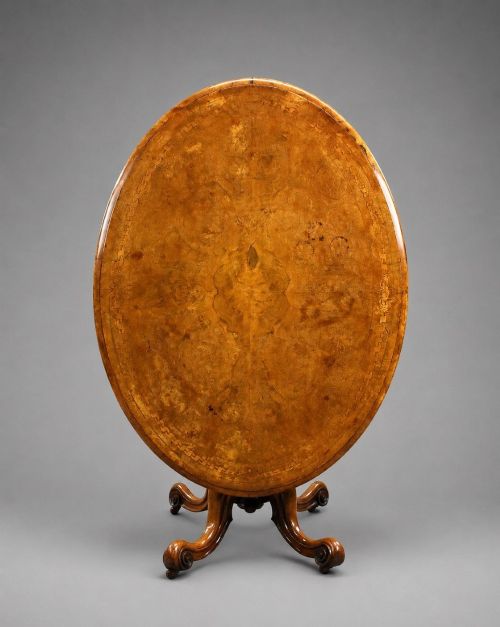
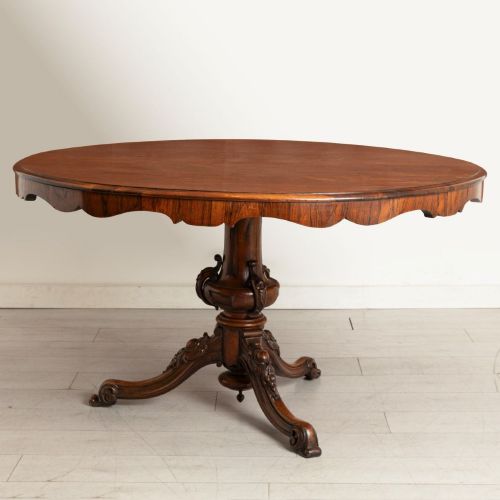
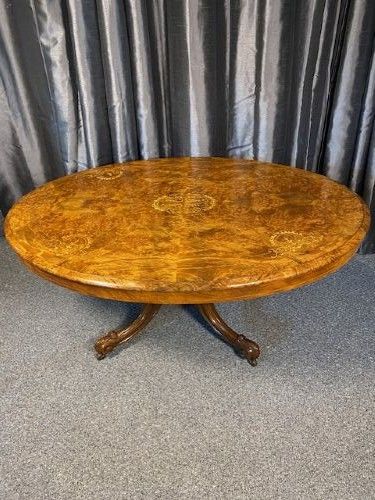
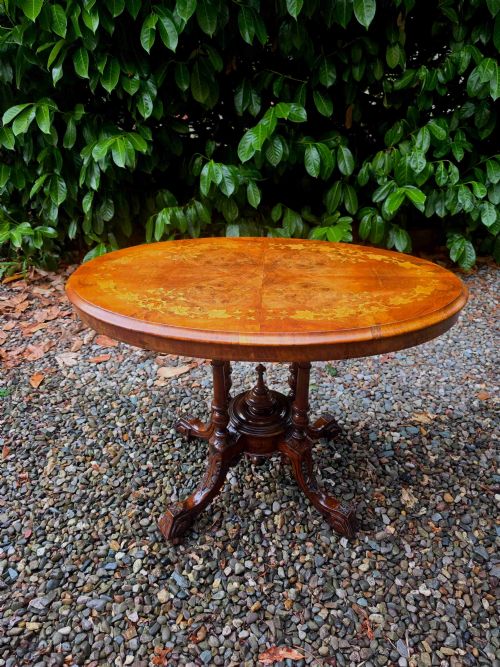
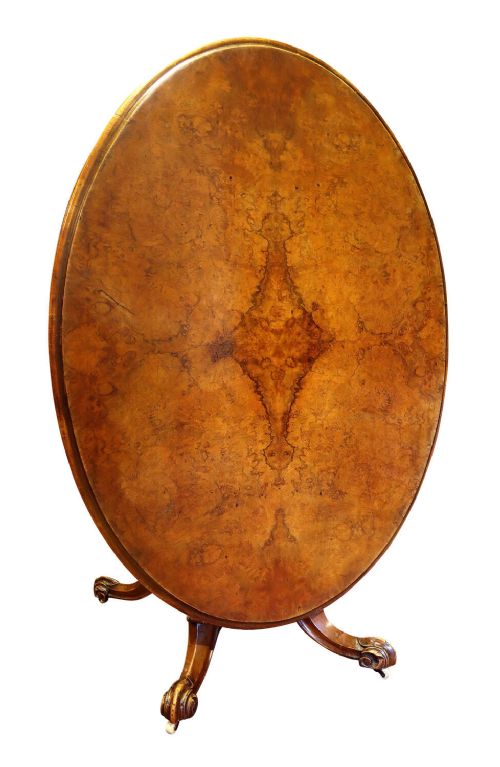
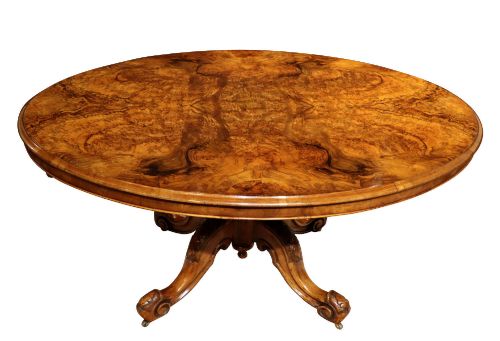
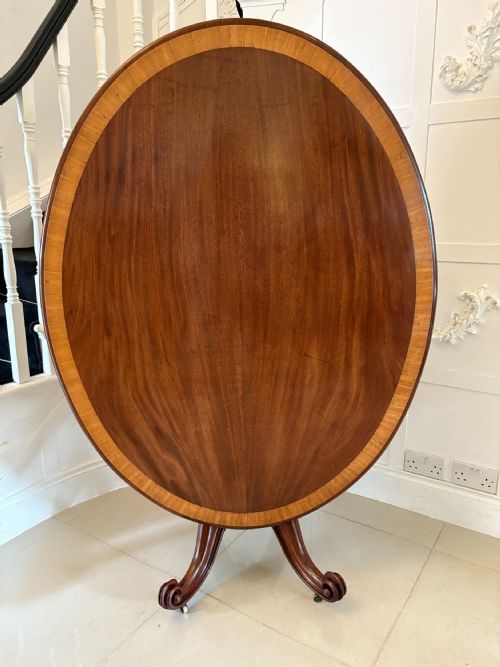
A victorian oval loo table is a versatile nineteenth-century centrepiece designed primarily for drawing rooms and parlours. These tables appear frequently in burr walnut and mahogany, often featuring marquetry or boxwood inlay upon the top.
The form bridges the gap between a dining table and an occasional piece, frequently incorporating a tilting mechanism. Many examples seat four to six people, making them practical for smaller dining spaces or as lamp and display tables.
Materials and Construction
Cabinet makers utilised burr walnut veneer over solid carcase woods to create the characteristic swirling grain patterns on the top. Boxwood and various wood inlays were frequently added to form intricate marquetry details around the edges.
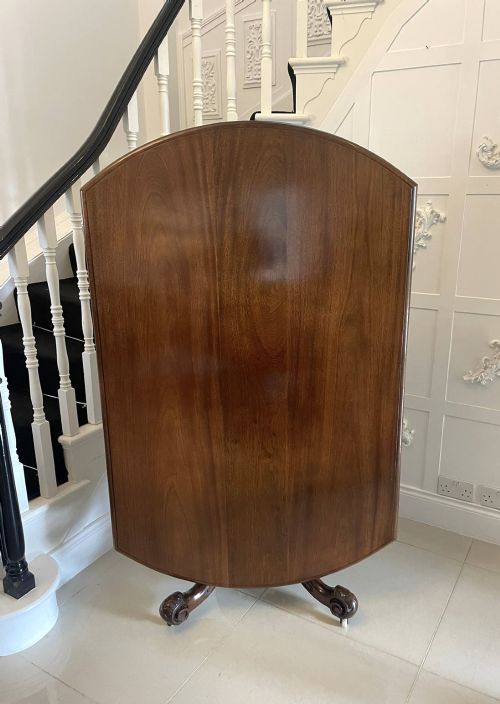
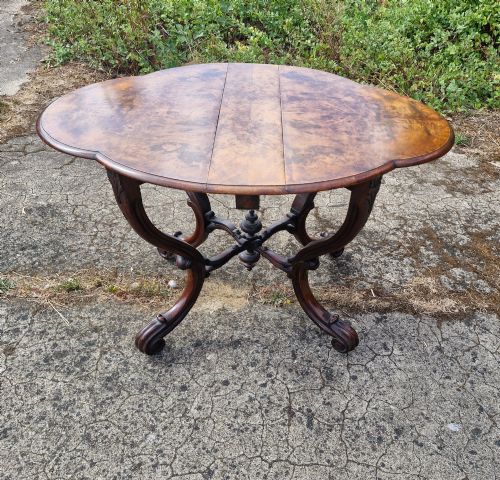
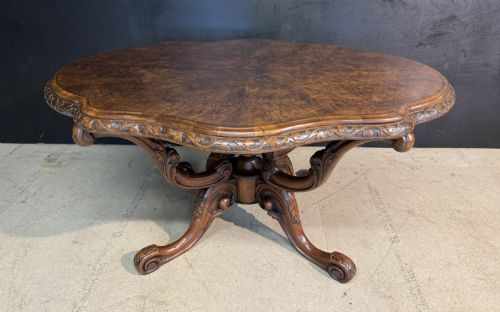
The central pillar typically rests upon a carved quadrapod or tripod base fitted with brass castors for mobility. A hinged block mechanism allows the top to tilt vertically when not in use, saving valuable floor space.
Listings feature burr walnut, mahogany, and rosewood across Victorian and nineteenth-century periods.
Assessing Quality and Craftsmanship
The choice of timber underpins the distinction between standard and superior pieces, with densely figured burr walnut commanding greater attention than plain mahogany or walnut. The crispness of hand-carved details on the stem and legs also signals higher workshop standards.
Marquetry execution reveals the skill of the artisan, where tightly fitted inlay work without noticeable gaps indicates superior production. The stability of the tilt action and the smoothness of the underlying brass mechanism further distinguish finer examples.
The Victorian Oval Loo Table Glossary
- Burr walnut
- A prized timber harvested from walnut tree growths, producing intricate, swirling grain patterns. It forms the primary decorative surface on many high-status nineteenth-century tables.
- Tilt top
- A hinged table mechanism allowing the surface to swivel and lock into a vertical position. This clever engineering enabled large furniture to be pushed against walls when the room was needed for other purposes.
- Marquetry
- Decorative veneer work arranged in pictorial or geometric patterns using various coloured woods. Craftsmen inlaid these pieces directly into the table top.
- Quadrapod base
- A heavy central pedestal supported by four carved legs, often terminating in castors. This configuration provides the stability required for a large oval top.
- Centre table
- A freestanding piece finished on all sides to be viewed from any angle in the middle of a room. These tables served multiple functions including dining and card playing.
Victorian Oval Loo Table: Frequently Asked Questions
How do I use a loo table today?
These tables function well as dining surfaces, occasional desks or striking centrepieces in larger hallways. Their tilt mechanism also allows them to stand flat against a wall as decorative furniture when floor space is needed.
For daily living, placing a protective mat beneath lamps or hot dishes preserves the delicate veneer. The generous oval surface accommodates several guests comfortably for dinner parties.
What is the history of the loo table?
The term originates from the popular nineteenth-century card game called loo, which required a spacious circular or oval table for players. As card games waned in popularity, the tables remained essential drawing room fixtures.
Cabinet makers adapted the form throughout the Victorian period, introducing elaborate marquetry and aesthetic movement influences. They became symbols of domestic comfort and refinement in middle-class and aristocratic homes alike.
How do I date a Victorian table?
Examining the secondary timbers, fixing screws and overall styling helps narrow down the production era within the nineteenth century. Earlier examples tend to feature heavy mahogany construction, while mid-period pieces favour burr walnut.
Inlay styles also shift over decades, moving from simple geometric boxwood lines to complex floral marquetry. Hardware such as brass castors provides further clues regarding the manufacturing decade.
Can these tables seat six people?
Many oval examples accommodate four to six diners comfortably due to the generous proportions of the top. The absence of awkward corner legs on pedestal tables maximises legroom for seated guests.
When assessing capacity, consider the width of the pedestal base beneath the top. A sturdy quadrapod foundation ensures the table remains balanced even when fully loaded.