
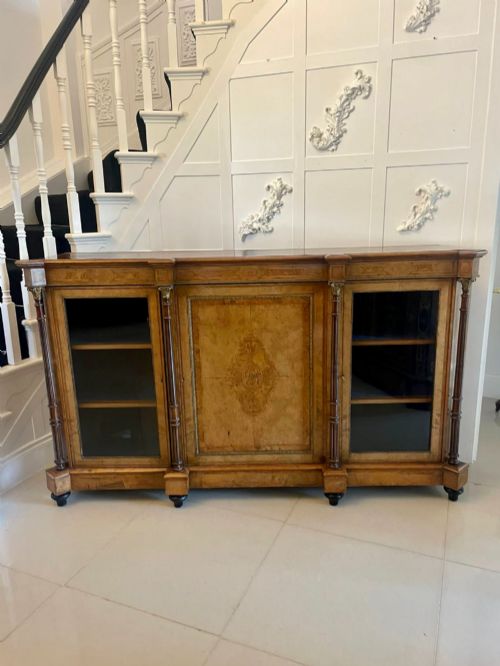
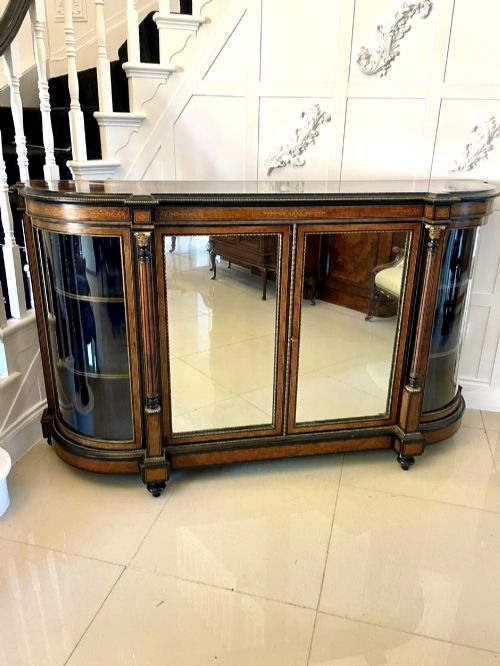
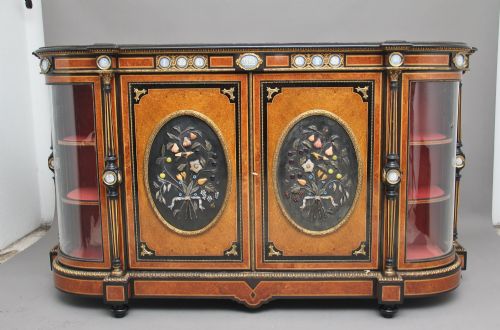
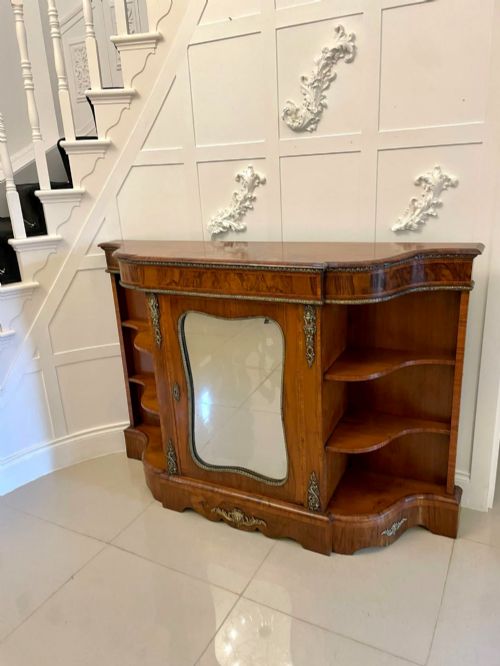


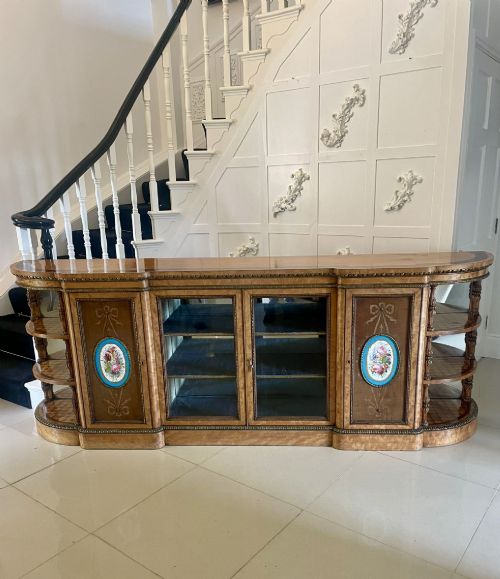
Victorian Ormolu Sideboard
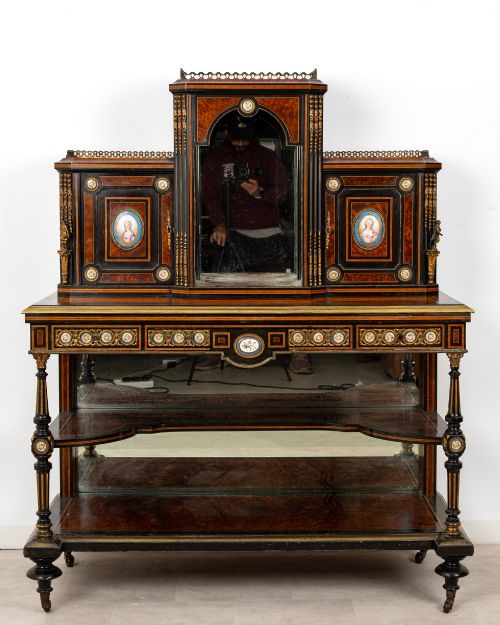
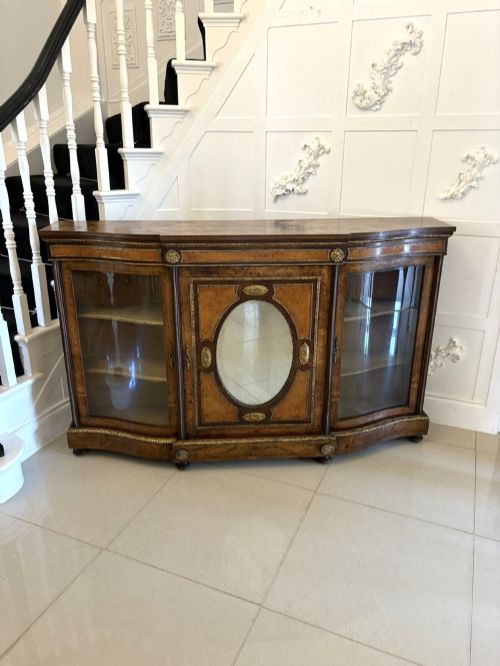
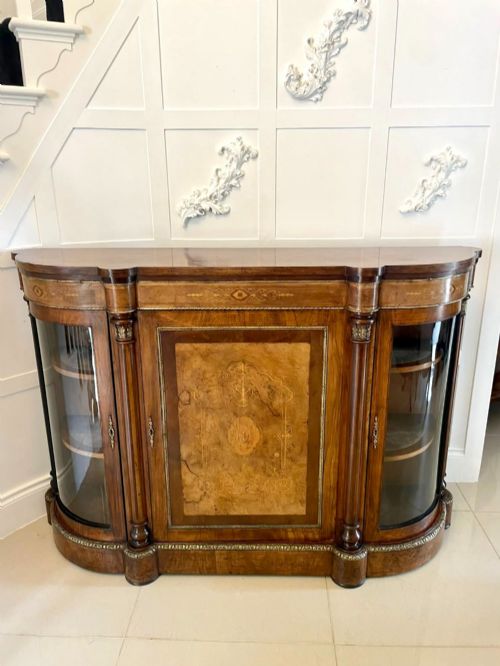
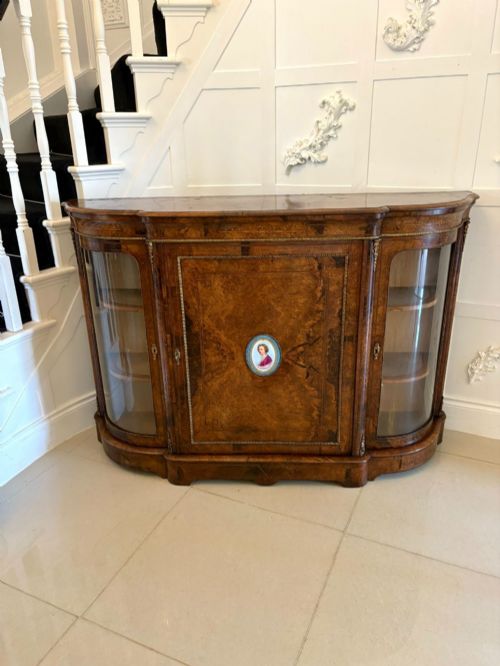
A victorian ormolu sideboard brings together rich burr walnut, intricate marquetry, and gilt bronze mounts to anchor a formal room.
Victorian Ormolu Sideboard
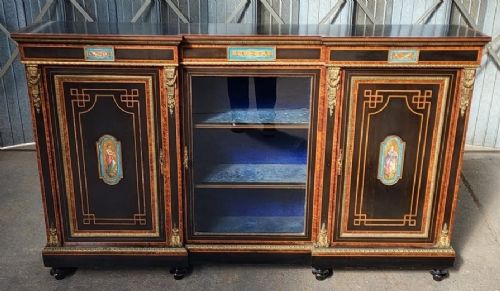
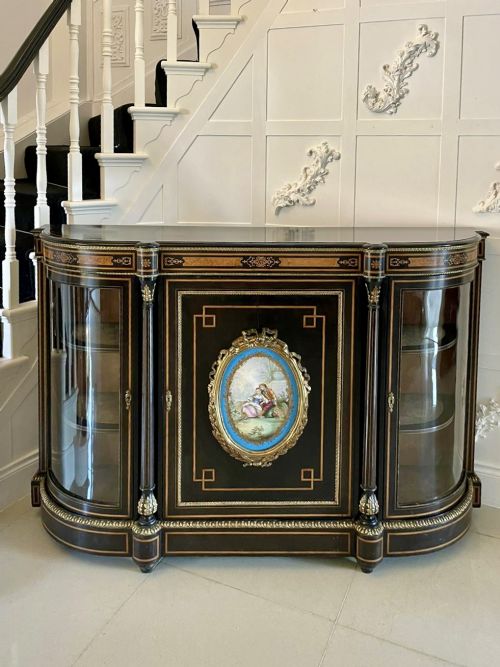
A victorian ormolu sideboard typically manifests as a credenza, side cabinet, or pier cabinet designed for display and storage in nineteenth-century interiors. These low-profile storage pieces frequently incorporate glass doors, mirrored backs, and serpentine shapes alongside traditional cabinet space.
Burr walnut veneer forms the predominant body of these examples, often complemented by ebonised wood, rosewood, amboyna, or satinwood. Makers drew heavily upon French Revival, Napoleon III, and Neoclassical styles, integrating classical motifs with domestic utility.
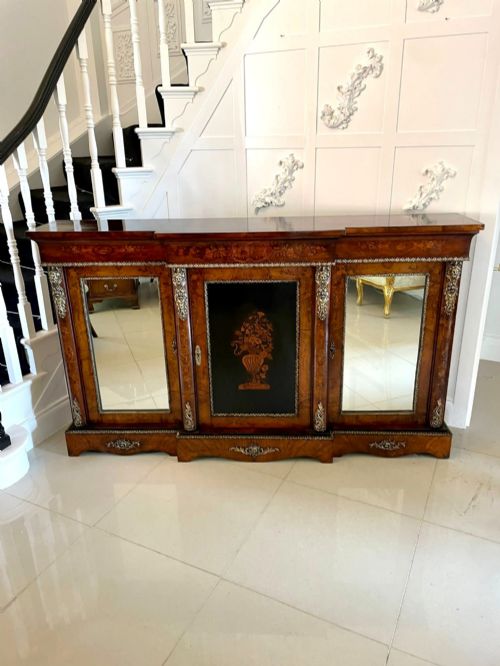
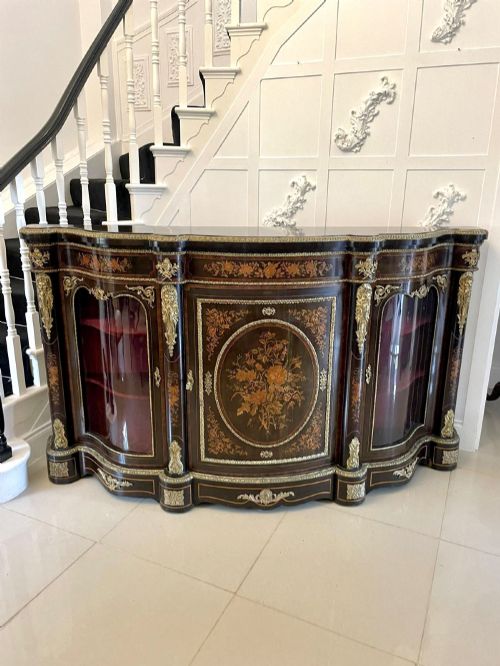
The version most commonly encountered on this page pairs a figured burr walnut foundation with detailed floral marquetry and cast ormolu mounts. Such pieces bridge the gap between functional sideboards and decorative display furniture.
Materials and construction
Cabinet makers built these carcasses using sturdy secondary timbers before applying highly figured burr walnut, kingwood, or ebonised veneers to the visible surfaces. Precision cutting allowed for complex floral marquetry and boxwood inlay work to be set flush into the grain.
Ormolu mounts, cast in brass and given a gold-coloured finish, were secured to corners, friezes, and door surrounds to accent the woodwork. Additional decorative elements include inset porcelain plaques, marble tops, and brass stringing.
Glass panels fitted to central and side doors relied on fine timber framing to support curved or serpentine profiles without warping. Interior shelving typically featured fabric lining or polished wood to display glassware and ceramics.
Listings feature pieces from the 1850s to the 1890s, dominated by burr walnut, ebonised wood, and ormolu mounts.
Assessing craftsmanship
The intricacy of the floral marquetry and the depth of the timber figuring dictate the visual tier of the piece. Dense, highly figured burr walnut paired with refined boxwood inlay indicates superior workshop selection.
Ormolu mounts vary from sharply chased, heavy cast brass pieces with distinct detailing to simpler, lighter pressings. Crisply cast mounts integrated harmoniously into the veneer design elevate the overall standard.
Structural complexity, such as fully serpentine-shaped fronts and mirrored backboards framed in matching timber, separates standard sideboards from exhibition-grade examples. Precision in door alignment and veneering around curved corners further distinguishes finer items.
Gillows·Maison Gagneau
The Victorian Ormolu Sideboard Glossary
- Ormolu
- Gilded bronze or brass mounts applied to furniture for decorative contrast. These decorative elements catch the light and frame the timber panels.
- Marquetry
- Inlaid patterns of different woods applied to a carcass to create pictorial or floral designs. Artisans cut thin veneers to fit together tightly before gluing them to the surface.
- Burr walnut
- Timber taken from the gnarled growths of walnut trees, prized for its swirling, highly figured grain patterns. It forms the primary visual surface on many nineteenth-century cabinet pieces.
- Pier cabinet
- A narrow display cabinet built to fit the wall space between windows. These upright pieces often match the aesthetic of larger sideboards in the same room.
Victorian Ormolu Sideboard: Frequently Asked Questions
What is a victorian ormolu sideboard?
A victorian ormolu sideboard is a low display cabinet, frequently called a credenza, featuring gilt metal mounts and decorative wood veneers. These pieces were built during the nineteenth century for formal drawing rooms.
They combine enclosed cupboard storage with glass-fronted display sections and mirrored backs. The incorporation of ormolu mounts reflects a strong French aesthetic influence on British cabinet makers.
How were these sideboards used?
Original nineteenth-century interiors utilised these cabinets to display fine ceramics, glassware, and decorative ornaments. The enclosed sections stored table linen and household items.
Today, they serve a similar decorative and storage function in modern reception rooms. Their flat tops provide a surface for lamps and larger display objects.
How do I identify the wood types?
Burr walnut displays swirling, mottled grain patterns created by tree growths, whereas standard walnut has a straighter, more uniform stripe. Ebonised wood is stained black to imitate expensive ebony.
Exotic veneers like amboyna and satinwood offer lighter, golden tones with distinctive speckling or chatoyancy. Close inspection under good light reveals whether the grain is natural timber or painted simulation.
How do I care for burr walnut and ormolu?
Keep these cabinets away from direct sunlight and heat sources to prevent the burr walnut veneer from drying and splitting. Regular dusting with a dry, soft cloth maintains the polished finish without abrasive cleaners.
Ormolu mounts require gentle cleaning with a dry cloth to avoid removing the gilt finish. Avoid commercial metal polishes, which can damage the surrounding timber veneer.